The Corporate Powerhouse Behind the Toughest Trucks on the Road
When you see a Western Star truck conquering a logging road or hauling a heavy load down the highway, its rugged, hand-built appearance speaks for itself. These machines are synonymous with durability and custom craftsmanship. But for many, the story behind the badge is a bit of a mystery. The question of **who makes Western Star trucks and where are they manufactured** reveals a fascinating journey through corporate evolution, blending a fierce independent spirit with the power of a global manufacturing giant. The answer isn’t as simple as a single founder in a garage; it’s a story that starts in Canada and finds its modern home in the heart of American truck manufacturing, all under the umbrella of one of the world’s largest automotive groups.
Understanding this lineage is key to appreciating why these trucks are so revered. It’s a blend of heritage and cutting-edge technology, a combination that has allowed the brand to thrive where others have faltered. From their roots serving the most demanding industries to their current state-of-the-art production lines, the identity of Western Star has been carefully cultivated through decades of change.
From Canadian Roots to a Global Trucking Empire
The history of Western Star is not one of a standalone company but of a brand born from necessity and shaped by strategic acquisitions. Its identity is deeply rooted in serving industries that push vehicles to their absolute limits.
The White Motor Company Era
Western Star’s story begins in 1967 in Kelowna, British Columbia, Canada. It wasn’t an independent startup but a new division of the White Motor Company. White, an established American truck manufacturer, created the “White Western Star” brand specifically to build tough, reliable trucks for the demanding logging, mining, and oil industries of Western Canada.
The brand quickly earned a reputation for its overbuilt frames and highly customizable configurations. Buyers could specify nearly every component, resulting in trucks that were tailor-made for specific, often brutal, applications. This focus on bespoke manufacturing became a core part of the brand’s DNA and continues to this day.
A New Chapter Under Daimler Truck North America
The brand went through several ownership changes after White Motor Company faced financial struggles. However, the most significant shift occurred in 2000 when Daimler AG, the German automotive conglomerate, purchased Western Star. This acquisition placed the brand under the corporate umbrella of what is now Daimler Truck North America (DTNA).
DTNA is a powerhouse in the commercial vehicle market, and it is the definitive answer to the question of who makes Western Star trucks today. This move integrated Western Star into a family of iconic brands that includes Freightliner Trucks, Detroit Diesel Corporation (now known as Detroit), and Thomas Built Buses. Rather than being absorbed and losing its identity, Western Star was positioned as DTNA’s premium vocational and specialized heavy-duty truck brand.
Pinpointing the Modern Manufacturing Hub
For decades, the answer to “where are they manufactured?” was intertwined with the brand’s Canadian and later, Portland, Oregon, roots. But today, the production of these formidable machines is centralized in one of North America’s most advanced truck manufacturing facilities.
The Strategic Move to Cleveland, North Carolina
Initially, after the Daimler acquisition, Western Star trucks were built at a plant in Portland, Oregon. This facility had a long history of producing high-quality, custom-ordered trucks. However, to streamline production and leverage corporate synergies, DTNA made a strategic decision to consolidate manufacturing.
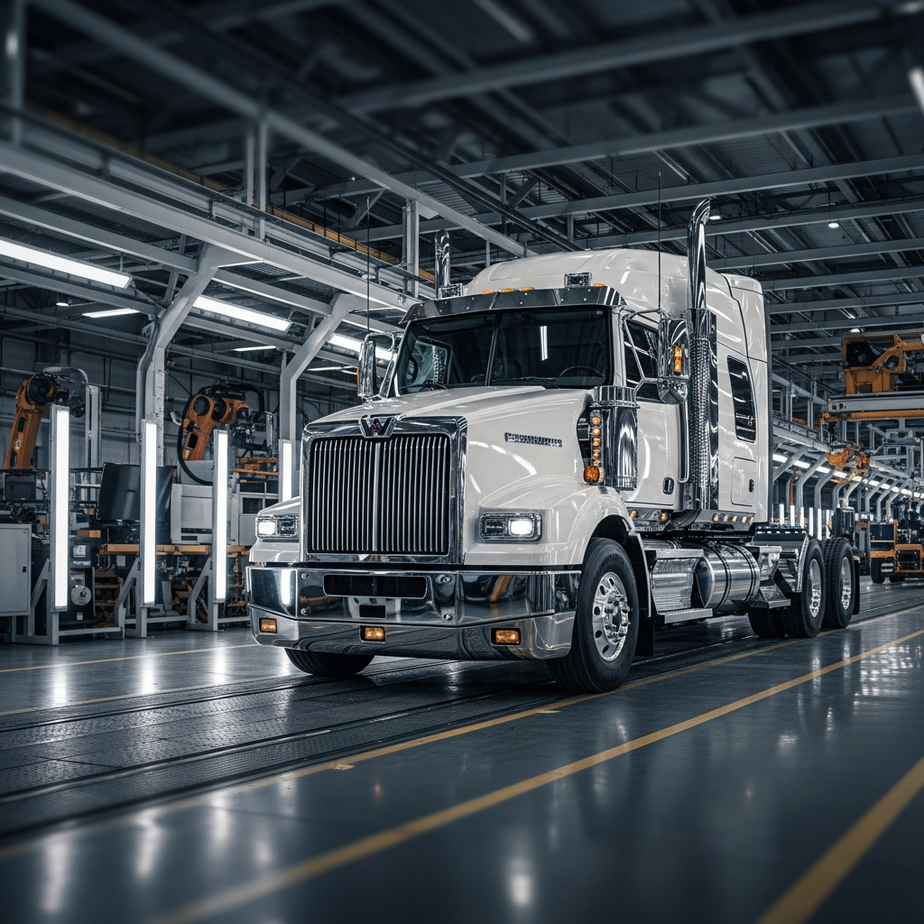
Today, all new Western Star trucks are manufactured at the Daimler Truck North America plant in Cleveland, North Carolina. This massive, state-of-the-art facility is a testament to modern manufacturing efficiency, but it still honors the brand’s legacy of craftsmanship. This is the primary location where Western Star trucks are manufactured, sharing production space with some of its Freightliner counterparts.
Inside the Cleveland Manufacturing Plant
Walking through the Cleveland plant reveals a fascinating blend of high-tech automation and skilled human touch. While robotic arms handle heavy lifting and precision welding, the final assembly and custom installations that define a Western Star are still performed by highly skilled technicians.
Key aspects of the manufacturing process include:
– Custom Frame Assembly: Each truck starts with a frame built to the customer’s exact specifications for length, strength, and component layout.
– Hand-Installed Cabs: The cabs, known for their durability and steel construction, are meticulously assembled and mounted.
– Bespoke Component Integration: From engine and transmission selection to specialized PTOs (Power Take-Offs) and hydraulic systems, components are integrated according to the specific vocational need.
This hybrid approach allows DTNA to achieve high standards of quality and efficiency while delivering the highly customized product that Western Star customers expect.
The Western Star Lineup: A Family of Purpose-Built Machines
Understanding who makes Western Star trucks and where are they manufactured is only part of the story. The trucks themselves are the ultimate expression of the brand’s philosophy, combining rugged tradition with the immense technological resources of Daimler Truck.
The Revolutionary X-Series
The modern Western Star lineup is dominated by the formidable X-Series, a new generation of trucks designed from the ground up to be tougher, safer, and more efficient.
Western Star 47X
The 47X is the “baby” of the family, designed as a versatile vocational truck. It’s shorter and lighter than its bigger siblings, making it ideal for applications like concrete mixers and dump trucks where maneuverability and payload are critical. It combines a tough-as-nails chassis with a modern, driver-focused cab.
Western Star 49X
Considered the flagship vocational model, the 49X is engineered for the most severe-duty jobs. It features the industry’s toughest single-channel frame rail, an all-new steel-reinforced aluminum cab, and advanced safety features. It’s the direct descendant of the legendary trucks that built Western Star’s reputation in logging, mining, and heavy haul.
Western Star 57X
The 57X is the brand’s on-highway champion. It takes the durability and driver-centric design of the vocational models and wraps it in an aerodynamic package built for long-haul efficiency. It boasts impressive fuel economy numbers, a luxurious interior, and the full suite of Detroit Assurance safety systems, proving that a tough truck can also be smart and comfortable.
The Enduring Legacy of the 4900
No discussion of Western Star is complete without mentioning the iconic 4900. For decades, this model was the quintessential Western Star—a versatile workhorse that could be configured for almost any job. While it has been largely succeeded by the advanced 49X, the 4900 remains a legend on job sites and a sought-after model in the used truck market, symbolizing the brand’s unwavering commitment to building trucks that last.
The Daimler Advantage: Blending Heritage with High-Tech
Being part of the Daimler Truck North America family provides Western Star with an almost unfair advantage. It allows a brand known for its traditional, rugged quality to access a global reservoir of research, development, and technology. This is a critical factor when people ask not just who makes Western Star trucks, but *how* they are made so well.
Access to a World-Class Powertrain
One of the most significant benefits of DTNA ownership is access to the Detroit powertrain. Western Star trucks are predominantly equipped with Detroit engines, transmissions, and axles, which are engineered to work together seamlessly for optimal performance, efficiency, and reliability.
– Detroit Engines: The DD13, DD15, and DD16 engines are renowned for their power, fuel economy, and long service intervals.
– Detroit DT12 Transmission: This automated manual transmission offers smooth shifting and intelligent software that improves both performance and driver comfort.
– Detroit Axles: These are engineered for durability and efficiency, completing the integrated powertrain package.
This synergy ensures that a Western Star’s toughness is matched by a sophisticated and reliable powertrain. You can explore more about DTNA’s brand portfolio on their official website.
Advanced Safety and Connectivity
Modern trucking is about more than just power; it’s about safety and data. Through DTNA, Western Star incorporates the Detroit Assurance suite of active safety systems. This includes features like Active Brake Assist, Adaptive Cruise Control, and Lane Departure Warning, making some of the toughest trucks on the road also some of the safest.
Furthermore, connectivity through platforms like Detroit Connect allows fleet managers to monitor vehicle health, fuel efficiency, and location in real-time, maximizing uptime and operational efficiency. This fusion of old-school brawn with new-school brains is what defines the modern Western Star.
So, who makes Western Star trucks and where are they manufactured? The answer is clear: these iconic heavy-duty vehicles are built by Daimler Truck North America in their advanced facility in Cleveland, North Carolina. This partnership preserves the brand’s historic commitment to custom-built durability while infusing it with world-class technology, safety, and efficiency. From the Canadian logging roads of its birth to the high-tech American assembly lines of today, Western Star continues to be the definitive choice for those who demand the very best.
The next time you see one of these impressive machines at work, you’ll know the full story—a legacy of toughness, precision-engineered in a state-of-the-art facility, and backed by a global leader in transportation. To truly appreciate the craftsmanship that goes into every truck, explore the current X-Series lineup and see how a legendary brand continues to set the standard for excellence in the toughest jobs on Earth.