Why the Mixed‑Reality Market Is Heating Up
In recent months, the tech world has been buzzing around Apple’s Vision Pro, the company’s first foray into high‑end mixed‑reality (MR) hardware. As the industry’s leading players weigh in, the market is rapidly expanding beyond the traditional VR/AR divide. Consumers and developers alike are eager for more immersive experiences that blend the digital and physical worlds seamlessly. This surge of interest has paved the way for a new generation of MR headsets, with price points that make the technology accessible to a broader audience.
Enter the New Contender: Samsung’s MR Headset Collaboration with Google and Qualcomm
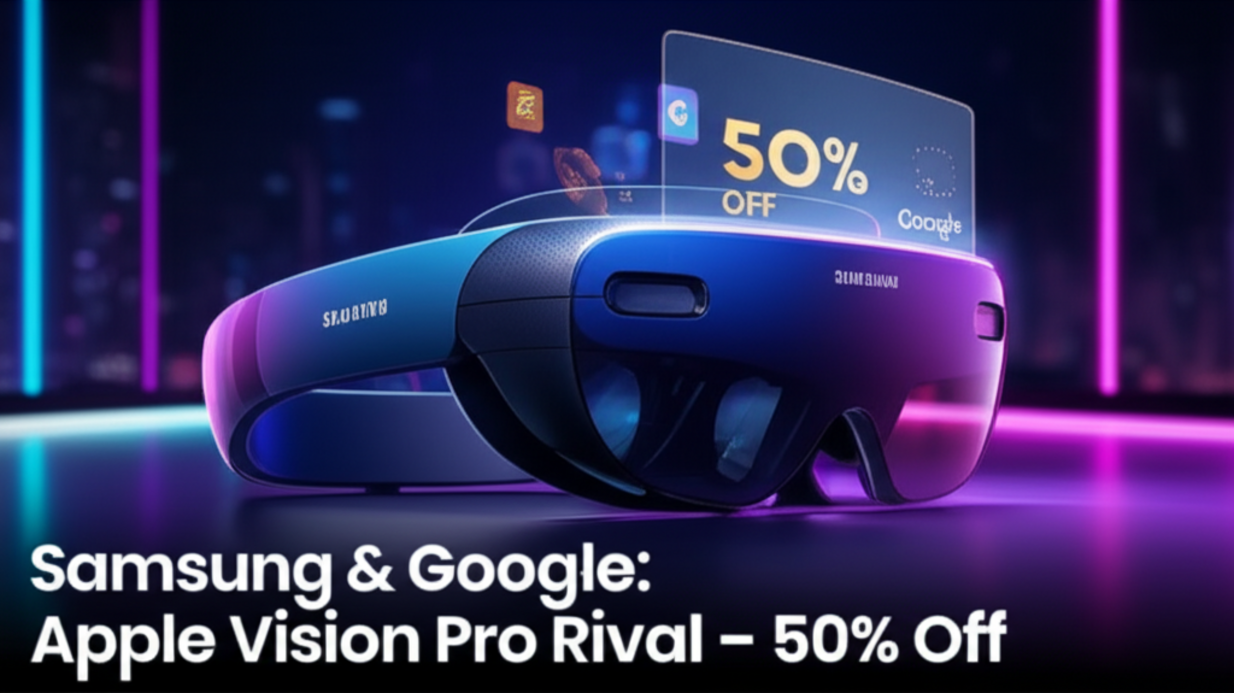
Samsung has taken a bold step by announcing a direct competitor to Apple’s Vision Pro, developed in partnership with Google and powered by Qualcomm’s latest Snapdragon XR platform. The announcement signals a major shift: the first time Samsung has publicly positioned itself in the MR space, and the first time a major mobile chipset supplier has built a headset specifically for consumer use.
What Makes This Headset Stand Out?
Unlike Vision Pro, which focuses on high‑resolution optics and a premium price tag, the Samsung‑Google‑Qualcomm trio has engineered a solution that balances performance with affordability. The headset boasts:
- Dual 2K Displays: Each eye receives a 2,048 × 2,048 pixel display, offering sharp visuals without the high cost of 4K optics.
- Integrated Snapdragon XR2+: Qualcomm’s XR‑focused SoC delivers powerful graphics and AI processing, enabling real‑time hand tracking, eye tracking, and spatial audio.
- Samsung’s HMD Design Language: The device adopts a lightweight, ergonomic form factor that rivals the Vision Pro’s sleek aesthetics while remaining comfortable for extended wear.
- Google’s Software Stack: Powered by Android XR, developers can easily port Android apps, while the headset supports Google’s ARCore, unlocking a rich library of AR experiences.
Price and Market Positioning
The headline factor driving excitement is the headset’s price point. Samsung claims it will be available for roughly $1,200 – about half the cost of the Apple Vision Pro’s $3,499. This aggressive pricing strategy is designed to democratize MR, making it a viable option for both professional users and casual consumers.
In a statement, a Samsung spokesperson said, “We believe immersive technology should be accessible, not exclusive.” The company is targeting a segment that includes content creators, enterprise teams, and gamers who previously found MR too expensive to justify. By offering a more affordable alternative, Samsung hopes to capture a larger share of the emerging MR ecosystem.
Technological Advantages and Trade‑Offs
While the Samsung headset may lack some of the Vision Pro’s premium hardware—such as a high‑density display and a proprietary eye‑tracking camera—the device compensates in other ways:
- Higher Frame Rates: The Snapdragon XR2+ supports 120 fps rendering, reducing motion blur and improving user comfort during fast‑moving applications.
- Developer Friendly: By aligning with Android XR and ARCore, the headset lowers the barrier to entry for developers, accelerating the content pipeline.
- Battery Life: Samsung’s collaboration with Qualcomm has yielded a 7‑hour battery life estimate, surpassing many competitor offerings.
However, there are trade‑offs. The headset uses a single integrated camera for depth sensing rather than the Vision Pro’s dual‑camera array. Some reviewers anticipate this could slightly reduce hand‑tracking precision in complex scenes. Additionally, the audio system relies on software‑based spatial audio rather than Vision Pro’s integrated speakers, which could affect immersion for users who value high‑fidelity sound.
Impact on Apple and the MR Landscape
Apple’s Vision Pro has set a high benchmark, but the Samsung‑Google‑Qualcomm collaboration introduces a compelling alternative that could shift market dynamics. If Samsung successfully brings the headset to market on schedule, we may see:
- Price War: Apple might consider a price drop or the introduction of a more affordable Vision Pro variant to maintain its competitive edge.
- Accelerated Content Development: With a larger user base expected for the Samsung headset, third‑party developers might prioritize cross‑platform optimization, enriching the ecosystem for all devices.
- Hardware Innovation: The competition could spur further advancements, such as more advanced eye‑tracking sensors or lighter, battery‑optimized designs.
What This Means for Consumers
For the average consumer, the implications are exciting. An MR headset that offers near‑Vision Pro quality for a fraction of the price opens doors for a wide range of use cases: immersive gaming, virtual meetings, remote collaboration, and interactive education. The lower cost reduces the barrier for first‑time users who may have been hesitant to invest heavily in MR hardware.
Moreover, the integration with Android XR and ARCore ensures a growing library of content. Whether you’re a developer looking to build new experiences or a consumer ready to explore them, the ecosystem is set to become more diverse and accessible.
Looking Ahead
Samsung’s unveiling marks a turning point in the MR space, but the journey is just beginning. Key factors to watch include:
- Launch Timeline: Samsung has hinted at a 2025 release window, but production delays or supply chain issues could push back availability.
- Software Support: The success of the device will hinge on Google’s ability to deliver a robust, developer‑friendly SDK, and on Samsung’s commitment to firmware updates.
- Market Adoption: Initial sales figures will reveal whether consumers are ready to embrace an MR headset that prioritizes affordability over premium specs.
As the MR landscape evolves, the collaboration between Samsung, Google, and Qualcomm could become a cornerstone of the next generation of immersive tech. By offering a competitive price point without sacrificing core functionality, this new headset positions itself as a genuine challenger to Apple’s Vision Pro—potentially reshaping how we experience digital content in the near future.
Conclusion
The launch of Samsung’s MR headset—backed by Google’s software stack and Qualcomm’s processing power—introduces a bold proposition: a Vision Pro rival that’s accessible, powerful, and developer‑friendly. If the company can deliver on its promises, it may catalyze a broader adoption of mixed reality, democratizing the technology and driving innovation across the industry. Whether you’re a tech enthusiast, a developer, or a casual user, the next few months are sure to be an exciting chapter in the story of immersive computing.