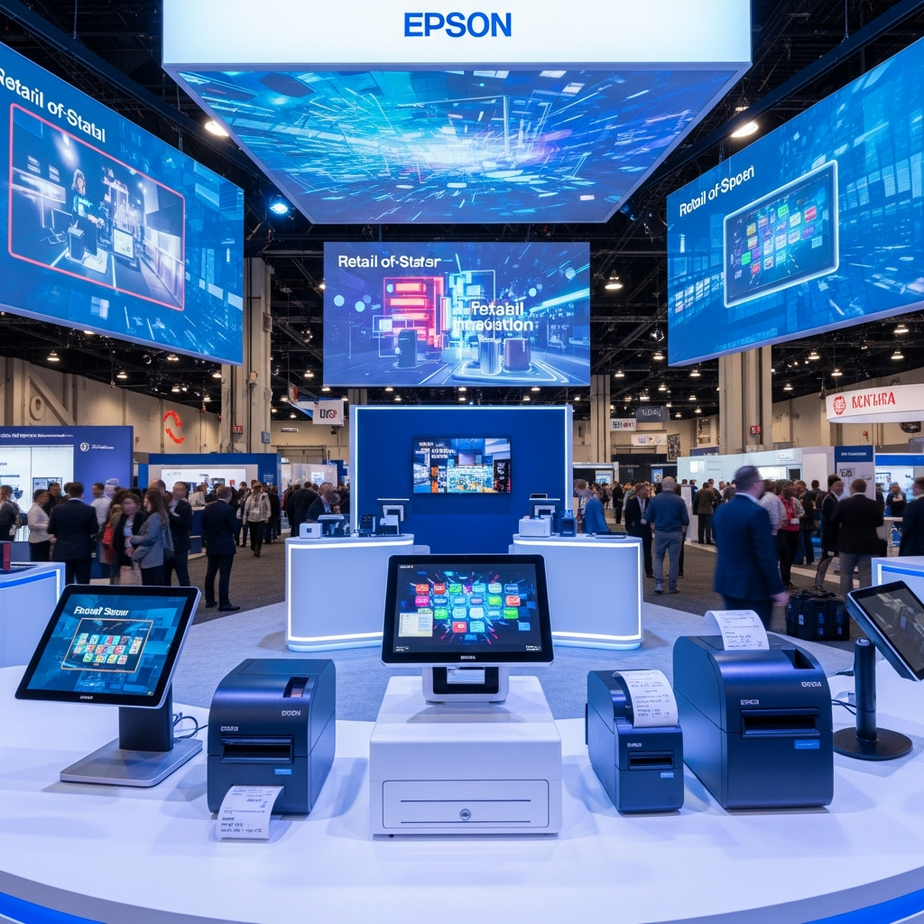
The retail landscape is constantly shifting, driven by consumer demands for speed, personalization, and seamless experiences. As industry leaders gather in New York City for the year’s most anticipated event, the focus is squarely on technology that bridges the gap between digital convenience and physical presence. The energy at the Javits Center this January is palpable, with thousands of decision-makers looking for the next big breakthrough to streamline operations. Among the most exciting showcases is the presence of Epson at NRF 2026, where the company is set to demonstrate how hardware innovation can fundamentally change the way businesses interact with their customers. By focusing on practical, hands-on demonstrations, Epson is moving beyond static displays to show retailers exactly how these tools perform in real-world scenarios.
Experiencing Innovation: The In-Booth Café Concept
One of the challenges with trade shows is that technology often feels abstract. You might see a printer or a kiosk on a pedestal, but it is difficult to visualize how it fits into a bustling coffee shop or a high-traffic boutique. To solve this, the Epson at NRF 2026 exhibit features a fully functional In-Booth Café. This immersive setup allows visitors to do more than just look at specifications; they are invited to sip, see, and experience the technology in action. The café concept is a brilliant way to simulate the pressures of a live retail environment. When a visitor orders a coffee, they witness the entire transaction lifecycle. They see the point-of-sale terminal capture the order, the receipt printer generate a transaction record instantly, and the label printer churn out a sticky label for the cup. This “sip and see” approach proves reliability in real-time. It demonstrates that the hardware can keep up with the pace of service required in modern hospitality and retail sectors. By creating this environment, Epson highlights the synergy between different devices. Retail is no longer about standalone machines; it is about an ecosystem where the POS system talks to the kitchen display, and the label printer communicates with the inventory software. Visitors can walk through the self-service journey, understanding how intuitive hardware design can reduce friction for the end consumer. This hands-on experience is invaluable for buyers who need to know that the equipment they invest in will perform flawlessly during their own morning rushes.
Revolutionizing the Point of Sale and Self-Service
The traditional checkout counter is disappearing. In its place, retailers are adopting flexible, compact, and mobile solutions that allow staff to serve customers anywhere in the store. A major focus of the Epson at NRF 2026 showcase is the evolution of Point of Sale (POS) technology. Modern retail spaces are expensive, and counter space is at a premium. Bulky registers are being replaced by sleek, tablet-based systems paired with compact receipt printers that tuck neatly under counters or fit inside self-service kiosks. Self-service is no longer a novelty; it is an expectation. From grocery stores to fast-casual dining, customers prefer the control and speed of ordering themselves. However, a self-service kiosk is only as good as its components. If the printer jams or the receipt is illegible, the customer experience crumbles. Epson is addressing this with robust thermal receipt printers designed specifically for kiosk integration. These devices are engineered to handle high volumes with minimal maintenance, ensuring that the automated lanes remain open and operational. Key features of these modern POS solutions include: – Ultra-compact designs that free up valuable counter space for merchandise or promotions.
– Multiple connectivity options, including USB, Ethernet, and Bluetooth, ensuring stable connections with tablets and mobile devices.
– High-speed printing capabilities that keep lines moving during peak hours.
– Modern aesthetics that blend seamlessly with high-end store interiors. By focusing on the m-Series and other compact POS printers, Epson is providing retailers with the tools to design cleaner, more inviting store layouts without sacrificing functionality.
Enhancing Efficiency with Liner-Free Labeling
In the quick-service restaurant (QSR) and takeout sectors, speed and accuracy are the currency of success. A significant trend visible at NRF 2026 is the shift toward liner-free labeling. Traditional labels come with a silicone backing that must be peeled off and discarded. This creates waste and slows down employees who are trying to fulfill orders rapidly. Liner-free labels, which act like tape, eliminate this waste and the extra step of peeling. The technology showcased at the booth demonstrates how “Sticky POS” solutions can transform order fulfillment. When a customer places an online order for pickup, a liner-free label printer can generate a single label that sticks securely to the bag or box. This label serves as the receipt, the order ticket, and the seal for tamper-proofing the package. This technology solves several problems simultaneously. First, it improves order accuracy by ensuring the right ticket stays with the right bag. Second, it speeds up the workflow in the kitchen. Third, it is an environmentally friendlier option because it eliminates the non-recyclable backing paper. For retailers and restaurateurs looking for operational efficiency, seeing these printers in action at the In-Booth Café provides a compelling argument for upgrading their back-of-house systems.
The Strategic Value of On-Demand Color Labeling
While receipt printing is about speed and transaction data, color labeling is about branding and compliance. Another highlight of Epson at NRF 2026 is the ColorWorks series, which brings on-demand color printing to the retail floor. Historically, businesses had to order pre-printed color labels in bulk from third-party print shops. This required storing massive amounts of inventory and resulted in waste if a product formula or logo changed. On-demand color labeling changes the game. It allows retailers to print high-quality, full-color labels instantly. This is particularly valuable for businesses that sell specialty goods, such as bakeries, candle shops, or boutique retailers. They can create seasonal packaging, personalized labels for gifts, or update ingredient lists on the fly without waiting for a supplier. The operational benefits of on-demand color printing include: – Inventory reduction by eliminating the need to stock pre-printed labels for every SKU.
– Flexibility to make immediate changes to designs, prices, or regulatory information.
– Enhanced brand presentation with professional-quality color graphics printed in-store.
– The ability to support short-run products or limited-time offers without setup costs. By bringing this capability in-house, retailers gain agility. They can react to market trends instantly, creating shelf appeal that captures customer attention in a crowded marketplace.
Sustainability and the Future of Retail Hardware
Sustainability is a major theme across the entire National Retail Federation show, and it is a core component of the conversation surrounding Epson at NRF 2026. Retailers are under increasing pressure from consumers and investors to reduce their carbon footprint. This extends beyond the products they sell to the operations they run. Epson is addressing this through energy-efficient designs and features that reduce paper consumption. Many of the showcased receipt printers include paper-saving settings that can reduce the length of a receipt by up to 30 percent without shrinking the font size. Over the course of a year, this saves miles of paper for a large chain retailer. Furthermore, durability plays a role in sustainability. Electronic waste is a growing global concern. By engineering printers and scanners that are built to last and withstand the harsh environments of kitchens and warehouses, the frequency of hardware replacement is reduced. This longevity ensures that retailers are not sending broken equipment to landfills every few years. The focus is on creating technology that supports a circular economy and responsible business practices.
Empowering the Back Office and Logistics
While the front-of-house technology grabs the headlines, the back-office operations are the backbone of retail. Efficient logistics, inventory management, and warehousing are essential for omnichannel success. If a system says an item is in stock, it must be on the shelf. At the show, attendees can explore portable printing solutions and rugged devices designed for the warehouse floor. These mobile printers allow employees to print shipping labels, inventory tags, and shelf-talkers right at the point of activity. This eliminates the need to walk back and forth to a central station, significantly improving labor productivity. Integration is the key word here. The hardware displayed is designed to integrate smoothly with major inventory management software and ERP systems. This ensures that data flows in real-time. When a shipment arrives, it can be scanned and labeled immediately, updating the online inventory instantly. This level of synchronization is vital for retailers offering Buy Online, Pickup In-Store (BOPIS) services, where accuracy is paramount.
Why NRF 2026 is a Turning Point for Retail Tech
The National Retail Federation’s “Big Show” always sets the tone for the coming year, and 2026 is no exception. The industry is moving past the experimentation phase of digital transformation and entering a phase of optimization. Retailers are no longer asking if they need automation; they are asking which automation is the most reliable and easiest to deploy. The presence of Epson at NRF 2026 highlights a shift toward “pragmatic innovation.” It is not just about flashy gadgets; it is about tools that solve labor shortages, reduce error rates, and enhance the customer journey. The partnership ecosystem is also on display, showing how hardware manufacturers are collaborating with Independent Software Vendors (ISVs) to create turnkey solutions. These partnerships mean that a retailer can buy a bundle—software, tablet, and printer—that works out of the box. For industry professionals, the event offers a unique opportunity to speak directly with engineers and product managers. It is a chance to provide feedback and ask tough questions about integration and support. The dialogue that happens on the show floor often shapes the product roadmaps for the next decade.
Moving Business Forward
As the retail world converges in New York, the emphasis is on technology that delivers tangible results. The industry has become too competitive for inefficiency. Every second saved at the checkout, every error avoided in the kitchen, and every label printed on-demand contributes to the bottom line. The showcase of Epson at NRF 2026 serves as a reminder that the physical and digital worlds are inextricably checking linked. The In-Booth Café demonstrates that technology is best when it works so smoothly that the customer barely notices it—they just enjoy their coffee and their seamless shopping experience. For retailers, the path forward involves investing in hardware that is flexible, sustainable, and reliable enough to handle the demands of the modern consumer. Those attending the show have a unique opportunity to witness the future of retail operations firsthand. By exploring these innovations, business leaders can find the tools they need to stay ahead of the curve, delight their customers, and drive growth in an increasingly complex market. Whether it is through smarter self-service kiosks or more efficient back-office labeling, the technology to move business forward is ready for deployment.