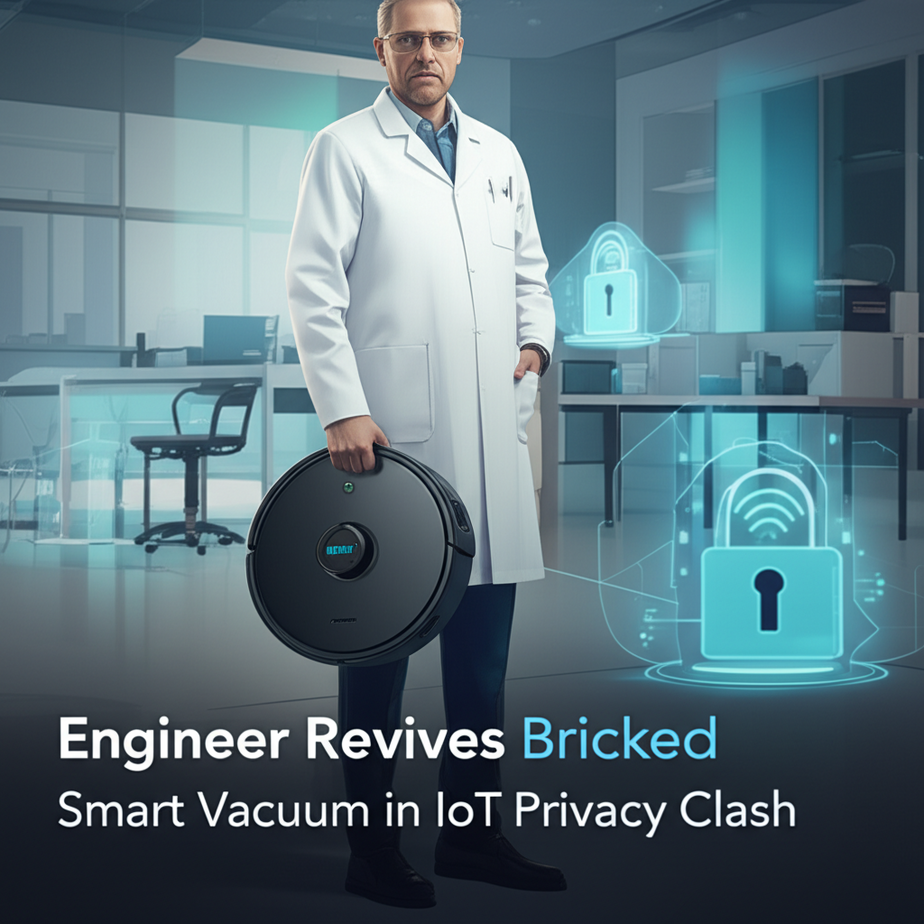
When a Smart Vacuum Goes Offline: A Tale of Privacy, Power, and DIY Resilience
In a world where appliances can now send telemetry from the living room to cloud servers, the line between convenience and intrusion has never been thinner. A recent incident involving an iLife A11 robotic vacuum illustrates the escalating battle over who truly controls the data that flows from our homes. An engineer—armed with a soldering iron and Python code—tried to keep his vacuum from reporting back to its manufacturer. The company, in response, remotely bricked the device. Undeterred, the engineer reverse‑engineered the vacuum, crafted custom hardware, and revived it in offline mode. The story is a microcosm of a larger struggle: user rights versus corporate data collection, and the need for clearer regulatory frameworks around the Internet of Things (IoT).
Why the iLife A11 Became a Battleground
iLife, a well‑known maker of smart home appliances, designs its vacuums to collect data on cleaning patterns, floor types, and even room dimensions. The device reports this telemetry to a cloud service that ostensibly improves firmware and offers predictive maintenance. For the average user, this data exchange is seamless and invisible—cleaner floors, fewer service calls. For privacy advocates, however, it raises uncomfortable questions:
- What personal information is being transmitted?
- Is that data stored securely, or could it be intercepted?
- Who owns the data once it leaves the home?
The engineer—whose identity is withheld for safety—felt the answers were unsatisfactory. He used a combination of hardware modifications and firmware tweaks to block the vacuum’s outbound network packets, effectively cutting off its telemetry stream.
When the Manufacturer Reacts: Remote Bricking Explained
Once the manufacturer detected anomalous network activity from the vacuum, they launched a remote firmware patch that disabled the device’s wireless radios. The iLife A11 went from a helpful household assistant to a silent, “bricked” appliance. In technical terms, the firmware update reset critical system parameters, leaving the vacuum unable to power on normally. For many users, such bricking is the end of their product life; for the engineer, it became a call to action.
Reversing the Curse: Custom Hardware Meets Python
Undeterred, the engineer began a two‑phase restoration plan. First, he built a low‑profile hardware interface that tapped into the vacuum’s internal data bus. Using a microcontroller (an Arduino Nano 33 IoT) he captured the device’s boot sequence and intercepted the firmware checksum calculations that the manufacturer’s patch relied upon.
Next, he rewrote the firmware bootloader in Python, leveraging the PySerial library to communicate over the vacuum’s UART port. The script performed a few critical tasks:
- Re‑verified the firmware signature to bypass the manufacturer’s lock.
- Re‑configured the wireless module to operate in a local Wi‑Fi network instead of the manufacturer’s cloud.
- Injected a lightweight, local data logger that stored cleaning logs on a microSD card.
Once the vacuum was back online, the engineer set it to run in “offline mode.” The device could now navigate rooms, schedule cleanings, and even report its status to the engineer’s home network—all without sending data to the iLife servers.
Implications for IoT Ownership and User Rights
While the engineer’s technical triumph is impressive, it underscores a systemic problem: the ownership of data in the IoT ecosystem. When a manufacturer can remotely brick a device, they effectively assert control over the product’s lifecycle. Users, on the other hand, often lack the tools or knowledge to defend themselves against such moves.
Several key takeaways emerge:
- Data Sovereignty Is Still a Myth—Even if your device never physically leaves your home, data can be routed through corporate servers, raising questions of sovereignty and consent.
- Firmware Lock‑In Is a Privacy Risk—Remote firmware updates that can disable devices should be regulated to prevent abuse.
- Open Standards Are Critical—When manufacturers lock down communication protocols, they inadvertently make it harder for independent developers to offer alternatives.
Calls for Regulatory Reform
The incident has already spurred discussion in several policy circles. Tech advocacy groups argue for the following reforms:
“Manufacturers should not be allowed to remotely disable devices without user consent. Regulatory bodies should enforce transparency in firmware update processes and guarantee that users can always revert to a factory state.”
Some lawmakers are exploring a “right to repair” bill that would require companies to provide firmware access, detailed documentation, and hardware interfaces for third‑party developers. Others suggest a data‑privacy amendment specifically targeting the IoT, mandating clear opt‑in mechanisms for telemetry and offering users the choice to operate devices offline.
What Consumers Can Do Right Now
For homeowners who want to protect their smart vacuum and other IoT devices, here are some practical steps:
- Enable local control modes whenever possible—many devices support operation without cloud connectivity.
- Regularly check for firmware update logs—some manufacturers publish detailed changelogs that disclose new telemetry endpoints.
- Use a network firewall or router rules to block outbound traffic to manufacturer domains.
- Join or support open‑source IoT communities—there’s a growing movement to create alternative firmware for popular appliances.
Looking Ahead: The Future of Smart Home Privacy
As the number of connected devices in our homes continues to soar, the iLife A11 saga will likely repeat itself in various guises. The tension between corporate data collection and individual privacy rights will intensify, especially as devices become more autonomous and capable of learning user habits.
Ultimately, the engineer’s story is a cautionary tale and a beacon of hope. It reminds us that while manufacturers can exert significant influence, informed users armed with technical knowledge can reclaim control. The conversation must evolve from “Can we stop the company from sending data?” to “How do we design IoT ecosystems that respect human agency from the ground up?”
In the meantime, keep your smart vacuum—and your privacy—under control. And stay tuned: as more voices join the debate, the next wave of IoT regulations might finally put the power back where it belongs—inside the user’s hands.