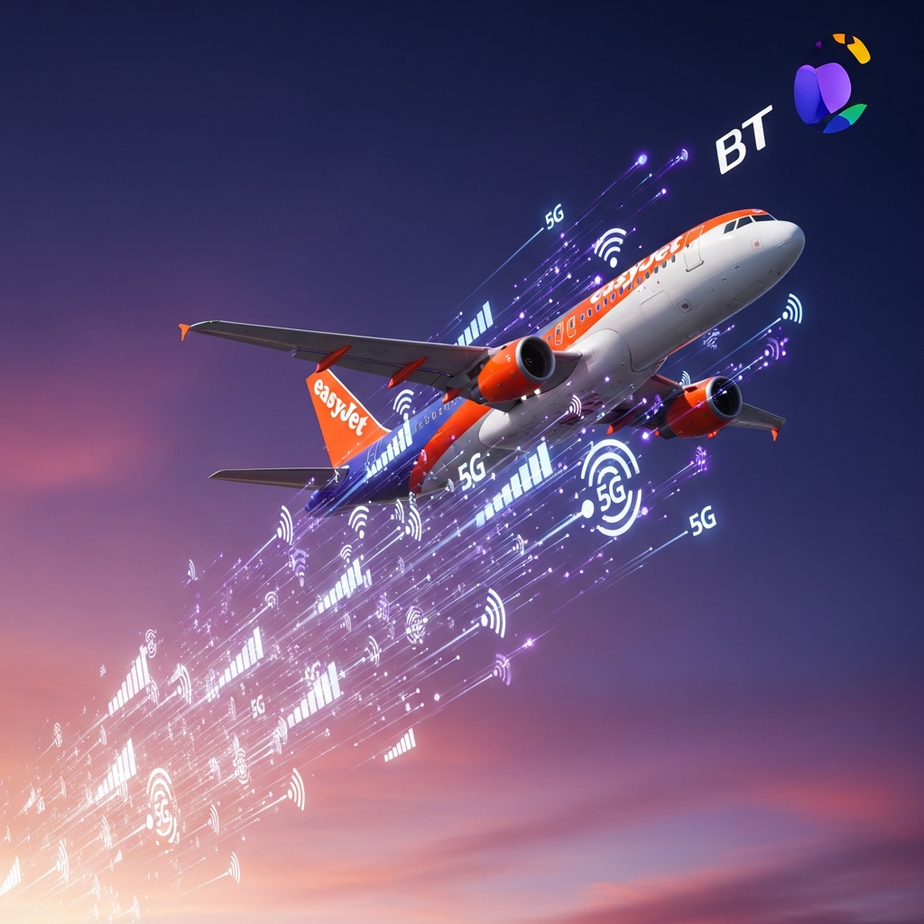
Managing the logistics of a major international airline is comparable to conducting a complex symphony where the musicians are moving at hundreds of miles per hour across different continents. For a carrier like EasyJet, ensuring that thousands of crew members, ground staff, and operational teams remain synchronized is not just a matter of convenience, it is a critical safety and operational requirement. In an industry defined by tight schedules and vast geographies, the backbone of this coordination is reliable communication. Recognizing this need, the airline has made a significant strategic move to overhaul its digital infrastructure. By partnering with a top-tier telecommunications giant, the new EasyJet mobile network initiative aims to transform how the airline connects its workforce across 35 countries. This collaboration with BT represents a shift toward a fully connected, data-driven aviation ecosystem designed to keep planes in the air and delays on the ground to a minimum.
Transforming Airline Operations with Digital Connectivity
The aviation industry has long moved past the days of paper manifests and manual radios. Today, a modern airline operates as a digital enterprise where data must flow freely between the cockpit, the cabin, the tarmac, and headquarters. The partnership between EasyJet and BT is designed to facilitate this seamless flow of information, ensuring that the airline’s vast operational network remains cohesive regardless of where a specific aircraft or crew member is located. At the heart of this transformation is the need for speed and reliability. When an aircraft lands in Paris, Berlin, or Milan, the turnaround time is crucial. Every minute an airplane sits at the gate is a minute it is not generating revenue. By equipping staff with high-speed connectivity, operational tasks that used to take precious minutes can now be completed instantly. This includes everything from filing flight reports and checking maintenance logs to updating crew rosters and passenger manifests. The scope of this connectivity upgrade is massive. It involves connecting thousands of mobile devices used by pilots and cabin crew. These devices, often referred to as Electronic Flight Bags (EFBs) for pilots and crew tablets for cabin staff, rely on a robust mobile signal to download real-time weather updates, flight plans, and safety notices. Without a reliable network, these digital tools become expensive paperweights, potentially causing delays while crews revert to slower manual processes.
The Role of Continuous Communication
Continuous communication is the glue that holds the airline schedule together. In the past, patchy signals or the high cost of data roaming could discourage staff from using mobile data freely while abroad. This created information silos where data entered into a device might not sync until the crew returned to a home base or found Wi-Fi. With the new infrastructure, data synchronization happens in real-time. This means: – Operations control centers have a live view of where every crew member and aircraft is.
– Maintenance teams can receive alerts about potential technical issues before the plane even reaches the gate.
– Ground crews can coordinate fueling and baggage handling with greater precision.
The Strategic Partnership Between EasyJet and BT
Choosing the right technology partner is a high-stakes decision for a company operating on the scale of EasyJet. The decision to tap BT for this massive undertaking highlights the importance of network reliability and global reach. As the owner of the EE network, which is widely recognized as the UK’s best mobile network, BT brings a level of infrastructure stability that is essential for mission-critical communications. This partnership is not merely about providing SIM cards for phones; it is about creating a bespoke enterprise mobility solution. The EasyJet mobile network strategy leverages BT’s extensive roaming agreements across Europe and beyond. Since EasyJet operates in over 150 airports across 35 countries, the ability for devices to seamlessly switch between local networks without losing connectivity or incurring prohibitive costs is vital.
Leveraging the EE Network Advantage
For the UK-based operations, the utilization of the EE network ensures that crew and ground staff have access to the fastest available 4G and 5G speeds. This domestic strength is the foundation of the airline’s connectivity. However, the true test of the partnership lies in its international capabilities. BT’s global footprint allows EasyJet to manage its mobile estate as a single, unified entity rather than dealing with dozens of different local carriers. This centralization simplifies IT management significantly. Instead of juggling contracts with providers in Spain, Italy, and France, EasyJet can rely on BT to manage the connectivity lifecycle. This reduces administrative overhead and ensures that if a connection issue arises in Amsterdam, there is a single point of contact to resolve it.
Empowering Crew and Staff Across Europe
The primary beneficiaries of this technological upgrade are the people on the front lines: the pilots and cabin crew. For years, the aviation industry has been transitioning toward the “paperless cockpit.” The heavy flight bags filled with navigation charts and manuals have been replaced by tablets. However, these digital tools are only as good as the data they can access. Under the new EasyJet mobile network arrangement, pilots can download the latest flight plans and weather charts instantly, even while sitting on the tarmac in a foreign country. This capability is essential for safety and efficiency. Weather patterns change rapidly, and having the most up-to-date meteorological data can help pilots plot smoother, more fuel-efficient routes. For cabin crew, connectivity empowers them to better serve passengers. Modern handheld devices allow crew members to access passenger information, manage on-board sales, and communicate with ground staff regarding special requests or connecting flights. When the crew is connected, they can solve problems proactively rather than reactively.
The Digital Flight Bag Revolution
The shift to Electronic Flight Bags (EFBs) has revolutionized how pilots work, but it has also increased the demand for bandwidth. An EFB application might need to download significant amounts of data prior to departure. Key benefits of reliable EFB connectivity include: – Instant updates to navigation charts and airport maps.
– Real-time calculation of takeoff performance data based on current weather and runway conditions.
– Immediate access to technical manuals for troubleshooting minor issues. By ensuring that these devices are always connected via the BT partnership, EasyJet ensures that its pilots have the best possible tools at their fingertips, enhancing both safety and operational decision-making.
Operational Efficiency and Cost Reduction
While the technical aspects of 4G and 5G are impressive, the business case for this partnership drives the bottom line. Operational efficiency in aviation is directly linked to cost management. Delays cost millions of dollars annually in fuel, overtime, and compensation fees. By streamlining communication, the EasyJet mobile network initiative helps mitigate these costs. One of the most significant areas of savings is in maintenance and turnaround times. Modern aircraft are equipped with thousands of sensors that monitor everything from engine temperature to tire pressure. When this data can be offloaded securely and quickly via a mobile network upon landing, engineering teams can prepare for necessary maintenance before they even physically inspect the plane. This concept, often called predictive maintenance, relies heavily on connectivity. If a sensor indicates a part is wearing out, the part can be waiting at the gate when the plane arrives. This prevents the “technical fault” delays that are frustrating for passengers and costly for airlines. Furthermore, the centralized management of mobile contracts through BT allows EasyJet to control roaming costs. In the past, data usage abroad could lead to “bill shock.” With a negotiated enterprise roaming agreement, the airline can predict its communication costs accurately, regardless of how much data a crew member uses in Geneva or Lisbon.
Why Enterprise Mobility is Critical for Aviation
The move by EasyJet to consolidate its communications infrastructure reflects a broader trend in the aviation industry. Airlines are increasingly becoming technology companies that happen to fly planes. The volume of data generated by a single flight is staggering, and the ability to process and act on that data is a competitive advantage. Enterprise mobility extends beyond the aircraft. It encompasses the entire workforce, including the engineers on the ground, the baggage handlers, and the administrative staff. When everyone is connected to the same secure network, collaboration improves. A delay in baggage handling can be instantly communicated to the cockpit, allowing the pilot to adjust the flight speed to make up time. Security is another critical factor. Public Wi-Fi networks at airports are notoriously insecure. By equipping staff with cellular data connections through a trusted provider like BT, EasyJet adds a layer of security to its operations. Corporate data remains encrypted and travels over a managed network, reducing the risk of cyber threats or data breaches.
Looking Ahead: The Future of Connected Flying
As telecommunications technology continues to evolve, the partnership between EasyJet and BT positions the airline to take advantage of future innovations. The rollout of 5G across Europe offers even greater potential for the aviation sector. With its lower latency and higher capacity, 5G could enable real-time video streaming between maintenance crews and remote experts, allowing for faster diagnostics of complex mechanical issues. We are also moving toward an era of the Internet of Things (IoT) in aviation. In the future, every seat, life vest, and galley cart could be a connected device, providing inventory data and status updates automatically. The EasyJet mobile network foundation being laid today is the prerequisite for these future advancements. The integration of artificial intelligence into airline operations will also depend on robust connectivity. AI algorithms that optimize flight paths or crew schedules need a constant stream of high-quality data. By securing a high-performance network partner now, EasyJet is future-proofing its operations against the increasing data demands of the next decade.
Summary and Final Thoughts
The collaboration between EasyJet and BT serves as a prime example of how digital transformation is reshaping traditional industries. By deploying a robust, pan-European mobile solution, the airline is addressing the complex logistical challenges of modern aviation head-on. This partnership goes beyond simple phone contracts; it is a strategic infrastructure upgrade that enhances safety, improves efficiency, and reduces operational costs. For the crew, it means having reliable tools that work anywhere in Europe. For the airline, it means better data visibility and control. Ultimately, for the passenger, it translates to a smoother travel experience with fewer delays and better service. As airlines continue to compete on efficiency and reliability, the quality of their digital networks will become just as important as the quality of their aircraft. To stay updated on how technology is revolutionizing travel and enterprise business, continue following the latest developments in aviation tech. The sky is no longer the limit when it comes to digital innovation.