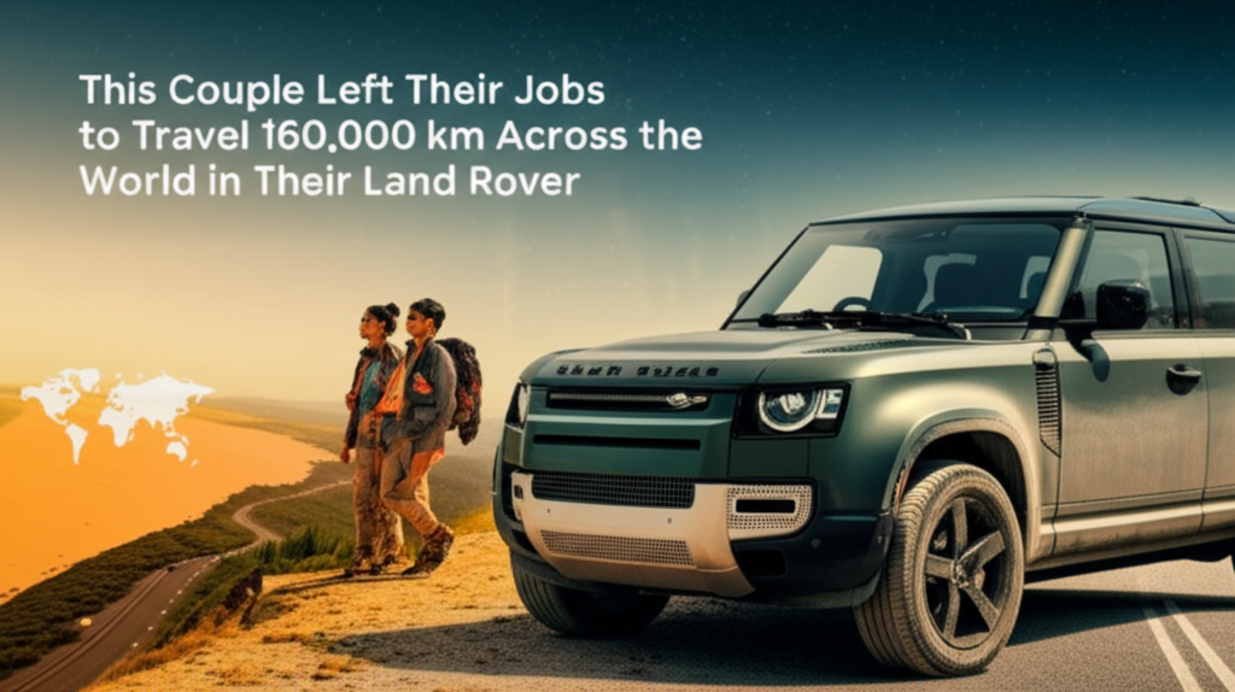
From Corporate Comfort to 160,000 km of Asphalt
Three years ago, 28‑year‑old Nick Chazee, then a software engineer at a bustling tech startup, and his partner Mathilde Vougny, a policy analyst at the United Nations, made a decision that would turn their lives upside down. They left the security of their jobs, sold their apartments, and set off in a Land Rover to traverse the globe. Over the course of the journey, they logged an astonishing 160,000 kilometres, crossing continents, cultures, and climates, proving that the world can fit in one vehicle if you’re willing to drive into the unknown.
Why the Leap? Motivations Behind the Wheels
For many of us, the idea of leaving a stable career feels like stepping into a black hole. But for Nick and Mathilde, the dream was simple: experience the planet on their terms, learn languages, and write a story that could inspire others. Their backgrounds gave them a unique lens—Nick’s tech savvy and Mathilde’s diplomatic experience meant they could navigate logistics and cross‑border bureaucracy with ease.
They also wanted to escape the 9‑to‑5 grind that had begun to feel suffocating. “The world is too big to stay in one office,” Mathilde reflected in a recent interview. “We wanted to see it firsthand, not just through a screen.”
Blueprint for 160,000 km: Planning the Road
Planning such an expedition required a blend of meticulous logistics and flexible improvisation. Here’s how they did it:
- Vehicle Selection: A Land Rover, renowned for off‑road resilience, was the obvious choice. The SUV’s four‑wheel drive, high ground clearance, and robust suspension meant they could tackle rugged terrain without constant maintenance.
- Route Mapping: Instead of a straight line from point A to B, they mapped a circular route that looped through South America, Africa, Asia, and back to Europe. This strategy maximised scenic variety and avoided long stretches of empty highway.
- Budget Forecasting: They set a monthly budget of $4,000, covering fuel, maintenance, visas, and a small emergency reserve. By using local currencies where possible and staying in hostels or couchsurfing, they kept costs in check.
- Documentation: The couple pre‑filled over 30 visa applications and secured travel insurance that covered both health and vehicle damage.
- Gear Checklist: From spare tires and a hydraulic jack to a solar charger and a basic first‑aid kit, everything was accounted for. “You’re only as good as your spare parts,” Nick joked.
On the Road: 160,000 Kilometres of Unfiltered Life
The journey unfolded in phases, each with its own character and set of challenges.
Phase 1: The New World and the Wild Atlantic
Starting in the Amazon basin, the couple encountered lush rainforests, bustling indigenous markets, and the occasional river crossing that required a temporary boat.
In the Atlantic, they navigated the winding roads of Cape Verde, where the salty sea air and music made long drives feel like a festival. A spontaneous stop at a remote fishing village turned into an impromptu cooking lesson in shrimp stew.
Phase 2: The Desert Pulse of Africa
Driving through the Sahara was a test of endurance. High temperatures and sandstorms demanded constant vigilance. The duo learned to read the stars at night for navigation, a skill that proved invaluable during a GPS outage.
In Morocco, they were welcomed by a nomad family who invited them to a traditional ksar (fortified village). That night, they shared stories and a cup of mint tea, cementing the idea that travel is as much about connections as it is about destinations.
Phase 3: The Himalayas and Beyond
Crossing into South Asia, the Land Rover tackled the high‑altitude passes of the Himalayas. The thin air forced them to pace themselves and adapt their driving style, learning to balance speed with safety.
In Nepal, they joined a local trekking group for a week, experiencing the serenity of mountain meadows before returning to the road to head towards the Arabian Sea.
Phase 4: Return to the Old Continent
Back in Europe, the journey slowed to a more relaxed tempo. The couple spent months in Italy and France, savoring regional cuisine, learning culinary techniques, and documenting their adventures through a popular travel blog. Their posts, peppered with vivid descriptions and practical advice, attracted a community of like‑minded travelers.
Trials on the Trail: Challenges That Shaped Their Story
Every odyssey has its share of setbacks, and Nick & Mathilde’s wasn’t an exception.
- Mechanical Failures: A broken alternator in a remote Mexican town forced them to improvise a solar panel setup for a week.
- Visa Hurdles: A delayed visa in a Southeast Asian country left them stranded overnight, highlighting the importance of buffer days in itineraries.
- Health Emergencies: Mathilde suffered a severe allergic reaction to local food in India; the couple relied on a nearby clinic and their travel insurance to get treatment.
- Financial Crunches: Unexpected vehicle repairs in Kenya briefly depleted their emergency fund, prompting them to take on short freelance gigs online.
Each obstacle turned into a learning moment, reinforcing their adaptability and deepening their bond.
Lessons from 160,000 Kilometres: What We Can Take Home
- Plan, but Stay Flexible: No route is immune to change. Build in contingency days and be prepared to pivot.
- Respect Local Cultures: A simple “please” and a willingness to learn can open doors that a passport never could.
- Invest in a Reliable Vehicle: The Land Rover’s durability proved its worth time and again.
- Keep a Record: Blogging or vlogging not only documents your journey but can create a passive income stream.
- Health Is Wealth: Prioritize vaccinations, carry a well-stocked first-aid kit, and have comprehensive insurance.
Ready to Hit the Road? Your First 160,000 Kilometre Blueprint
If the story of Nick and Mathilde resonates, you might consider planning your own global trek. Start with a clear “why,” then move into the logistics:
- Choose a vehicle suited to your terrain.
- Map a loop that maximises cultural diversity while minimising long-haul stretches.
- Build a budget with a 10‑15% buffer.
- Learn essential languages or phrases for each region.
- Document every step; it’s your legacy and your income source.
Remember, the world isn’t a destination you arrive at; it’s a story you write with every mile you cover.
When Nick and Mathilde returned home, they were not the same people who had left their offices. The experience reshaped their careers, their worldview, and their relationship. Their Land Rover, once a mode of transport, became a vessel of discovery—a testament that the greatest journeys are those that challenge and inspire.