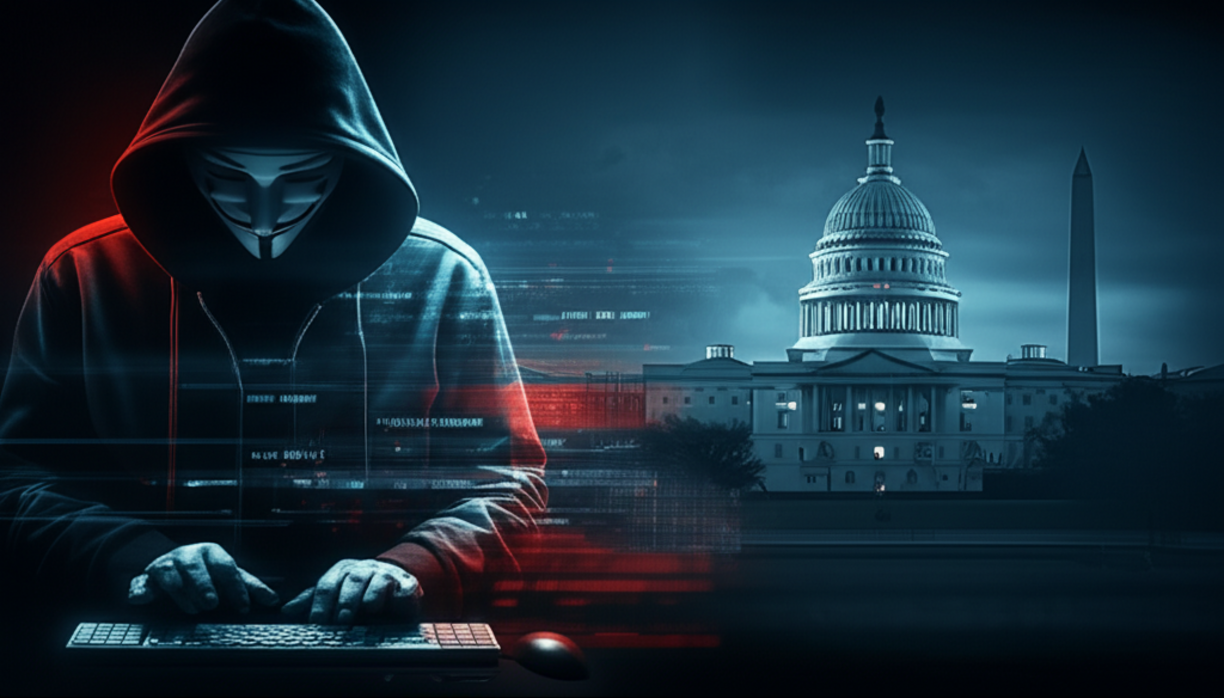
China’s Impersonation Hack Strikes at the Heart of How Washington Works
In a stark reminder that geopolitics now play out as much in the digital realm as on the campaign trail, intelligence officials confirmed that a group of hackers with ties to Beijing executed a sophisticated impersonation attack against the Chairman of a key U.S. House committee. By posing as the committee’s leader, the intruders sought to gain access to sensitive legislative files, communications, and confidential meeting schedules—information that could shape national policy and international negotiations.
How the Attack Was Orchestrated
The operation began with an infiltration of the chairman’s private email account. Using a combination of phishing, social engineering, and zero‑day exploits, the attackers bypassed multi‑factor authentication to acquire a credential that granted them administrative privileges. Once inside, they staged a series of emails and calendar invites that appeared to originate from the chairman’s inbox, directing staffers to share documents and coordinate meeting logistics.
While the phishing component was relatively standard, the attackers’ ability to convincingly emulate the chairman’s writing style and cadence demonstrated a high level of sophistication. Analysts attribute this to the use of advanced natural‑language processing models—likely a custom version of generative AI—that were trained on a dataset of public speeches, emails, and media transcripts.
Why Washington Matters
The committee in question holds jurisdiction over a critical sector—whether that be defense procurement, intelligence oversight, or energy regulation. Its decisions ripple outward, affecting contractors, foreign allies, and the everyday lives of Americans. By masquerading as the chairman, the hackers placed themselves in the levers of power, potentially steering deliberations, shaping policy drafts, and even influencing votes.
Such a breach is not merely a technical failure; it is a strategic violation of trust. The House operates on a foundation of confidentiality, where lawmakers can candidly discuss policy options. When that foundation is shaken by foreign actors, the entire legislative process is at risk.
Immediate Fallout and Congressional Response
Once the breach was detected, the committee’s security team launched an incident response that included isolating compromised accounts, conducting a forensic audit, and notifying the Office of the Inspector General. Congress, in turn, convened an emergency hearing to assess the damage and to discuss the adequacy of existing cybersecurity protocols.
Senator Maria Alvarez, a vocal advocate for stronger cyber defenses, called the attack “a chilling demonstration of how a state actor can infiltrate the core of our democratic institutions.” She urged bipartisan legislation to mandate regular third‑party penetration testing, enforce stricter authentication standards for all congressional offices, and increase funding for cyber threat intelligence.
Legislative Measures on the Horizon
Several bills are now on the floor that seek to address the gaps exposed by the incident. Among them is the Cyber Resilience for Congress Act, which proposes the establishment of a dedicated cyber task force within the Office of the Secretary of Defense, tasked with coordinating defense strategies across legislative and executive branches.
Another initiative, the Digital Security Enhancement Act, focuses specifically on the adoption of hardware‑based authentication modules for all congressional staff and contractors. By moving beyond software‑only solutions, lawmakers hope to reduce the risk of credential theft in future attacks.
The Broader Implications for U.S. National Security
Beyond the immediate threat to a single committee, this incident signals a broader trend of cyber espionage that targets political elites. Cybersecurity experts warn that such attacks could be the prelude to more intrusive tactics—such as influencing public opinion through targeted misinformation campaigns or manipulating election infrastructure.
Historically, the U.S. has faced a spectrum of foreign cyber threats ranging from state‑backed hacking to non‑state actors. However, the level of sophistication demonstrated in this case—combining zero‑day exploits with AI‑generated mimicry—marks a new era in which cyber adversaries can effectively impersonate high‑ranking officials.
Impacts on Foreign Policy and Diplomacy
In the realm of foreign policy, the committee’s oversight role includes vetting defense contracts and ensuring that U.S. military aid aligns with national security objectives. If a foreign hacker can insert themselves into these deliberations, they may influence the allocation of billions of dollars toward arms purchases or aid programs in ways that serve Beijing’s strategic interests.
Moreover, the mere perception of vulnerability can erode international confidence in U.S. institutions. Allies may become wary of sharing sensitive information, while adversaries may exploit the incident to justify their own aggressive cyber operations.
Strengthening the Defenses: Lessons Learned
Several key takeaways emerge from the incident:
- Zero Trust Architecture Is Not Optional. Every congressional office must adopt a zero‑trust model, where no device or user is inherently trusted.
- Continuous Monitoring Is Essential. Real‑time anomaly detection can catch unusual login patterns or atypical email activity before a breach escalates.
- Human Factors Matter. Comprehensive training on phishing and social engineering should be mandatory for all staff, especially those in leadership roles.
- AI Governance Needs to Be Established. As adversaries use generative AI for impersonation, defenders must develop AI‑based detection systems that can spot synthetic communication patterns.
Looking Forward: The Road to Resilience
The U.S. Congress faces an urgent need to reimagine its cyber posture. The path forward involves not just patching vulnerabilities but fostering a culture of security that permeates every layer of governance.
Stakeholders from the Department of Homeland Security, the Office of the Inspector General, and private sector cybersecurity firms are already collaborating to share threat intelligence and best practices. These partnerships are essential for creating a unified defense against future impersonation attempts.
Call to Action for Policymakers and Practitioners
Policymakers must prioritize cyber resilience by allocating resources for advanced threat detection tools, expanding workforce training, and enacting robust legislation that holds institutions accountable for cybersecurity failures.
Practitioners—whether they are congressional IT staff, cybersecurity analysts, or researchers—need to adopt a proactive stance, continuously scanning for new vulnerabilities and developing countermeasures that anticipate evolving threat vectors.
Conclusion: A Wake‑Up Call for America
The China‑linked impersonation hack against a U.S. House committee chairman is more than a technical breach; it is a strategic challenge that threatens the very foundations of democratic governance. As Washington grapples with this new reality, it must act decisively to strengthen its cyber defenses, protect its decision‑making processes, and safeguard the national interest.
In the face of ever‑evolving cyber adversaries, the imperative is clear: the U.S. must transform its approach to cyber security from reactive firefighting to proactive resilience. Only then can the heart of Washington beat strong and secure in the digital age.