What Are AI-Powered License Plate Readers and How Do They Work?
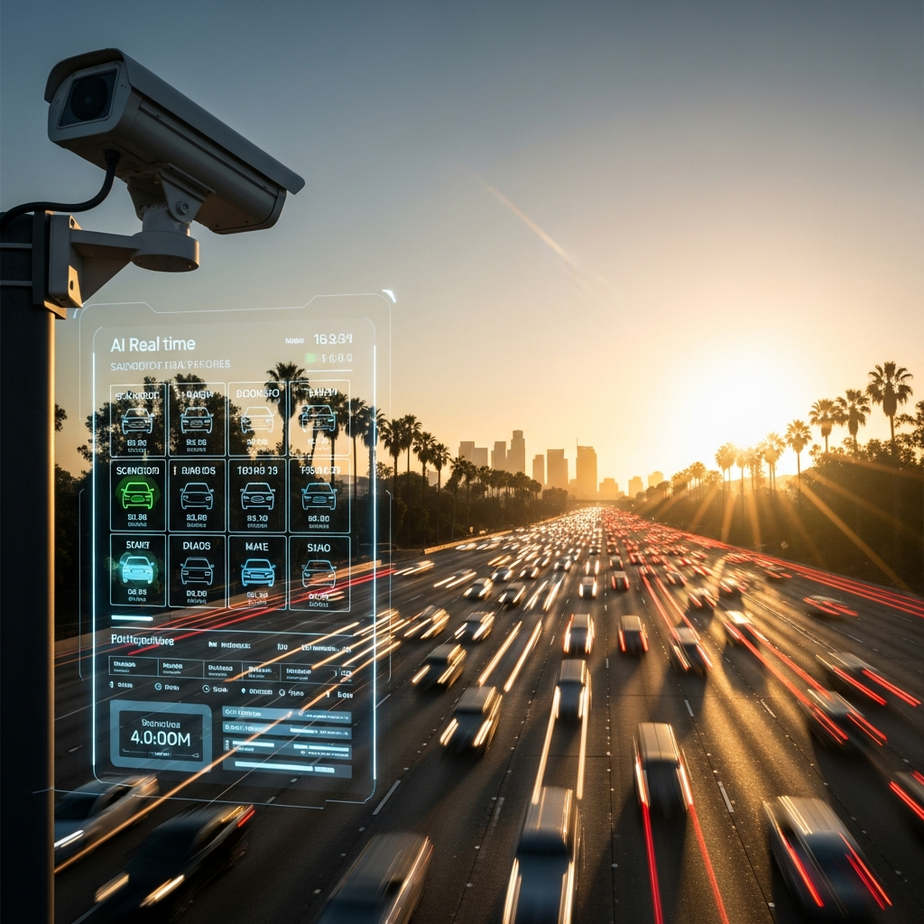
At first glance, an Automated License Plate Reader (ALPR) looks like a simple, unassuming camera mounted on a utility pole or police car. But behind the lens is a sophisticated system that has evolved dramatically in recent years. This technology represents a significant leap from old-school traffic cameras, and understanding how it works is key to grasping the ongoing debate.
These systems are more than just cameras; they are high-speed, data-gathering networks designed to capture and analyze information about every vehicle that passes by, 24/7.
From Simple Cameras to AI Super-Scanners
Early versions of license plate readers did one thing: they captured an image of a license plate and used optical character recognition (OCR) to convert the letters and numbers into digital text. This text was then checked against a “hot list” of stolen or wanted vehicles. It was a useful but limited tool.
Today’s systems are powered by artificial intelligence. They don’t just read the plate; they analyze the entire vehicle. Modern ALPRs, like those from industry leader Flock Safety, can identify a vehicle’s make, model, color, and even unique features like roof racks, bumper stickers, or damage. This transforms a simple plate number into a rich, searchable profile of a vehicle.
This AI-driven capability means law enforcement can search for vehicles based on descriptive characteristics, not just a plate number. For example, an officer could search for “all blue Ford F-150s with a ladder rack seen in the north side of town between 2 AM and 4 AM.” This creates a powerful, and to some, unsettling, database of vehicle movements.
The Network Effect: A Web of Surveillance
A single ALPR camera provides a snapshot in time. However, the real power comes from networking hundreds or thousands of these devices together. Companies like Flock Safety lease their cameras not only to police departments but also to private entities like homeowners’ associations (HOAs) and business districts.
When these entities agree to share their data with local law enforcement, it creates a vast, interconnected surveillance web. A vehicle’s journey can be tracked across city lines and through different jurisdictions, creating a detailed timeline of its movements. This network effect is a primary reason why **California cities are going all in on controversial AI license plate readers**; they see it as a way to pool resources and multiply their investigative reach.
The Promise of ALPRs: Why California Cities Are Embracing the Tech
City officials and law enforcement agencies across California argue that ALPRs are not just a luxury but a necessary tool for modern policing. Faced with staffing shortages, rising property crime, and complex criminal investigations, they view this technology as an indispensable force multiplier. The investment, often running into millions of dollars, is justified by promises of safer streets and faster case-solving.
Proponents point to a growing list of success stories, from recovering stolen family minivans to tracking down suspects in violent crimes. For them, the benefits to public safety are clear, tangible, and well worth the cost.
A Force Multiplier for Law Enforcement
Police departments argue that ALPRs allow them to do more with less. A single officer can’t be everywhere at once, but a network of cameras can monitor countless intersections and roadways simultaneously. When a stolen vehicle or a car linked to a crime passes a camera, the system sends an instant alert to patrol officers, complete with the vehicle’s location and direction of travel.
This can dramatically reduce response times. A car stolen from a driveway might be recovered in hours instead of days or weeks, often before it can be used in another crime. For example, police in Fresno, a city that has heavily invested in ALPRs, frequently credit the system with recovering hundreds of stolen vehicles and leading to numerous arrests that might not have happened otherwise.
Solving Crimes Beyond Vehicle Theft
The value of ALPRs extends far beyond locating stolen cars. The data they collect has become a critical component in investigating a wide range of criminal activity.
Consider these common scenarios:
– An Amber Alert is issued for a missing child. Law enforcement can instantly search the ALPR network for the suspect’s license plate, creating a real-time map of their movements and helping to pinpoint their location.
– A string of home burglaries plagues a neighborhood. Detectives can analyze ALPR data from the times of the break-ins to identify vehicles that were present for each incident, revealing a pattern and potential suspect vehicle.
– Following a shooting, witnesses provide a vague description of the getaway car. Investigators can search the database for vehicles matching the description that were near the scene, narrowing a massive pool of possibilities down to a handful of leads.
This ability to reconstruct events and connect disparate pieces of information is a powerful draw for investigators. It’s a significant factor in why **California cities are going all in on controversial AI license plate readers**, viewing them as a game-changer for detective work.
The Controversy: Privacy, Bias, and Mass Surveillance
While the public safety benefits are frequently highlighted, the rapid expansion of ALPR networks has ignited a fierce backlash from privacy advocates, civil liberties organizations, and concerned citizens. The core of the controversy lies in a fundamental question: How much surveillance are we willing to accept in the name of security?
Critics argue that these systems create a digital dragnet, tracking the movements of millions of law-abiding Californians without any suspicion of wrongdoing. The concerns are not abstract; they touch on issues of data security, potential for misuse, and the erosion of personal freedoms in the digital age.
A Digital Map of Your Daily Life
The most significant privacy concern is the indiscriminate nature of data collection. ALPR systems capture information on every single vehicle that passes, not just those on a hot list. This means a detailed record is created of your daily life.
Your commute to work, your trip to the grocery store, your visit to a doctor’s office, a political rally, or a place of worship—all these movements are logged, timestamped, and stored in a database. Data retention policies vary, with some agencies storing this sensitive location information for 30 days, 90 days, or even a year or more. For many, this constant, passive tracking feels like a step too far, transforming public roads into spaces of perpetual monitoring.
The Risk of Misidentification and Bias
Technology is not infallible. AI-powered systems can and do make mistakes. An OCR error could misread a license plate, flagging an innocent person’s car as stolen or wanted. This can lead to dangerous situations, such as high-risk traffic stops where an unsuspecting driver is confronted by police with drawn weapons. While rare, these errors have devastating consequences for those wrongly targeted.
Furthermore, there are concerns about inherent bias. The placement of ALPR cameras is not always uniform. If cameras are disproportionately concentrated in lower-income neighborhoods or communities of color, it can lead to over-policing and reinforce existing social inequalities. This technological bias can result in residents of certain areas being subjected to a higher degree of surveillance than others.
Data Security and the Potential for Abuse
Collecting a massive trove of location data creates an attractive target for bad actors. A data breach could expose the movements of millions of people, including politicians, activists, judges, and domestic violence survivors, to hackers or foreign governments. The security of these databases is a paramount concern.
Beyond external threats, there is the potential for internal misuse. Unchecked access could allow individuals to use the system to track a former spouse, a business rival, or a political opponent. Organizations like the Electronic Frontier Foundation (EFF) have documented cases of law enforcement officers abusing access to sensitive databases. Without stringent oversight, robust audit trails, and strict access controls, the potential for abuse is significant, making it clear why so many are wary as **California cities are going all in on controversial AI license plate readers**.
The Legal and Legislative Landscape in California
The deployment of ALPR technology in California is not happening in a legal vacuum. The state has laws on the books, and ongoing debates at the local and state levels continue to shape how these systems can be used. However, critics argue that the existing legal framework has not kept pace with the rapid advancement and proliferation of the technology.
Understanding the rules—and their limitations—is crucial for communities grappling with the decision to adopt or expand ALPR networks. The central tension is between providing law enforcement with an effective tool and establishing meaningful safeguards to protect civil liberties.
California’s State-Level Regulations
California Senate Bill 34 (SB 34), passed in 2015, established some foundational rules for ALPR usage by public agencies. The law requires any public agency that uses ALPRs to:
1. Maintain a privacy and usage policy that is available to the public.
2. Specify the purposes for which ALPR data will be used.
3. Define who has access to the system and the data it collects.
4. Establish a process for regular audits to ensure the system is used correctly.
5. Set a data retention policy, outlining how long data will be stored.
While SB 34 was a step toward transparency, privacy advocates argue it is too permissive. The law does not set a maximum data retention period, leaving it up to individual agencies. It also does not strictly limit how the data can be shared with other agencies, including federal entities like Immigration and Customs Enforcement (ICE), a major point of contention in many California communities.
The Battle in City Hall
Much of the real decision-making power rests with local city councils. It is at this level that multi-million dollar contracts with companies like Flock Safety are debated and approved. These meetings have become a key battleground for the debate over surveillance.
Often, police departments present the technology as a turnkey solution to rising crime rates, backed by compelling success stories. On the other side, organizations like the ACLU and local community groups push for greater transparency, stronger privacy protections, and a more thorough public discussion about the long-term implications. The outcome often depends on the specific political dynamics of a city and the level of engagement from its residents. The fact that so many councils are approving these systems shows that **California cities are going all in on controversial AI license plate readers**, often despite vocal opposition.
Striking a Balance: The Path Forward
The debate over AI-powered license plate readers is not a simple binary choice between safety and privacy. It is a complex issue with valid arguments on both sides. The technology is undeniably powerful, offering law enforcement unprecedented capabilities to solve crimes and protect the public. At the same time, it creates an infrastructure for mass surveillance that carries significant risks to personal freedom and equity. As **California cities are going all in on controversial AI license plate readers**, the challenge lies in finding a responsible path forward.
This technology is here to stay, but its implementation is not set in stone. The key moving forward will be public engagement and the demand for strong, legally binding safeguards. Communities must weigh the advertised benefits against the tangible costs to privacy, ensuring that any deployment of ALPRs is accompanied by ironclad policies that prioritize transparency, accountability, and the protection of civil liberties for everyone.
The conversation about surveillance technology is happening right now in city council meetings and community forums across the state. This is your opportunity to learn about the policies being proposed in your neighborhood. Stay informed, ask critical questions, and make your voice heard on the future of policing and privacy where you live.