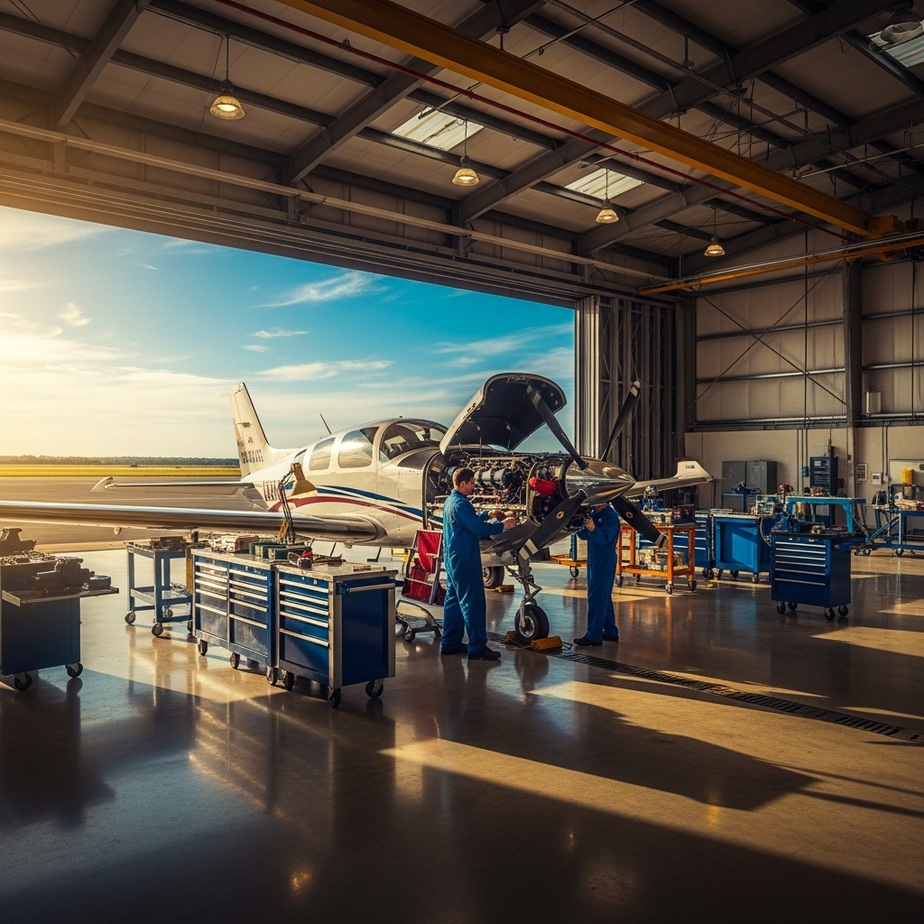
There is a certain romance attached to aviation that captures the imagination of almost everyone. When we look up and see a small plane cutting through the blue sky or a jet leaving a white contrail at high altitude, we usually think about the pilot’s skill or the passengers’ destination. Rarely do our thoughts drift to the ground level, where the real work of keeping those machines airworthy takes place. Yet, next door to the Shenandoah Valley Regional Airport in Weyer’s Cave, a dedicated aircraft maintenance garage keeps local planes in the air through a combination of mechanical expertise, technological precision, and unwavering dedication to safety. Without the meticulous work performed in hangars like this one, the skies would be a much more dangerous place. This facility represents the unseen backbone of general aviation, ensuring that every takeoff results in a safe landing.
The Critical Role of Routine Aircraft Maintenance
Aviation safety is built on a foundation of redundancy and prevention. Unlike a car, which can simply pull over to the side of the road if the engine sputters or a tire goes flat, an airplane operates in an environment where mechanical failure is not an option. This is why aircraft maintenance is governed by strict schedules and rigorous standards that far exceed those of the automotive world. For the technicians working near Weyer’s Cave, the day often begins with a scheduled inspection. In the world of aviation, maintenance is generally divided into two categories: scheduled and unscheduled. Scheduled maintenance is the lifeblood of the industry. Every aircraft, from the smallest single-engine Cessna to the largest corporate jet, must undergo specific checks based on flight hours or calendar time. The most common of these is the annual inspection. This is a comprehensive checkup where the aircraft is essentially opened up, inspected, tested, and serviced. Technicians look for signs of corrosion, metal fatigue, electrical issues, and engine wear. It is a preventative process designed to catch potential problems long before they become safety hazards. By adhering to these strict schedules, the team ensures that pilots can trust their machines implicitly.
Understanding the “100-Hour” Inspection
For aircraft that are used for flight instruction or carried for hire, the requirements are even more stringent. These planes must undergo what is known as a 100-hour inspection. This means that for every 100 hours the engine runs, it must be brought into the shop for a thorough review. During this process, mechanics perform several critical tasks: – Changing the oil and cutting open the oil filter to inspect for metal shavings, which can indicate internal engine wear.
– Checking cylinder compression to ensure the engine is producing power efficiently and safely.
– Inspecting the propeller for nicks or cracks that could lead to catastrophic failure under the immense stress of flight.
– Testing the landing gear retraction and extension mechanisms to ensure reliability. This high frequency of service ensures that the planes used to train the next generation of pilots remains in peak condition, regardless of how often they leave the tarmac.
Technology Meets Old-School Craftsmanship
The modern aircraft maintenance garage is a unique blend of cutting-edge technology and traditional mechanical craftsmanship. While the fundamental principles of flight haven’t changed, the systems that manage flight have evolved drastically. The technicians at the Shenandoah Valley facility must be fluent in both languages. On one side of the hangar, you might find a mechanic using a torque wrench to precisely tighten a cylinder head bolt on a vintage piston engine. This requires a tactile feel and a deep understanding of metallurgy and mechanics. It is dirty, physical work that requires grease, muscle, and patience. On the other side of the hangar, a technician might be hooked up to a laptop, diagnosing a glitch in a glass cockpit display or updating the firmware on a GPS navigation unit. Modern general aviation aircraft are increasingly equipped with sophisticated avionics that rival those found in commercial airliners. These systems provide pilots with weather data, traffic alerts, and terrain warnings, but they require a different set of skills to maintain.
Advanced Diagnostics and Non-Destructive Testing
One of the most fascinating aspects of modern maintenance is the use of non-destructive testing (NDT). This allows mechanics to “see” inside the metal parts of an airplane without taking them apart or damaging them. Techniques used in the industry include: – Ultrasound testing to detect internal cracks or voids in solid materials.
– Eddy current testing to identify surface and near-surface defects in conductive materials.
– Magnetic particle inspection to find flaws in steel parts like crankshafts and landing gear struts.
– Borescope inspections, which involve snake-like cameras that can be inserted into engine cylinders to inspect valves and pistons without removing the cylinders. These technologies allow the team to make informed decisions about the airworthiness of a part, saving aircraft owners money on unnecessary replacements while ensuring that safety is never compromised.
The Regulatory Landscape of Aviation Safety
The work performed at any aircraft maintenance garage is heavily regulated by the Federal Aviation Administration (FAA). This oversight ensures that standards remain uniform across the country. The technicians working in Weyer’s Cave operate under a strict code of ethics and federal law. Every repair, every replacement part, and every inspection must be documented in the aircraft’s logbooks. These logbooks are the legal history of the airplane. If a maintenance task is not recorded, in the eyes of the FAA, it was never done. This level of bureaucracy might seem tedious to an outsider, but it is essential for safety. It creates a chain of custody and accountability that protects everyone involved. According to the Federal Aviation Administration, the standards set forth in Part 43 of the Federal Aviation Regulations dictate exactly who can work on an aircraft and how that work must be performed. This ensures that a pilot flying a plane maintained in Virginia can have confidence that it meets the same safety standards as a plane maintained in California.
The Airframe and Powerplant (A&P) Mechanic
The individuals performing this work are not just “grease monkeys.” They are highly trained professionals known as Airframe and Powerplant (A&P) mechanics. Earning this certification requires years of study, practical experience, and a series of grueling written, oral, and practical exams. An A&P mechanic carries a tremendous amount of responsibility. When they sign off on a repair, they are putting their license and their reputation on the line. They are certifying that the aircraft is safe for flight. This weight of responsibility creates a culture of precision and integrity within the maintenance community. There is no room for “good enough” in aviation; it is either right, or it is grounded.
Serving the Shenandoah Valley Community
The impact of the maintenance facility near Shenandoah Valley Regional Airport extends far beyond the hangar walls. General aviation is a vital economic engine for the region, and this garage is what keeps that engine running. Local businesses rely on aircraft for travel and transport. Agricultural operations depend on crop dusters to manage fields. Medical transport helicopters and fixed-wing ambulances provide life-saving connections to major hospitals. All of these operators rely on the local maintenance team to keep their fleets operational. If a local pilot discovers a rough-running magneto during a pre-flight check, having a reputable shop nearby means the difference between a cancelled trip and a quick repair. For transient pilots passing through the beautiful Shenandoah Valley, knowing there is expert help available provides peace of mind.
Building Trust with Pilots
The relationship between a pilot and their mechanic is one of the most important relationships in aviation. It is built on trust. A pilot needs to know that when they push the throttle forward, the engine will deliver power. They need to know that the control cables are tensioned correctly and that the brakes will hold upon landing. The technicians in Weyer’s Cave understand this deeply. Many of them are aviation enthusiasts themselves. They understand the joy of flight and the absolute necessity of safety. They treat every airplane they touch as if their own families were going to be passengers. This personal investment in the quality of their work is what sets a local shop apart from a faceless corporate entity.
The Future of Aircraft Maintenance
As aviation technology continues to advance, the maintenance industry is adapting. We are seeing a shift toward predictive maintenance, where sensors on the aircraft transmit real-time data to the ground, alerting mechanics to potential issues before the plane even lands. However, despite these advancements, the need for skilled human hands remains constant. Computers can diagnose a fault, but they cannot replace a worn tire, re-pack a wheel bearing, or safety-wire a bolt. The tactile skill of the mechanic remains irreplaceable. The facility next to Shenandoah Valley Regional Airport is positioning itself to handle these changes. By investing in training and new equipment, they are ensuring that they can service the next generation of aircraft, including composite airframes and electric propulsion systems, should they become common in general aviation.
The Unseen Heroes of the Sky
While pilots often get the glory and the crisp uniforms, the technicians in the grease-stained coveralls are the true guardians of the sky. Their work is often performed in hot hangars in the summer and on freezing tarmacs in the winter. It involves contorting into tight spaces, dealing with hazardous chemicals, and managing complex regulatory paperwork. Yet, ask any of them why they do it, and the answer is usually the same: a love for aviation. There is a profound satisfaction in taking a broken machine, diagnosing the problem, fixing it, and then watching it lift off the runway, defying gravity once again. The team working next door to Shenandoah Valley Regional Airport in Weyer’s Cave exemplifies this spirit. They are a critical part of the local infrastructure, ensuring that commerce can flow, emergency services can operate, and enthusiasts can enjoy the freedom of flight. In a world that is increasingly automated and disconnected, the work of an aircraft maintenance garage serves as a reminder of the importance of skilled trades. It is a profession where integrity is paramount and where the quality of work has direct, life-or-death consequences. Next time you hear the drone of a single-engine plane overhead, take a moment to think about the team on the ground who made that flight possible. Their diligence, expertise, and commitment to safety are what keep local planes in the air and bring pilots home safely to their families. If you are a pilot in the region or simply an aviation enthusiast interested in how these machines remain airworthy, taking a closer look at the maintenance process can be incredibly educational. Understanding the mechanical reality of flight not only deepens your appreciation for the technology but also for the dedicated men and women who keep the propellers turning. Whether you are looking for a routine inspection or major repairs, trusting your aircraft to a team that values safety above all else is the most important decision you can make.