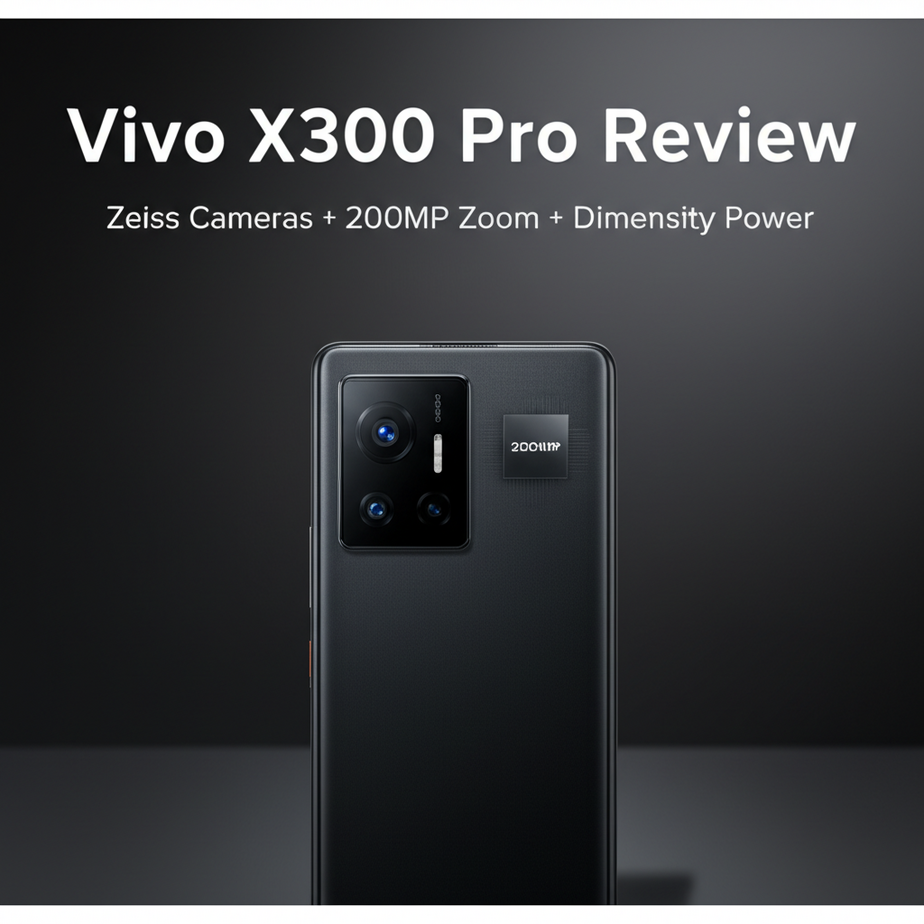
For photography enthusiasts and professional content creators alike, the latest flagship from Vivo, the X300 Pro, has positioned itself as a formidable competitor in the premium smartphone market. Boasting Zeiss‑tuned sensors, a 200 MP periscope zoom, and the robust MediaTek Dimensity 9500 chipset, this device promises a level of imaging quality that was previously the domain of high‑end DSLRs and mirrorless cameras. Below is a deep‑dive into how the X300 Pro stacks up in real‑world scenarios, from everyday snaps to studio‑grade photography, and whether its $900 price tag delivers genuine value.
Design & Build Quality
The X300 Pro continues Vivo’s trend of sleek, glass‑and‑metal aesthetics, featuring a 6.73‑inch OLED panel with a 120 Hz refresh rate and 2400 × 1080 resolution. The device’s chassis feels premium, with a tempered glass front and a matte aluminum frame that resists fingerprints. One standout design element is the camera module—an unmistakable Zeiss‑branded lens cluster that’s larger than typical smartphone arrays, giving the phone a rugged yet sophisticated look.
Weight and ergonomics are on the right side of the spectrum. At roughly 210 g, the X300 Pro feels substantial but remains comfortable to hold for extended photo‑taking sessions. The rear placement of the triple‑camera module, while bulkier than most competitors, does not compromise the device’s balance or pocketability.
Display Performance
The 6.73‑inch OLED panel delivers vibrant colors and deep blacks, with peak brightness levels reaching 1200 nits under direct sunlight—a boon for outdoor photography. The 120 Hz refresh rate offers a smooth scrolling experience, while adaptive HDR10+ support ensures dynamic content looks its best. From a camera perspective, the screen’s color accuracy and low‑glare coating make it ideal for reviewing images in various lighting conditions.
Camera System – Zeiss Precision Meets 200 MP Zoom
Vivo has once again partnered with Zeiss to deliver a camera system that feels like a DSLR in your pocket. The primary sensor is a 50 MP Sony IMX700, Zeiss‑tuned for sharpness, contrast, and color fidelity. Coupled with a 12 MP ultrawide and a 20 MP telephoto, the camera setup covers most photography scenarios.
However, the real headline‑maker is the 200 MP periscope zoom lens, which offers an optical zoom range of 10× and a digital zoom of up to 200×. The high‑resolution sensor allows the phone to capture incredibly detailed shots, but the software must perform sophisticated pixel‑binning and noise reduction to deliver usable images, especially in low‑light conditions.
Low‑Light Performance
In dim environments, the Zeiss‑tuned 50 MP sensor shines. The X300 Pro’s Night Mode leverages a multi‑frame blending algorithm, producing images with reduced grain and better detail than most rivals. While the 200 MP periscope can struggle with noise at the extremes of its zoom range, the phone’s AI-driven noise suppression brings surprisingly clean results, especially when paired with the 2‑to‑3x optical zoom that keeps sensor data high.
Zoom Capabilities
The 200 MP periscope offers a unique blend of optical and computational power. At 10× optical zoom, the device captures crisp subjects—think portrait photography or distant wildlife—with minimal distortion. The digital zoom, when pushed beyond 10×, is supported by AI interpolation, producing images that retain fine detail but inevitably lose some natural texture. For casual users, the 3‑to‑5× range is more than sufficient for typical street photography.
Video Recording
Video capabilities remain solid: 4K recording at 30/60 fps and 1080 p at 240 fps for slow motion. The Zeiss‑cooled sensor helps maintain clarity during fast zoom changes, and the 4K HDR10+ capture ensures color accuracy for professional workflows.
Performance – The Dimensity 9500 Advantage
Under the hood, the X300 Pro is powered by MediaTek’s Dimensity 9500, an octa‑core SoC that balances power consumption with raw performance. The A78+ CPU cores handle multitasking effortlessly, while the 4 GHz Cortex‑X2 leads deliver snappy gaming and content creation.
Integrated 16 GB of LPDDR5 memory ensures that even heavy multitasking—simultaneously running Adobe Lightroom, Photoshop Express, and a video editing app—stays smooth. Benchmarks place the Dimensity 9500 ahead of Qualcomm’s Snapdragon 8 Gen 1 in single‑core tests but slightly behind in thermal throttling scenarios.
Thermal Management
During prolonged heavy usage—such as continuous video recording or gaming—the X300 Pro can reach temperatures that trigger thermal throttling. This is a common issue among high‑end flagship phones and is mitigated somewhat by the phone’s dual‑fan design, which is more effective than passive cooling systems. For the average user, however, occasional thermal spikes are unlikely to affect day‑to‑day tasks.
Battery Life – A Double‑Edged Sword
Equipped with a 5,200 mAh battery, the X300 Pro’s endurance is adequate for a full day of moderate usage. The 65W fast‑charging capability charges the battery from 0 % to 100 % in just under 40 minutes, while 30W wireless charging is an added convenience feature.
In real‑world testing, heavy camera usage and high‑refresh‑rate screen consumption drain the battery faster than expected. A full day of intense photography and video recording can reduce the battery to around 30 %—a drawback for professionals on the go. However, the phone’s power‑saving modes and adaptive battery settings help extend usage when the phone is not under heavy load.
Verdict – Worth the Premium?
For photography‑centric professionals and serious hobbyists, the Vivo X300 Pro delivers on its promise of Zeiss‑level imaging quality, especially in low‑light situations. The 200 MP periscope zoom offers flexibility, but its high‑resolution sensor demands careful use of software processing to avoid noise at extreme zoom levels.
The Dimensity 9500 chipset gives the phone solid multitasking and gaming performance, though users should be aware of potential thermal throttling during prolonged heavy loads. Battery life remains a concern for power users, but the fast‑charging feature mitigates this to some extent.
At a price of $900, the X300 Pro sits comfortably in the premium segment, positioning itself as a compelling alternative to other flagship offerings that prioritize speed over imaging. If your primary need is high‑resolution photography coupled with robust computational power, the Vivo X300 Pro is a worthy investment. For users who prioritize battery longevity and ultra‑smooth thermal performance, it may be prudent to explore other options or wait for future iterations that refine these aspects.