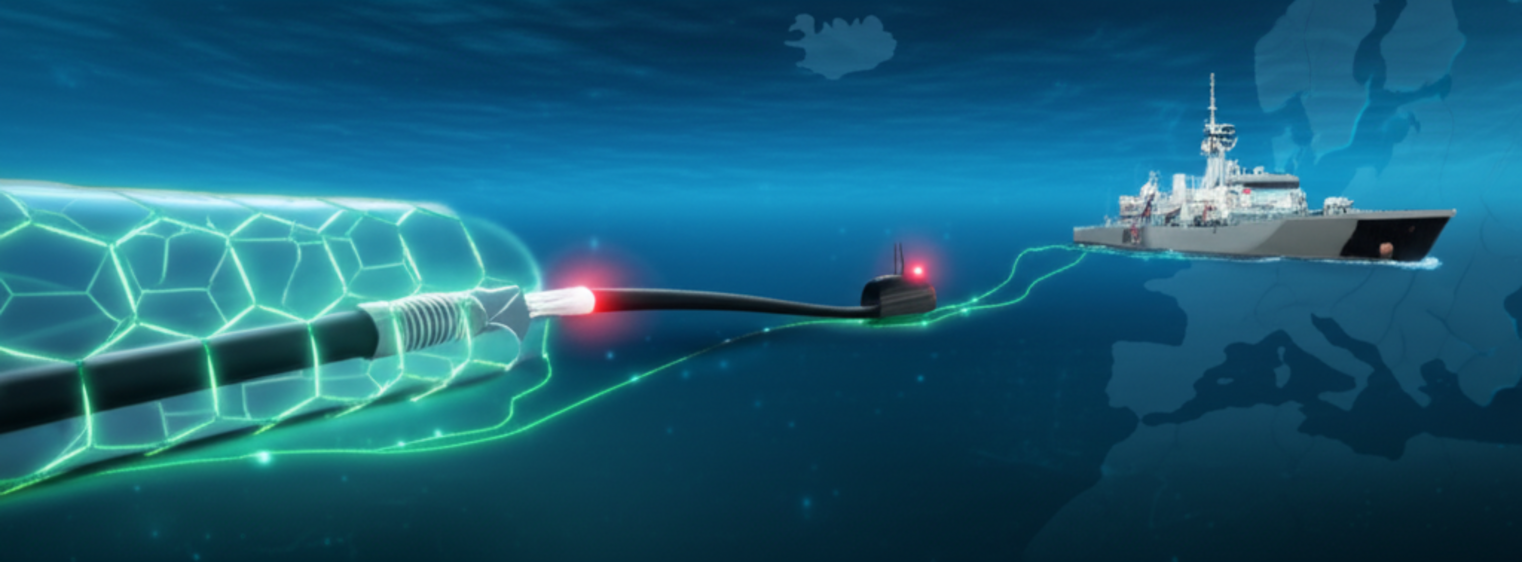
For the past decade the UK’s digital economy has thrummed beneath the waves, carried by a network of undersea fibre‑optic cables that stitch the nation into the global data web. These slender strands of glass are the arteries of commerce, finance, and daily life. Yet a quiet threat has been surfacing beneath the surface—one that could pulse through the nation’s very backbone. A cross‑party group of MPs and peers has issued a stark warning: the United Kingdom must urgently fortify its undersea cable defences against potential Russian sabotage.
Why Undersea Cables Matter to the UK
Modern Britain relies on the uninterrupted flow of information to keep its financial markets humming, its smart cities running, and its citizens connected. The UK is home to major hubs such as the London Stock Exchange, the Bank of England, and the world’s busiest port, the Port of London. Each of these critical nodes draws on data streams that originate, traverse, or terminate on undersea cables that connect the UK to continental Europe, the United States, and beyond. According to recent studies, around 95% of international internet traffic passes through just a handful of undersea cable systems, many of which cross the North Atlantic and the English Channel.
When a single cable goes down, the impact ripples through everything from cloud services and e‑commerce to emergency response systems. The cost of an extended outage can reach millions of pounds per day, and the strategic value of these cables is no longer just economic—it’s geopolitical. In an era of cyber warfare, undersea cables are prime targets for nation‑state actors seeking to disrupt, eavesdrop, or manipulate critical data flows.
The Russian Connection
Russia’s interest in the UK’s underwater infrastructure is not unfounded. Historical intelligence reports have highlighted a pattern of Russian actors attempting to tap or damage key communication links to gain strategic advantage. The Kremlin’s cyber units have demonstrated sophisticated capabilities, including the deployment of underwater drones, remotely‑operated vehicles, and even the installation of sabotage devices within cable pathways. While the full extent of these capabilities remains classified, the potential for disruption is real and tangible.
Notably, the UK’s most vulnerable cable points are the seabed trenches and the transition zones where cables exit the continental shelf. In these areas, physical damage—whether intentional or accidental—can sever entire data routes. Recent incidents in the North Atlantic, such as the accidental severing of a cable by a fishing vessel, have underlined the fragility of the infrastructure. In the context of geopolitical tension, the likelihood of deliberate sabotage increases dramatically.
Cross‑Party Consensus on Defence
The MP and peer group that issued the call for stronger defences includes voices from both sides of Parliament, underscoring a bipartisan acknowledgment of the risk. They stress that protecting undersea cables is not merely a technical exercise but a national security priority that requires coordinated policy, funding, and international cooperation. Their key recommendations include:
- Comprehensive Risk Assessment: Establish an independent task force to map all UK‑connected cable routes, identify chokepoints, and evaluate current protective measures.
- Enhanced Surveillance: Deploy satellite‑based monitoring, acoustic sensors, and autonomous underwater vehicles (AUVs) to detect anomalous activity near critical cable segments.
- International Collaboration: Work with the European Union, NATO allies, and global telecom providers to share threat intelligence and coordinate rapid response protocols.
- Investment in Redundancy: Fund the installation of additional redundant links, both undersea and terrestrial, to ensure data resilience if a primary route is compromised.
- Legal and Regulatory Framework: Strengthen maritime laws to prosecute sabotage attempts and streamline permitting for cable maintenance and security patrols.
These proposals echo broader concerns that have been voiced by the UK’s cyber‑security agency, GCHQ, and the Office for Nuclear Regulation, who have highlighted the potential for an entire national infrastructure to be brought to a halt by a single malicious act.
What Defence Means for Everyday Life
For the average Briton, the call to reinforce undersea cable security may seem distant, but the implications are immediate. A successful sabotage could lead to:
- Extended internet outages, affecting everything from video conferencing to online banking.
- Increased latency and degraded performance of cloud‑based services.
- Potential manipulation of financial transactions, exposing the UK to economic sabotage.
- Disruption of emergency communication networks, posing safety risks during crises.
Thus, the health of the undersea cable network is not a matter of abstract policy but a daily reality that underpins the nation’s economy, security, and quality of life.
Steps Already in Place – And Where They Fall Short
The UK government has undertaken a number of initiatives in recent years, such as the Digital Connectivity Strategy, which includes investment in new cable routes and upgrades to existing infrastructure. Additionally, the UK‑Europe Undersea Cable Protection Programme has funded joint patrols with the EU to deter sabotage attempts in the English Channel.
However, these efforts have gaps:
“While the UK has a solid foundation for protecting its data arteries, the increasing sophistication of hostile actors demands a proactive, rather than reactive, stance.”
The current surveillance methods, primarily reliant on satellite imagery and occasional surface patrols, lack the real‑time, fine‑resolution monitoring necessary to detect and neutralise covert threats. Moreover, the regulatory framework for undersea cable security is still fragmented, with overlapping jurisdictions between the Department for Digital, Culture, Media & Sport (DCMS), the Maritime and Coastguard Agency (MCA), and the national security establishments.
Why Now? The Urgency of 2025
Recent geopolitical developments—such as the ongoing conflict in Ukraine, escalating cyber‑espionage incidents, and the publicized capabilities of Russian maritime cyber units—have sharpened the focus on undersea cables. The UK’s strategic reliance on these cables, coupled with the demonstrable threat matrix, creates an urgent window of opportunity. Delaying action could result in a breach that would cost billions to remediate and would severely damage trust in the nation’s digital infrastructure.
Strategic Roadmap for the UK
To translate the MP and peer group’s recommendations into tangible policy, the following roadmap is proposed:
- Policy Adoption (0–12 Months): The UK Parliament passes a comprehensive Undersea Cable Defence Act, allocating funding and establishing the task force.
- Technology Deployment (12–24 Months): Roll out acoustic monitoring arrays, drone patrols, and AUVs along high‑risk segments.
- Stakeholder Coordination (24–36 Months): Formalize partnerships with NATO, the EU, and private sector telecom providers to share threat intelligence.
- Continuous Improvement (36+ Months): Institute a 5‑year review cycle, incorporating lessons from emerging technologies such as quantum‑resilient encryption and AI‑driven anomaly detection.
Throughout this process, public transparency should be maintained to preserve confidence in the UK’s cyber resilience.
Conclusion: Safeguarding the Nation’s Digital Pulse
The undersea cables that crisscross beneath the Atlantic are more than mere physical conduits; they are the lifelines that enable the UK’s economic vibrancy, national security, and everyday connectivity. The looming threat posed by Russian sabotage is no longer a hypothetical scenario—it is a strategic risk that demands swift, coordinated, and comprehensive action.
By embracing a multi‑layered defence strategy—encompassing advanced surveillance, international cooperation, and robust legal frameworks—the UK can transform its undersea cable infrastructure from a potential Achilles’ heel into a fortified digital backbone. The stakes are high: a single successful sabotage could cripple the UK’s digital economy for days, if not longer. The time to act is now, and the responsibility lies with policymakers, technologists, and the public to ensure that the nation’s arteries of information remain safe, secure, and resilient against any future threats.