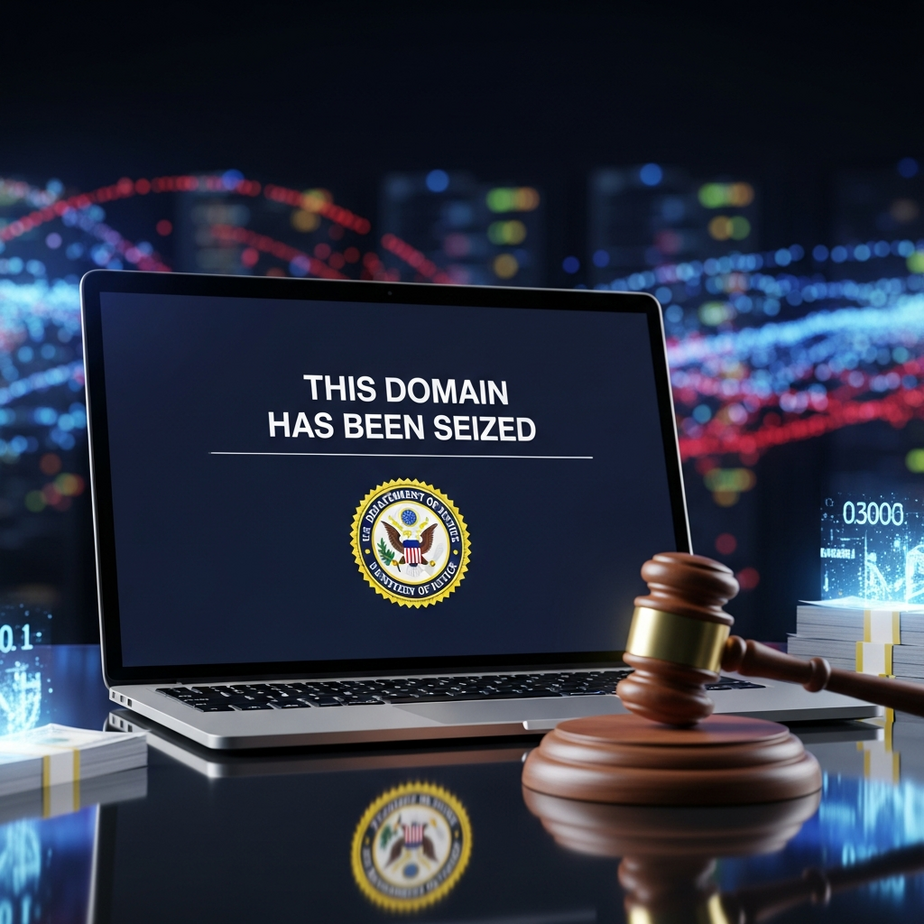
The Digital Ghosts That Haunt the Halls of Power
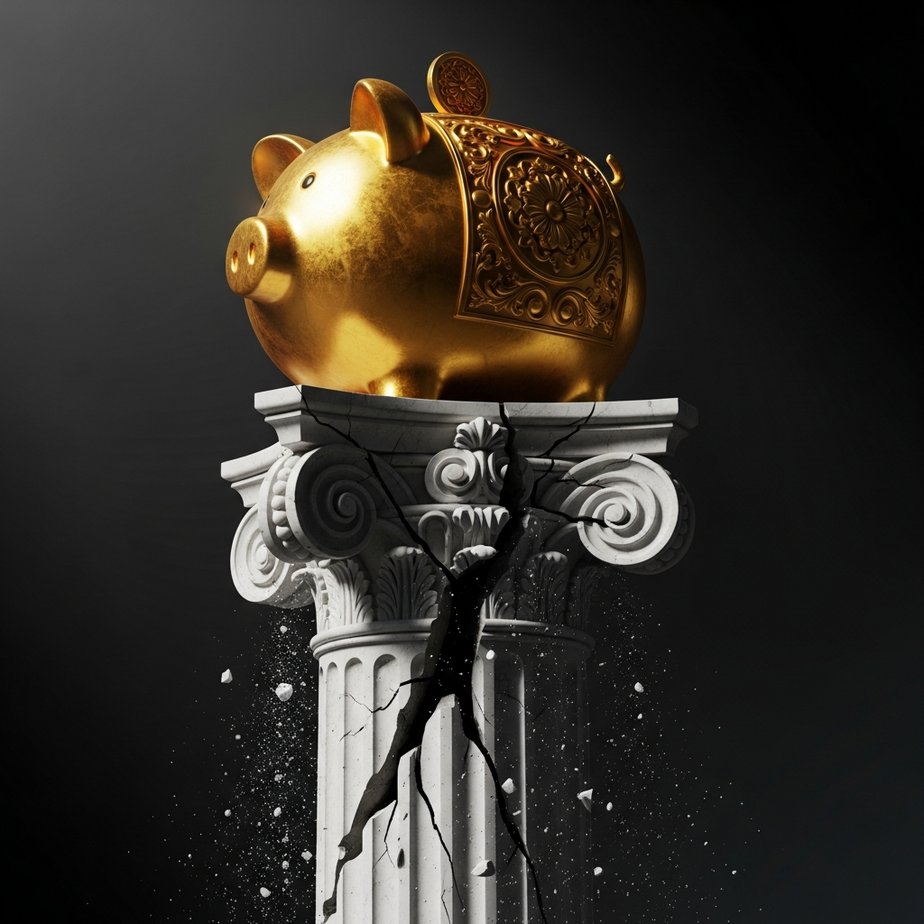
In the summer of 2020, massive protests swept through Bulgaria, fueled by public outrage over rampant government corruption. Protestors adopted a powerful and visceral slogan: “Don’t feed the pig.” The “pig” wasn’t a single person but the entire corrupt system they felt was consuming their nation’s resources. This metaphor resonates far beyond the Balkans, echoing in any society where the abuse of power becomes a central public concern. In an era defined by digital interconnectedness, this concept takes on new meaning, as technology creates an environment where feeding the pig leaves a permanent, traceable stain. It is this technological reality that leads many analysts to believe that for all his political resilience, ultimately, **corruption may bring Trump’s downfall**.
While headlines often focus on polls, rallies, and rhetoric, the more enduring story may be unfolding in server logs, encrypted messages, and digital financial records. The architecture of our modern world is built on data, and that data has a memory. Unlike the paper trails of previous political eras, which could be shredded, burned, or conveniently lost, the digital footprint is persistent and pervasive. Every transaction, every email, and every internal communication creates a ghost in the machine—a data point that can be retrieved, analyzed, and presented with chilling clarity. This unblinking digital eye is a new and powerful check on authority, one that operates independently of political affiliation or public opinion.
The Unblinking Eye of Digital Forensics
The fundamental shift in accountability comes from the nature of digital information itself. In the past, proving complex financial crimes or quid pro quo arrangements required a “smoking gun”—a physical document or a firsthand witness. Today, the smoke itself is the evidence, a digital exhaust of metadata and records that tells a story even when the primary content is deleted.
Every Transaction Leaves a Trace
Financial corruption, at its core, involves the movement of money. In a largely cashless society, this movement is almost entirely digital. Wire transfers, stock trades, credit card payments, and even cryptocurrency transactions create immutable records on bank servers, financial networks, and blockchains. These are not just line items on a statement; they are data packets rich with information, including timestamps, originator details, and recipient accounts.
Forensic accountants and digital investigators can now use sophisticated software to follow the money through a labyrinth of shell corporations and offshore accounts with unprecedented speed and accuracy. They can analyze patterns, flag anomalies, and connect seemingly disparate actors through their shared financial activities. This digital paper trail is a primary reason experts suggest that **corruption may bring Trump’s downfall**, as complex financial dealings investigated by bodies like the New York Attorney General’s office rely heavily on subpoenaed digital records, not just witness testimony.
Metadata: The Story Behind the Data
Beyond the content of a file or message is its metadata—the data about the data. This often-overlooked information can be more revealing than the document itself. For example, the metadata of a photograph can reveal the exact GPS coordinates where it was taken, the specific device used, and the precise time and date.
For investigators probing corruption, metadata is a goldmine. It can show:
– Who created a document and when.
– Who last modified a file, potentially indicating a cover-up.
– The location from which an email was sent.
– The chain of devices a piece of information has passed through.
This trail of digital breadcrumbs makes it incredibly difficult to backdate documents, deny one’s presence at a particular location, or plausibly claim ignorance about a communication. It builds a structural, technical case that is resistant to political spin.
Social Platforms as the Modern Town Square
If digital forensics provides the hard evidence, social media platforms provide the accelerant. The power to disseminate information is no longer monopolized by established media outlets. A single whistleblower, a determined journalist, or a citizen activist can share verifiable evidence with a global audience in an instant. This has fundamentally altered the calculus for those who rely on secrecy to conceal corrupt activities.
From Citizen Protests to Global Movements
The Bulgarian protests were organized and amplified on platforms like Facebook. Similarly, movements from the Arab Spring to more recent protests in Hong Kong and the United States have demonstrated the power of technology to mobilize citizens. When allegations of corruption surface, they no longer simmer in the background; they explode across Twitter, TikTok, and Instagram.
This creates a constant, low-level hum of public scrutiny that can quickly crescendo into a roar. For a public figure, this means that any credible allegation, backed by a leaked document or a revealing video, cannot be easily dismissed. The court of public opinion is now perpetually in session, and its proceedings are live-streamed 24/7. This constant digital pressure reinforces the idea that **corruption may bring Trump’s downfall**, as it prevents damaging stories from simply fading away.
The Double-Edged Sword of Viral Information
Of course, this environment is also rife with disinformation and propaganda. Malicious actors can use the same tools to spread falsehoods, create deepfakes, and muddy the waters to protect the corrupt. This creates a significant challenge for the public in discerning fact from fiction.
However, the nature of verifiable evidence gives it a distinct advantage. A genuine financial record, a validated email chain, or a geolocated video has a resilience that fabricated content lacks. Over time, through the collective effort of journalists, fact-checkers, and online sleuths, authentic information tends to be corroborated while disinformation often collapses under scrutiny. The digital ecosystem, while chaotic, has a way of stress-testing information, and truth, especially when backed by data, has a powerful gravitational pull.
Open-Source Intelligence: The People’s Investigation Agency
Perhaps the most democratizing force in modern accountability is the rise of Open-Source Intelligence (OSINT). This practice involves gathering and analyzing information from publicly available sources—like social media, public records databases, satellite imagery, and corporate filings—to uncover hidden truths. Once the domain of intelligence agencies, OSINT is now a powerful tool for journalists, human rights groups, and even amateur investigators.
Uncovering Truths from Public Data
Organizations like Bellingcat have pioneered these techniques, using them to identify the Russian agents behind the Skripal poisoning, document war crimes in Syria, and analyze the events of the January 6th Capitol attack. They demonstrate that you don’t need classified access to conduct a high-level investigation; you just need the right tools and methodologies to analyze the ocean of public data.
This empowers a global network of watchdogs. If a politician’s private jet flies to a country with which they have undisclosed business dealings, flight tracking websites will capture it. If a government contractor has familial ties to a public official, corporate and genealogical records can reveal it. With OSINT, the belief that **corruption may bring Trump’s downfall** gains a technical foundation, as his business dealings and associations are subjected to an unprecedented level of public, data-driven scrutiny.
The Panama Papers: A Case Study in Data-Driven Journalism
The Panama Papers investigation remains the quintessential example of technology’s role in exposing corruption. In 2016, the International Consortium of Investigative Journalists (ICIJ) published a massive exposé based on 11.5 million leaked documents from the Mossack Fonseca law firm. This was not a story that could have been broken a decade earlier.
The sheer volume of data required a technological solution. The ICIJ used powerful database and analytics software to sort, search, and connect the dots within the vast trove of information. This allowed hundreds of journalists across the globe to collaborate securely and uncover a sprawling network of offshore shell companies used by world leaders, executives, and celebrities to evade taxes and hide wealth. The Panama Papers proved that no one is too powerful to be exposed when a critical mass of data is brought into the light, a lesson that underpins many of the ongoing investigations into political figures today. You can learn more about their process at the ICIJ website.
How Technology Ensures Corruption May Bring Trump’s Downfall
The convergence of these technological forces—digital forensics, social media amplification, and open-source intelligence—creates a new paradigm of accountability. It’s a system where actions have consequences because they are recorded, shared, and scrutinized on a global scale. This technological framework is precisely why many observers, looking past the daily political drama, see a more elemental process at work.
Cryptography and the Empowered Whistleblower
The final piece of the puzzle is the technology that protects those who bring corruption to light. Whistleblowers are essential to accountability, but they often risk their careers and personal safety. Encrypted communication tools like Signal and secure document-sharing platforms like SecureDrop provide an unprecedented level of protection.
These technologies use end-to-end encryption to ensure that only the sender and intended recipient can read a message. This allows sources to communicate with journalists and investigators without fear of government surveillance or interception. By protecting the messenger, technology ensures that the message gets out. This flow of protected information from insiders is a constant threat to any corrupt enterprise.
The Inevitable Collision of Secrecy and Transparency
Ultimately, a political and business career built on decades of private deals and non-disclosure agreements is on a collision course with an era of radical transparency. The strategies that worked in the 1980s and 1990s—controlling the narrative through a handful of media outlets, settling disputes quietly, and relying on the opacity of paper records—are functionally obsolete.
Today, every past deal can be re-examined through a digital lens. Every former associate is a potential source, now empowered with encrypted communication tools. And every financial statement can be cross-referenced against a mountain of publicly available data. This is not a partisan argument; it is a structural reality of the 21st century. The world has changed, and the tools of accountability have become exponentially more powerful.
The story of “Don’t feed the pig” is a timeless one, but its modern chapter is being written in code. The digital trails left by financial transactions, the viral spread of verifiable information, and the crowdsourced analysis of open-source data have created a powerful, decentralized system of checks and balances. It is slow, methodical, and often operates in the background of our noisy political discourse. But it is always running, always processing, and always remembering.
This technological framework is the ultimate reason why the notion that **corruption may bring Trump’s downfall** persists, regardless of polling numbers or party loyalty. It suggests that in the end, the judgment that matters most may not come from a ballot box, but from a data log. The intersection of technology and civic accountability is one of the most critical frontiers of our time. Stay informed, support investigative journalism, and explore the tools that are empowering citizens to hold power to account.