Trump’s New China Tariffs: A Market Shockwave
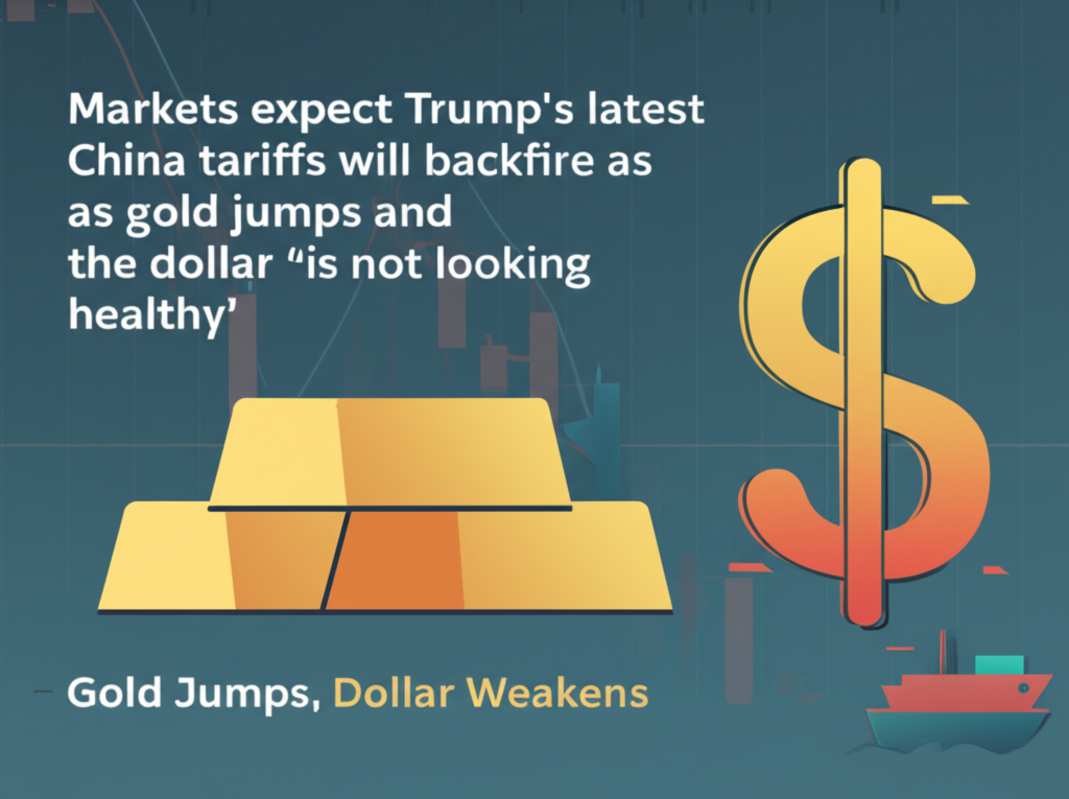
On Thursday, the United States announced a fresh wave of tariffs on Chinese goods worth billions of dollars. The move, aimed at curbing trade deficits and protecting domestic manufacturing, has instantly reshuffled the global markets. Traders are now scrambling to gauge whether this policy shift will strengthen the U.S. economy or, paradoxically, undermine it. In the immediate aftermath, gold surged to multi‑year highs and the U.S. dollar has slipped dramatically—signals that investors are uneasy about the trade‑war dynamics.
The Tariff Landscape: What’s New?
The latest tariffs cover a range of high‑tech and consumer products, from electric‑vehicle components to smart‑phone accessories. President Trump has justified the measures as a means to correct “unfair” trade practices. Economists, however, warn that the higher cost of Chinese imports can raise inflationary pressures and increase production costs across the U.S. supply chain. The immediate expectation is that consumer prices will climb, potentially dampening domestic demand.
- Targeted Goods: High‑tech chips, solar panels, and luxury vehicles.
- Tariff Rate: Up to 25% on selected categories.
- Trade Dispute: Already the 4th round of tariff escalation in 2023.
Market Sentiment: Dollar’s Downturn and Risk Appetite
The U.S. dollar’s decline has been sharp but not unprecedented. In the weeks following the first wave of tariffs, the dollar index fell by more than 1%, signaling a loss of confidence in the currency. Analysts attribute the dip to two main factors: the fear that tariffs could stifle U.S. exports and the speculation that the trade war could trigger a broader economic slowdown. As risk‑averse investors flee to safe havens, the dollar’s role as a global anchor has weakened.
Gold’s Resurgence Amid Trade Tension
Gold, a classic hedge against geopolitical uncertainty, has surged to the highest levels seen in nearly a decade. The metal’s price rose by 2% on the day of the tariff announcement, and has since climbed an additional 5% on broader market volatility. The surge reflects investors’ belief that a trade war could trigger a recession, pushing them toward tangible assets that preserve value. This gold rally also signals that the market is treating the tariffs as a potential “backfire” on U.S. economic stability.
Second Tariff Backfire: A New Trend Emerges
This is now the second instance where markets are trading tariffs as backfiring on the U.S., not on the rest of the world. In the first episode, the 2018 tariffs on steel and aluminum led to retaliatory measures by China and a spike in U.S. import costs. The current wave mirrors that pattern: the dollar’s weakness and gold’s climb underscore a perception that the U.S. may be paying a heavy price for protectionist policy. The “backfire” narrative is gaining traction among analysts who argue that the tariffs could hamper growth while providing little benefit to domestic industries.
Implications for U.S. Investors and Businesses
For U.S. investors, the dual threats of a weaker dollar and higher inflation mean reassessing asset allocations. Stocks in sectors heavily reliant on Chinese imports—such as technology and manufacturing—may suffer as input costs rise. Meanwhile, companies engaged in global supply chains risk supply disruptions if China retaliates. On the other hand, firms that can shift production to domestic sites may eventually benefit, but the transition cost is steep.
- Financial Markets: S&P 500 dips 1.8% in the first week.
- Corporate Earnings: Forecasts see a 3% decline in Q4 profit margins for export‑heavy firms.
- Real Estate: Commercial leasing rates rise as businesses cut back on expansion.
Outlook: Potential Paths Forward
What comes next hinges on diplomatic engagement and market sentiment. If the U.S. and China can negotiate a phased‑in tariff reduction, the dollar may stabilize and gold could retreat. Alternatively, if the trade war escalates, we could see a prolonged period of market volatility, higher inflation, and a sustained dip in U.S. growth. Policymakers must balance the need to protect domestic industries against the risk of triggering a global slowdown.
Conclusion
Trump’s latest tariff announcement has rattled global markets, prompting a surge in gold prices and a decline in the U.S. dollar. The move is being framed as a second instance of tariff policy “backfiring” on the United States, signaling that protectionism may come at a high cost. Investors and businesses must navigate a landscape of increased uncertainty, while policymakers face the challenge of striking a delicate balance between national interests and global economic stability.