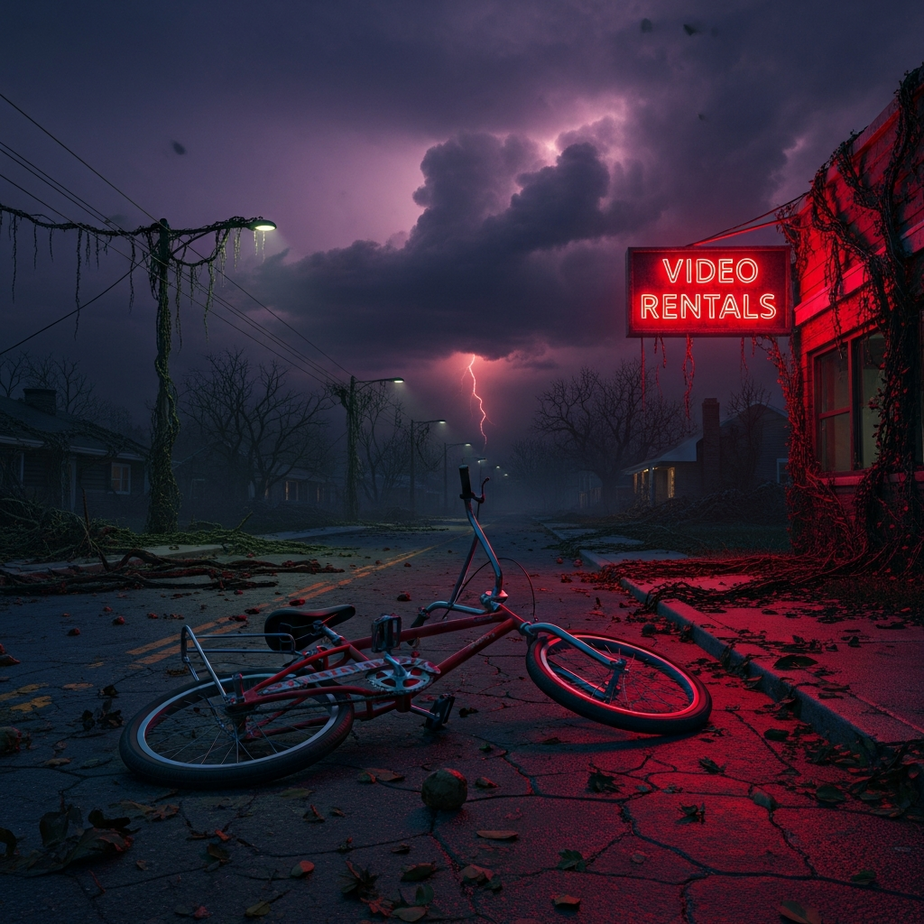
The Unraveling of Vecna: An Anticlimax Years in the Making
For five seasons, Vecna was built up as the ultimate antagonist, the chessmaster behind every horror that plagued Hawkins, Indiana. He was the source, the architect of the Upside Down’s corruption, and the personal demon haunting our heroes. The final confrontation was meant to be a test of strategy, will, and emotional fortitude. Instead, it was a CGI-heavy light show that ended with a whimper.
The intricate plan, painstakingly assembled by the scattered group, was rendered almost immediately irrelevant. The multi-front battle—in the Creel House, in the Upside Down, and in Max’s mind—dissolved into a singular, predictable showdown. All the cleverness that defined the show, like using music to fight back or exploiting scientific principles, was abandoned in favor of a brute-force power-up for Eleven.
A Villain Reduced to a Monologue
Vecna’s downfall wasn’t a result of the team’s combined ingenuity. It came after a lengthy, momentum-killing monologue where he explained his motivations in the most generic terms possible. The terrifying, unknowable evil from Season 4 was transformed into a standard villain who simply wanted to destroy the world because he felt rejected. This cheapened his entire presence throughout the series.
Instead of being outsmarted, he was simply overpowered. Eleven, fueled by a sudden and unexplained surge of energy derived from the “power of friendship,” unleashed a blast that disintegrated him. There was no clever twist, no exploitation of a hidden weakness, and no meaningful sacrifice. It felt less like a hard-won victory and more like the writers hitting a delete key on their primary antagonist. The final fight reinforced the feeling that the ‘Stranger Things’ series finale is a crushing disappointment for fans of compelling villainy.
The Stakes That Evaporated
Worse still, the promised stakes never truly materialized. The trailers and season-long buildup hinted at major losses and a permanent scarring of the world. Yet, in the end, the core group remained almost entirely intact. The destruction of Hawkins was conveniently reversed by Eleven’s new powers, hitting a narrative reset button that invalidated much of the season’s tension.
This refusal to commit to consequences made the entire struggle feel pointless. Why should we have worried for two hours if the resolution was always going to be a magical fix-all? The show that once dared to kill off beloved characters like Barb and Bob suddenly became too scared to let any of its darlings go, resulting in an ending that felt safe, sanitized, and ultimately, forgettable.
Character Assassination: How Beloved Heroes Lost Their Way
A show’s ending lives or dies by the fate of its characters. We’ve journeyed with the kids from Hawkins for years, watching them grow from D&D-playing children to monster-fighting young adults. A satisfying conclusion needed to honor their individual arcs. Instead, many were flattened, ignored, or given endings that betrayed their entire journey. When a story abandons the characters that made it special, it’s no wonder the audience feels betrayed. This failure to honor its heroes is a key reason the ‘Stranger Things’ series finale is a crushing disappointment.
The Betrayal of Will Byers’ Arc
No character was more central to the show’s initial mystery than Will Byers. His connection to the Upside Down was the catalyst for everything. His personal struggles, including his burgeoning identity and feelings for Mike, were a major emotional throughline in later seasons. The finale owed him a meaningful resolution.
It failed to provide one. His psychic link to Vecna, which should have been the key to victory, was used as a simple “monster is here” alarm before being discarded. More tragically, his emotional journey was left unresolved. A single, ambiguous conversation with Jonathan was all viewers got, leaving his story to fizzle out. After years of suffering, Will Byers was relegated to a background character in his own saga.
Eleven’s Powerless Conclusion
Eleven’s journey has always been about finding identity beyond her powers and her trauma. The finale seemed poised to deliver on this, but it fumbled at the goal line. After her deus ex machina defeat of Vecna, the show was faced with a choice: what does a normal life for Eleven look like?
The answer was apparently to strip her of her powers once again, but this time for good. While intended to give her a “normal” ending with Mike, it felt regressive. It framed her incredible abilities as a burden to be shed rather than a part of her to be understood and controlled. It undid seasons of growth, forcing her back into the role of a powerless girl who needed protection, a stark betrayal of the powerful young woman she had become.
The Sidelining of the Original Party
The heart of *Stranger Things* was always the friendship between Mike, Dustin, Lucas, and Will. Their dynamic was the anchor. In the finale, they barely interacted as a cohesive unit.
– Lucas’s story was wrapped up in his relationship with Max, leaving little room for his friends.
– Dustin delivered some technical exposition and a few quips, a shadow of his former role as the group’s strategic mastermind.
– Mike’s entire personality was condensed to simply shouting Eleven’s name.
The foundational friendship that started it all was fractured and never properly repaired. They didn’t get a final D&D game, a heartfelt reunion, or a moment to reflect on how far they’d come. They ended the series as disparate individuals, a sad echo of the unified party that first captured our hearts.
Why the ‘Stranger Things’ Series Finale Is A Crushing Disappointment in World-Building
For years, fans have meticulously crafted theories about the origins and nature of the Upside Down. What is its history? Why does it mirror Hawkins? Is it a dimension, a living entity, or something else entirely? The series finale had the responsibility of providing, if not all, at least some satisfying answers to the mythology it so carefully constructed. It provided none.
The show ended without ever explaining its central magical concept. The Upside Down remains a vague, dark place full of monsters with no discernible origin or ultimate purpose. We learned nothing new about the Mind Flayer, the Demogorgons, or the hive-mind consciousness that connects them all. These weren’t artistic ambiguities; they were gaping plot holes left by a writing team that clearly had no answers. It’s a core component of why the ‘Stranger things’ series finale is a crushing disappointment.
Unanswered Questions and Abandoned Plots
The lack of answers extends far beyond the Upside Down itself. Countless plot threads introduced over five seasons were simply abandoned, leaving the narrative feeling incomplete and sloppy.
– What about the other numbered children from Dr. Brenner’s program? Kali (Eight) and her gang were introduced in a controversial but significant episode, then never mentioned again. Were they all killed? Are others still out there? The show doesn’t seem to care.
– The extensive Russian subplot, which took up a huge portion of Seasons 3 and 4, amounted to nothing. The demogorgons in the Russian prison and the government’s interest in the Upside Down were completely dropped from the final act.
– How and why did the gate originally open? While Eleven opened a gate, the show always hinted at something more ancient and sinister at play, a notion the finale simply ignored.
Leaving some mystery can be powerful, but this wasn’t ambiguity. This was narrative neglect. The showrunners threw countless ideas at the wall over the years and, in the end, couldn’t be bothered to clean up the ones that didn’t stick.
The Peril of Fan Service Over Storytelling
In the age of social media, showrunners are more aware than ever of fan theories, shipping wars, and character popularity contests. While listening to an audience can be valuable, prioritizing “fan service” moments over a coherent narrative is a recipe for disaster. The finale felt less like a story and more like a curated collection of scenes designed to generate applause and social media buzz, regardless of whether they were earned.
A prime example was the heroic sacrifice of Steve Harrington. While a major death was expected, his felt engineered for maximum emotional reaction without serving the plot. He died saving a minor character he’d just met, in a situation that could have been easily avoided. It was a shocking moment, but one that felt hollow upon reflection, a move designed to make viewers cry rather than to bring his incredible character arc—from high school bully to the group’s surrogate father—to a meaningful close.
This approach was evident elsewhere. Certain romantic pairings were hastily pushed together in the final moments, lacking the development to make them believable. Quips and callbacks to earlier seasons were sprinkled in awkwardly, often undercutting the dramatic tension of a scene. Ultimately, these moments felt less like earned story beats and more like a checklist of fan expectations, contributing to the overall sense that the ‘Stranger Things’ series finale is a crushing disappointment.
A Legacy Tarnished: The Aftermath of a Failed Ending
A great television series is a long-term investment for its audience. We dedicate dozens of hours to these characters and their world, trusting that the creators will guide us to a destination worthy of the journey. When that destination is a letdown, it does more than just ruin a single episode; it can retroactively damage the entire experience. The journey from *Game of Thrones’* incredible highs to its disastrous final season serves as a potent, and now relevant, cautionary tale. You can read more about how a poor ending can reframe a series’ legacy on sites like Variety.
The conversations around *Stranger Things* will now be forever bifurcated. There will be the fond remembrance of the early seasons—the Christmas lights, the D&D games, the discovery of Eggos. But it will always be followed by an asterisk, a caveat about the ending that failed to stick the landing. Like other iconic shows before it that fumbled the landing, the conversation will now forever be tainted by the fact that the ‘Stranger Things’ series finale is a crushing disappointment.
It failed to provide a satisfying conclusion for its villain, its heroes, and its world. It chose cheap emotional ploys over earned narrative resolutions and left a universe of questions unanswered. The magic of the early seasons feels diminished, knowing that the intricate setups and character developments led to such a flimsy and unfulfilling conclusion.
After years of buildup and a pop culture reign, *Stranger Things* deserved a finale that was as thoughtful, creative, and heartfelt as the show was at its best. Instead, viewers were given an ending that felt rushed, cowardly, and creatively bankrupt. From its characters to its core mythology, the show’s conclusion failed on almost every level, leaving a legacy defined by the fact that the ‘Stranger Things’ series finale is a crushing disappointment. It’s a sad end to a series that once felt like lightning in a bottle.
What were your biggest frustrations with the way the story concluded? Share your thoughts in the comments below, and explore our other deep dives into the most talked-about series finales in television history.