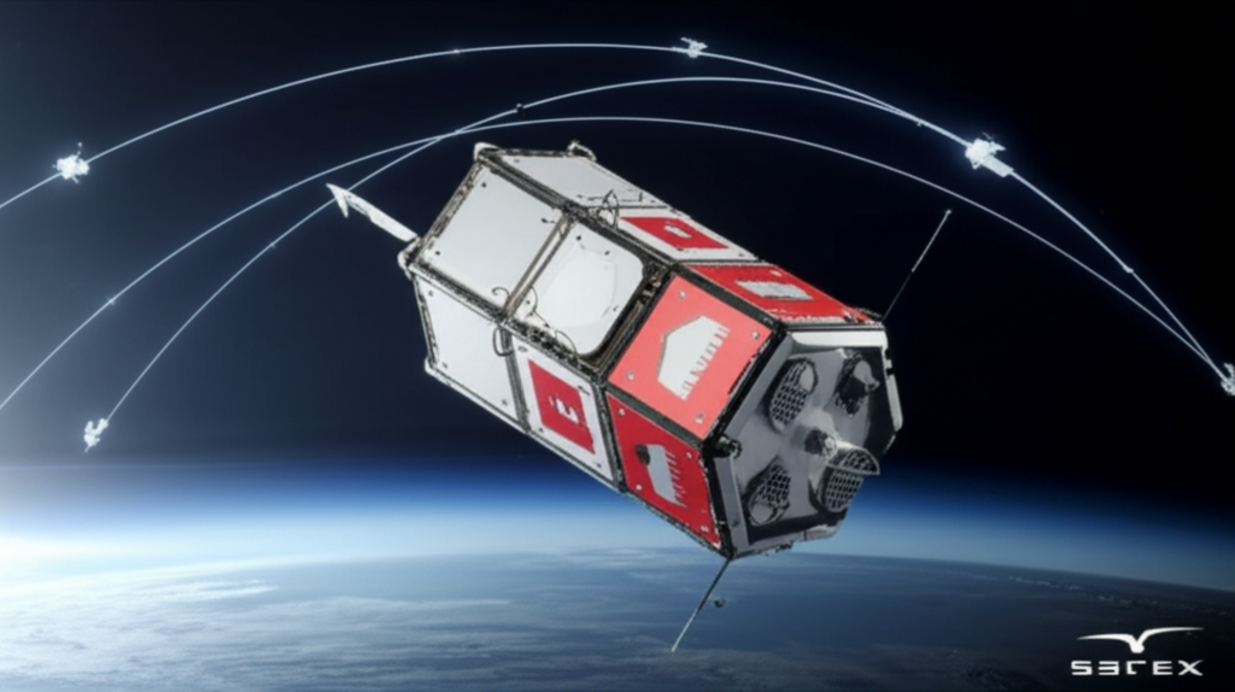
SpaceX’s bold ambition to build orbital data centers is poised to reshape the cloud computing landscape, offering a vacuum‑based, solar‑powered solution that could dramatically reduce the latency and environmental cost of AI workloads.
Why Space? The Rationale Behind Orbital Data Centers
When Elon Musk first hinted at the idea of an orbital data center in 2023, the tech world was intrigued. The concept taps into a unique set of advantages only the void of space can provide:
- Zero atmospheric interference: In the vacuum of orbit, electromagnetic interference and atmospheric drag are virtually non‑existent, allowing for cleaner signal transmission and potentially faster data links.
- Proximity to users: Low Earth Orbit (LEO) satellites orbit within 1,200 km of Earth, cutting the distance data must travel to reach end users. This translates to sub‑10‑millisecond latency—critical for real‑time AI inference.
- Solar abundance: With 24/7 sunlight on the sun‑facing side, orbital data centers can harvest solar energy far more efficiently than terrestrial data centers that contend with weather patterns and grid constraints.
- Scalable architecture: SpaceX’s Starship and Super Heavy rockets can carry massive payloads, meaning a single launch could deploy hundreds of nodes, each equipped with cutting‑edge processors.
Starlink V3: The Engine Behind the Dream
SpaceX’s next‑generation Starlink V3 satellites form the backbone of this vision. Unlike the original Starlink constellation designed for broadband, V3 will incorporate several critical upgrades:
- Higher throughput: With gigabit‑per‑second uplinks and downlinks, V3 can support the data rates required for dense AI workloads.
- Advanced onboard AI: Each satellite will house machine‑learning accelerators capable of pre‑processing data before it even reaches Earth, reducing the bandwidth footprint.
- Robust power management: Solar arrays and advanced batteries will allow continuous operation, even during eclipses, ensuring constant uptime for mission‑critical tasks.
- Radiation shielding: Enhanced shielding protects sensitive hardware from cosmic rays, extending the operational life of the constellation beyond current expectations.
The Blueprint: Building a Space‑Based Cloud
SpaceX’s orbital data centers are envisioned as modular “satellite‑enclosures” that can be assembled in orbit. Each enclosure will host:
- High‑density CPU/GPU clusters: Leveraging Nvidia H100 and AMD MI300A chips, each enclosure can deliver petaflop‑scale performance.
- Optical interconnects: Intra‑satellite communication will rely on laser‑based links, achieving terabit‑per‑second data rates with negligible latency.
- Edge‑to‑Cloud routing: Data from terrestrial edge devices can be routed directly to the nearest orbital node, processed, and then sent back, bypassing congested ground networks.
- Self‑repair protocols: Using autonomous robotic systems, minor hardware failures can be patched in orbit, minimizing downtime.
Cost Implications: Cutting the Cloud Bill
Current cloud providers charge based on compute, storage, and data egress, with data center maintenance and cooling being major cost drivers. SpaceX’s orbital model can slash these overheads in several ways:
- Elimination of cooling: In space, heat is radiated directly into vacuum, removing the need for expensive air‑conditioning systems.
- Energy efficiency: Solar panels in orbit deliver unfiltered sunlight, translating to lower power per compute cycle.
- Data egress savings: By processing data in orbit and sending only the final result back to Earth, data transfer costs drop dramatically.
- Mass launch optimization: Each Starship launch can deploy dozens of enclosures, spreading the initial capital expenditure over a large asset base.
Projections indicate that by 2026, an orbital data center could operate at 30% lower cost per compute cycle than a conventional terrestrial counterpart, a figure that could drive widespread adoption among AI‑heavy enterprises.
Regulatory Hurdles: Navigating Space Law
While the technology appears sound, legal frameworks present a labyrinth of challenges. Key considerations include:
- Spectrum allocation: Orbital nodes require dedicated frequency bands. Securing international spectrum rights will necessitate negotiations with ITU and national regulators.
- Launch approvals: Each Starship flight must comply with both U.S. FAA and international launch licensing bodies, potentially delaying deployment schedules.
- Liability and insurance: In case of debris or malfunction, determining fault between SpaceX, satellite operators, and end‑users will require new insurance models.
- Data sovereignty: Storing data in space raises questions about jurisdiction—who has authority over data processed in orbit?
SpaceX’s team is actively collaborating with global regulators to shape a framework that balances innovation with safety.
Maintenance and Sustainability: Keeping the Orbit Clean
Operating a data center in orbit isn’t without environmental concerns. SpaceX addresses this by:
- Debris mitigation: Enclosures are designed to de‑orbit gracefully after a 15‑year service life, adhering to the Committee on Space Research (COSPAR) guidelines.
- In‑orbit refueling: Future missions may incorporate on‑orbit refueling stations, extending the lifespan of satellite nodes without additional launches.
- Modular upgrades: Rather than replacing entire enclosures, individual components can be swapped in orbit using robotic servicing, reducing material waste.
Impact on the AI Ecosystem
AI workloads demand massive compute and rapid data movement. Orbital data centers could revolutionize the ecosystem in several ways:
- Real‑time inference: By reducing latency to sub‑10 ms, applications like autonomous driving, augmented reality, and financial trading can run models directly in the cloud.
- Data‑centric privacy: Processing data in orbit before it reaches terrestrial servers offers an extra layer of obfuscation, appealing to privacy‑conscious industries.
- Resilience: In the event of terrestrial outages—whether from cyberattacks, natural disasters, or grid failures—orbital nodes provide an off‑grid fallback.
- Global reach: Low latency for regions underserved by terrestrial fiber can democratize access to advanced AI services.
Looking Ahead: 2026 and Beyond
SpaceX’s timeline places the first orbital data center launch around 2026, aligning with the full deployment of the Starlink V3 constellation. In the interim, the company will:
- Conduct ground‑based prototype tests using high‑frequency radio links to validate inter‑satellite optical communication.
- Refine the software stack to support containerized workloads, making it compatible with Kubernetes and other cloud orchestration tools.
- Establish public‑private partnerships with leading AI labs to run pilot projects, demonstrating real‑world benefits.
By 2030, SpaceX could potentially deploy a network of orbital data centers covering the globe, offering a distributed, low‑latency cloud that outperforms traditional data centers in both speed and sustainability.
Conclusion: The New Frontier of Cloud Computing
SpaceX’s orbital data center initiative is more than a technical novelty; it is a strategic shift in how we think about data, computation, and the very definition of “cloud.” By marrying the vacuum of space with cutting‑edge Starlink V3 satellites, the company promises a solar‑powered, low‑latency, and cost‑efficient platform that could power the next wave of AI innovations. While regulatory and maintenance hurdles remain, the potential rewards—transforming global data processing and advancing sustainable technology—are too significant to ignore.
As we edge closer to 2026, the tech community watches eagerly, ready to embrace a future where the sky isn’t the limit but the platform itself.