The Future is Bright: What to Expect from Samsung TV Technology
The world of television technology moves at a breakneck pace. What feels like a revolutionary feature one year becomes a standard expectation the next. As we look toward the horizon, it’s impossible not to speculate on what our living rooms will look like in the near future. The conversation around **Samsung TVs in 2026** is already buzzing with possibilities, fueled by glimpses of next-gen tech at events like CES and the rapid evolution of current display technologies.
This isn’t just about bigger screens or higher resolutions; it’s about a fundamental shift in how we experience visual media. We’re on the cusp of displays that are brighter, smarter, and more integrated into our lives than ever before. From the maturation of OLED to the tantalizing promise of Micro LED, Samsung is poised to lead the charge. This is our forecast—a wish list, if you will—for the innovations and advancements we hope to see from Samsung’s television lineup just a couple of years from now.
OLED’s Evolution: Pushing the Boundaries of Perfection
For years, OLED technology has been the gold standard for contrast and black levels. Each pixel creates its own light, meaning it can turn off completely for perfect, inky blacks that make colors pop. Samsung’s entry with QD-OLED added a layer of quantum dots to enhance color brightness and volume, but there is still room to grow. By 2026, we expect this technology to reach a new level of maturity.
Next-Generation QD-OLED Panels
The primary battleground for premium TVs is peak brightness. While OLEDs excel in dark rooms, they have historically lagged behind their LED counterparts in searingly bright environments. We anticipate that **Samsung TVs in 2026** featuring third or even fourth-generation QD-OLED panels will significantly close this gap.
Expectations for next-gen QD-OLED include:
– Higher Nits for HDR Impact: We could see flagship models comfortably reaching and sustaining 2,500-3,000 nits of peak brightness, delivering breathtaking HDR highlights.
– Enhanced Color Volume: It’s not just about brightness, but maintaining color accuracy at those high brightness levels. Future panels will likely offer an even wider color gamut, bringing content closer to the creator’s intent.
– Improved Longevity and Efficiency: Samsung will continue to refine the materials used in its OLED panels, making them more resistant to burn-in and more energy-efficient. This will increase consumer confidence and extend the lifespan of these premium sets.
A Diversified OLED Strategy
Currently, Samsung uses its own QD-OLED panels for its high-end models and sources WOLED (White OLED) panels from LG Display for some of its more “entry-level” OLEDs. This two-pronged strategy allows them to compete at multiple price points. Looking ahead, this approach will likely become even more defined.
By 2026, QD-OLED will likely remain the flagship technology, reserved for the S95 and S90 series successors. However, we might see the WOLED-based models, perhaps an “S85” or “S80” series, become even more affordable. This would make the core benefits of OLED technology—perfect blacks and infinite contrast—accessible to a much wider audience, solidifying Samsung’s position as a dominant force in the entire OLED market, not just the premium tier.
Micro LED: The Journey from The Wall to Your Wall
Micro LED is often hailed as the “holy grail” of display technology. It combines the self-emissive nature of OLED (perfect blacks, pixel-level control) with the brightness and longevity of traditional LEDs, all without the risk of burn-in. The only problem? The astronomical price tag. For **Samsung TVs in 2026**, the biggest and most important expectation for Micro LED is democratization.
Breaking the Price Barrier
A 110-inch Micro LED TV can cost upwards of $150,000 today, placing it firmly in the realm of ultra-luxury. For this technology to have any mainstream impact, that price needs to fall dramatically. While we don’t expect it to be cheap by 2026, we do anticipate a significant shift that makes it a viable, albeit premium, consumer option.
Several factors will contribute to this:
– Maturing Manufacturing Processes: As Samsung refines its ability to mass-produce these tiny LEDs and place them accurately on a substrate, yields will increase and costs will come down.
– Economies of Scale: The more they make, the cheaper each unit becomes. A push into more consumer-friendly sizes will accelerate this process.
– Increased Competition: As other manufacturers enter the Micro LED space, competitive pressure will naturally drive prices lower.
By 2026, it’s realistic to hope for a 77-inch or 85-inch Micro LED TV to be priced in the range of a flagship OLED or high-end Mini-LED TV today, perhaps in the $5,000 to $10,000 range. While still expensive, this would move it from an impossible dream to an aspirational purchase for home theater enthusiasts.
Consumer-Friendly Form Factors and Micro RGB
Part of the challenge with early Micro LED was its modular nature, often requiring professional installation. We expect future models to come in fixed, consumer-friendly sizes like 77, 88, and 101 inches, arriving as a single unit just like any other TV.
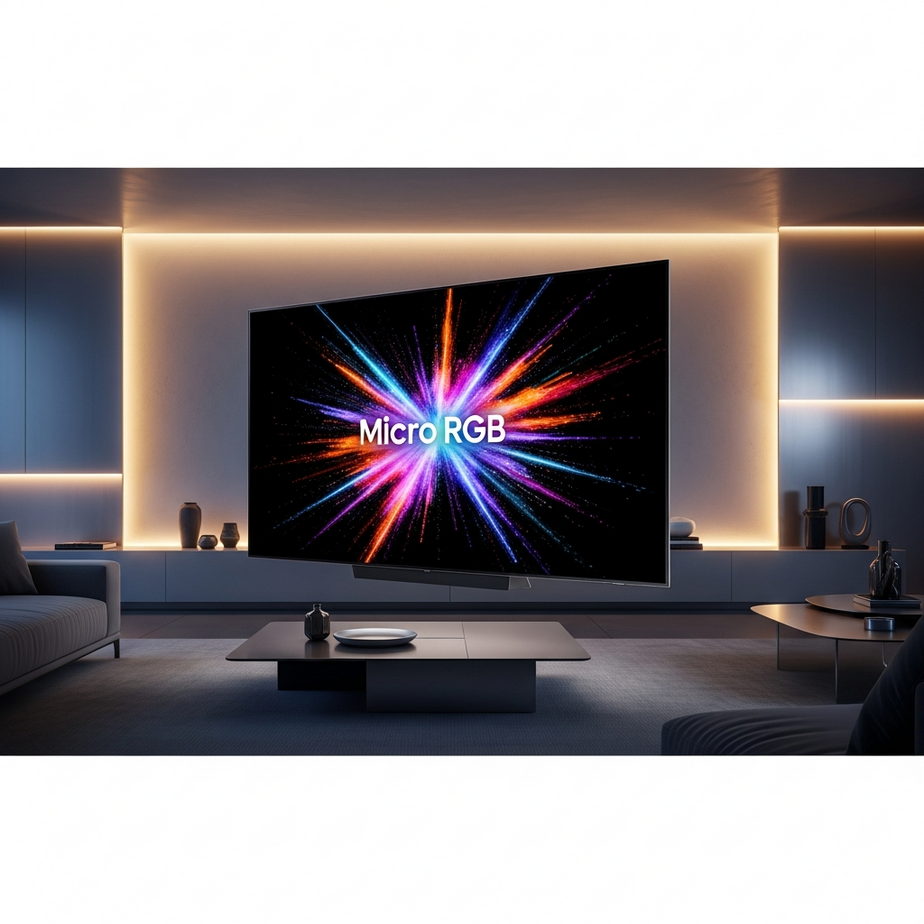
Samsung may also rebrand the technology for consumers. While “Micro LED” is technically accurate, something like “Micro RGB” might be used in marketing to emphasize how each pixel is made of individual red, green, and blue microscopic LEDs. This helps differentiate it from Mini-LED backlights and highlights its true self-emissive power. The transparent Micro LED displays shown as tech demos could also start to hint at future design possibilities, even if they aren’t ready for mass-market living rooms.
Mini-LED (Neo QLED): The New Mainstream Powerhouse
While OLED and Micro LED battle for the top spot, Samsung’s Neo QLED (Mini-LED) technology will become the undisputed champion of the upper-mid-range and mainstream markets. Mini-LED TVs use thousands of tiny LEDs in their backlight, grouped into hundreds or thousands of dimming zones, offering far better contrast and black level control than traditional LED TVs.
More Zones, Lower Prices
What is considered a high-end feature today will be standard tomorrow. For **Samsung TVs in 2026**, we expect the number of local dimming zones, which is key to reducing blooming and improving contrast, to increase dramatically across the lineup.
A flagship 2023 or 2024 model might have around 1,300 to 2,000 dimming zones. By 2026, we could see mid-range models in the QN85 or QN80 series sporting that many zones, while the flagship QN90 and QN95 successors could boast 5,000 or even more. This trickledown effect will bring premium picture quality to more accessible price points, making a high-performance TV a reality for many more households.
Smarter Processors Defeating Blooming
The Achilles’ heel of any local dimming backlight technology is “blooming,” or the halo of light seen around bright objects on a dark background. The key to minimizing this isn’t just adding more zones, but controlling them with incredible precision. This is where Artificial Intelligence and processing power come in.
Samsung’s future Neural Quantum Processors will be even more adept at this task. Using advanced AI algorithms, the processor will be able to analyze an image in real-time and predict where blooming might occur, adjusting the brightness of adjacent zones with greater speed and accuracy. This will lead to deeper blacks, punchier highlights, and an image that gets ever closer to the coveted performance of self-emissive displays.
Beyond the Panel: Smarter, Faster, and More Connected
A great television is more than just its screen. The user experience, processing, and connectivity features are what tie it all together. The **Samsung TVs in 2026** will be defined by an intelligence and seamlessness that makes our current smart TVs look basic by comparison.
AI as the Core of the Experience
Artificial intelligence will be woven into every facet of the TV. We’re already seeing this with AI-powered upscaling, which makes 1080p and 720p content look sharp on a 4K screen. This will only get more sophisticated, with processors capable of object recognition to selectively enhance texture, depth, and detail in a scene.
Other AI enhancements we expect to see:
– AI Sound Remastering: The TV will be able to analyze audio, separate dialogue from background noise, and remaster it in real-time for ultimate clarity. Object Tracking Sound will become more precise, making audio feel like it’s truly coming from its source on the screen.
– AI-Optimized Tizen OS: The Tizen smart TV platform will use AI to learn your viewing habits, providing more personalized content recommendations and a user interface that adapts to your needs.
– AI for Gaming: For gamers, the TV will automatically recognize the genre of game being played (e.g., FPS, RPG, racing) and optimize picture and sound settings accordingly, a feature discussed by tech experts as a logical next step in TV intelligence.
Next-Generation Connectivity and Gaming
The connected home will be even more integrated by 2026. Samsung TVs will act as the central hub for your SmartThings ecosystem, with more intuitive controls for everything from your lights to your washing machine.
On the connectivity front, Wi-Fi 7 will likely become the standard for high-end models, offering the higher bandwidth and lower latency needed for seamless 8K streaming and cloud gaming. For console and PC gamers, we anticipate the standardization of 4K at 144Hz refresh rates across more models, along with continued improvements in Variable Refresh Rate (VRR) and Auto Low Latency Mode (ALLM) for the smoothest possible gameplay.
As we move forward, the features and performance of **Samsung TVs in 2026** will set a new benchmark for home entertainment. The convergence of superior panel technology with powerful AI processing will create an experience that is more immersive, intuitive, and visually stunning than ever before. Whether you’re a cinephile chasing perfect black levels with OLED, an early adopter ready for the Micro LED revolution, or a practical buyer seeking the incredible value of a mature Mini-LED set, the future looks incredibly bright.
The advancements we’ve outlined are not just incremental updates; they represent a significant leap in what we can expect from a television. Get ready for a living room centerpiece that is not only a window to new worlds but a truly intelligent partner in your home. To see how far the technology has already come, explore the latest reviews of today’s top-tier televisions and imagine how these features will evolve in the years to come.