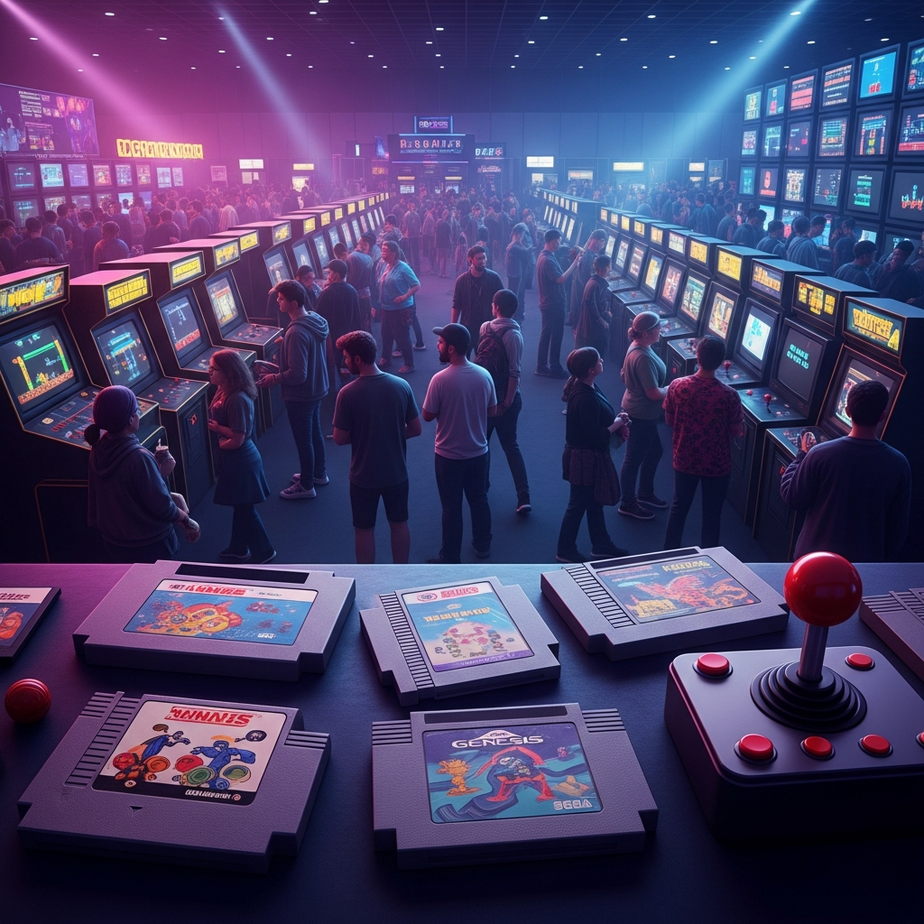
A Resonant Echo: The Thriving Heartbeat of Retro Gaming
The air hums with a familiar symphony—the cacophony of 8-bit chiptunes, the satisfying clack of arcade joysticks, and the collective cheer of a crowd witnessing a perfectly executed combo. This isn’t a memory from 1995; it’s the vibrant reality of today. The recent **Sac Gamers Expo** served as a powerful testament that retro gaming is not just surviving on nostalgia; it is a dynamic and flourishing culture. For anyone who questioned the relevance of cartridges and cathode-ray tube TVs in a world of 4K graphics and cloud gaming, this event was a definitive answer. It showcased a community bound by a shared passion for the pixels, polygons, and groundbreaking gameplay that defined entire generations. This year’s gathering was more than an expo; it was a vibrant celebration of history, art, and the enduring magic of classic video games.
More Than a Marketplace: A Living Museum of Gaming History
While many conventions are defined by their vendor halls, the **Sac Gamers Expo** distinguished itself by prioritizing history and preservation. The event felt less like a flea market and more like an interactive museum, where attendees could not only see but also experience the artifacts that shaped the industry. This commitment to celebrating gaming’s heritage created an atmosphere of reverence and discovery that permeated the entire venue.
The Art of Preservation: From Concept to Cartridge
One of the most impressive sections of the expo was dedicated to the physical and digital archival of gaming history. In partnership with preservationist groups, organizers curated exhibits that went beyond the finished product.
Here’s a glimpse of what was on display:
– Original concept art for iconic characters, showing the evolution from initial sketches to their final pixelated forms.
– Developer notes and design documents for classic titles, offering a rare look into the creative process and the technical hurdles developers faced.
– Prototype cartridges and unreleased game demos, allowing attendees to play “what if” scenarios and experience content lost to time.
– A dedicated area showcasing the process of “dumping” ROMs from deteriorating cartridges, explaining how this crucial work saves games from being lost forever.
This focus on preservation highlighted a key aspect of the retro community: it’s not just about playing old games, but about ensuring they are remembered and accessible for future generations. The care taken in these exhibits transformed the **Sac Gamers Expo** into an educational experience.
Interactive Exhibits That Bring History to Life
Beyond static displays, the expo featured hands-on exhibits that connected fans directly with the past. An entire wing was dedicated to “The History of the Home Console,” featuring every major system from the Magnavox Odyssey to the Sega Dreamcast, all hooked up to period-accurate televisions.
Another popular area was the “Arcade Alley,” a sprawling free-play zone packed with dozens of original arcade cabinets. From Pac-Man to Street Fighter II, the familiar glow of the marquees and the responsive click of the controls offered an authentic experience that emulation can’t fully replicate. This wasn’t just about nostalgia; it was about experiencing games in their intended environment, surrounded by the energy of other players.
Voices of the Industry: Insights from Legendary Guests
A major draw for the **Sac Gamers Expo** was its stellar lineup of guest speakers, featuring developers, artists, and composers who were instrumental in gaming’s golden age. These panels provided invaluable insights, moving beyond trivia to discuss the creative philosophies and technical innovations that drove the industry forward. The sessions were packed, with fans eager to hear firsthand accounts from the creators of their favorite titles.
Development War Stories and Creative Triumphs
The most compelling panels were those that pulled back the curtain on the game development process of the 80s and 90s. One particularly memorable session featured a lead programmer from a legendary JRPG studio who recounted the challenges of fitting a massive story onto a tiny Super Nintendo cartridge.
He explained, “We had to invent our own compression tools from scratch. Every line of dialogue, every character sprite, every note of music was a battle for kilobytes. It forced us to be incredibly efficient and creative, which I think is why so many games from that era have such a distinct and focused feel.” These stories offered a profound appreciation for the ingenuity required to create timeless classics on limited hardware.
The Future of Retro: New Games on Old Consoles
It wasn’t all about looking backward. Another fascinating series of talks focused on the burgeoning “homebrew” scene, where modern developers create new games for classic consoles like the NES, Sega Genesis, and Game Boy. These developers discussed their motivations, which ranged from a love for the hardware’s limitations to a desire to create experiences that feel both new and authentic.
This movement demonstrates that retro gaming is not a static hobby. It’s a living platform for new creativity. The passion to continue developing for these decades-old systems is a powerful indicator of their enduring appeal and the strength of the community that the **Sac Gamers Expo** so effectively celebrates.
The Showfloor: A Treasure Trove for Collectors and Players
Of course, no gaming convention is complete without a bustling showfloor, and the **Sac Gamers Expo** delivered in spades. It was a sprawling wonderland for collectors searching for rare gems, players looking to test their skills, and fans eager to find unique merchandise from independent artists. The energy was electric, a perfect blend of commerce, competition, and community.
Hunting for Holy Grails
The vendor hall was a collector’s paradise. Booths were stacked high with everything from common NES titles to ultra-rare Japanese imports. Navigating the aisles felt like a real-life treasure hunt, with the possibility of discovering a long-sought-after game at every turn.
What made the marketplace special was the expertise and passion of the vendors themselves. They were more than just salespeople; they were fellow enthusiasts who were happy to share stories, offer advice on console repairs, or debate the merits of different game versions. This created a welcoming environment where both seasoned collectors and curious newcomers could feel at home.
The range of items available included:
– CIB (Complete in Box) games from every generation.
– Refurbished and modded consoles with modern video outputs.
– Niche peripherals and long-forgotten accessories.
– An incredible variety of import titles that were never released in North America.
The Thrill of Competition
For those more interested in playing than collecting, the expo hosted numerous tournaments throughout the weekend. From Super Smash Bros. Melee to Tetris and Dr. Mario, the competition was fierce but friendly. These tournaments served as a powerful reminder of the timeless appeal of well-designed gameplay. The mechanics that made these games addictive decades ago still hold up today, drawing in skilled players and enthusiastic spectators. The roars from the tournament section were a constant, energetic backdrop to the entire event, proving the competitive spirit of retro gaming is stronger than ever.
Community Is the Core of Retro Gaming’s Revival
Beyond the games and the guests, the true magic of the **Sac Gamers Expo** was the people. In an era where multiplayer gaming often means anonymous online lobbies, the event was a powerful reminder of the joy of face-to-face interaction. It was a place where friendships were forged over a shared love for a niche RPG or a high-score battle on Galaga.
The diversity of the crowd was striking. Veteran gamers who grew up with the Atari 2600 walked the halls alongside teenagers discovering the Sega Genesis for the first time. Parents were enthusiastically introducing their children to the games of their youth, creating a beautiful, multi-generational bridge. Cosplayers brought beloved 8-bit characters to life with incredible creativity, posing for photos and adding to the festive atmosphere. This sense of shared identity and belonging is the engine driving the retro gaming renaissance. For more on how communities are working to save this history, organizations like the Video Game History Foundation are doing incredible work.
This year’s **Sac Gamers Expo** felt like a massive family reunion, celebrating not just the games themselves but the culture and connections they’ve inspired over the decades.
What This Year’s Expo Means for the Future
An event like this is more than just a weekend of fun; it’s a barometer for the health and direction of the retro gaming scene. The overwhelming turnout and palpable enthusiasm suggest that this niche is expanding into a major cultural force. The expo demonstrated that the demand for physical media is far from dead and that players crave authentic, tangible experiences.
The rise of high-quality clone consoles, CRT filter technologies, and a booming homebrew market indicates a shift from simple nostalgia to active, creative engagement. People aren’t just replaying old games; they are reinterpreting them, preserving them, and building new experiences on their foundations. The success of the **Sac Gamers Expo** sends a clear message to the wider industry: there is immense value, both cultural and commercial, in gaming’s rich history.
The incredible passion on display proves that the legacy of these classic games is secure. They are more than just obsolete technology; they are foundational texts of a digital age, and their influence continues to grow. Events like the **Sac Gamers Expo** are crucial hubs that nurture this passion, connecting the past with the present and inspiring the future.
If you’ve ever felt the pull of pixelated worlds or the satisfying click of a cartridge sliding into a console, the message from this year’s gathering is clear: you are part of a massive, vibrant, and growing community. Don’t just let your favorite classics gather dust on a shelf. Seek out a local retro game store, attend a convention, or join an online forum. Dive back into the games that shaped an industry and discover for yourself why retro gaming is not just alive—it’s thriving.