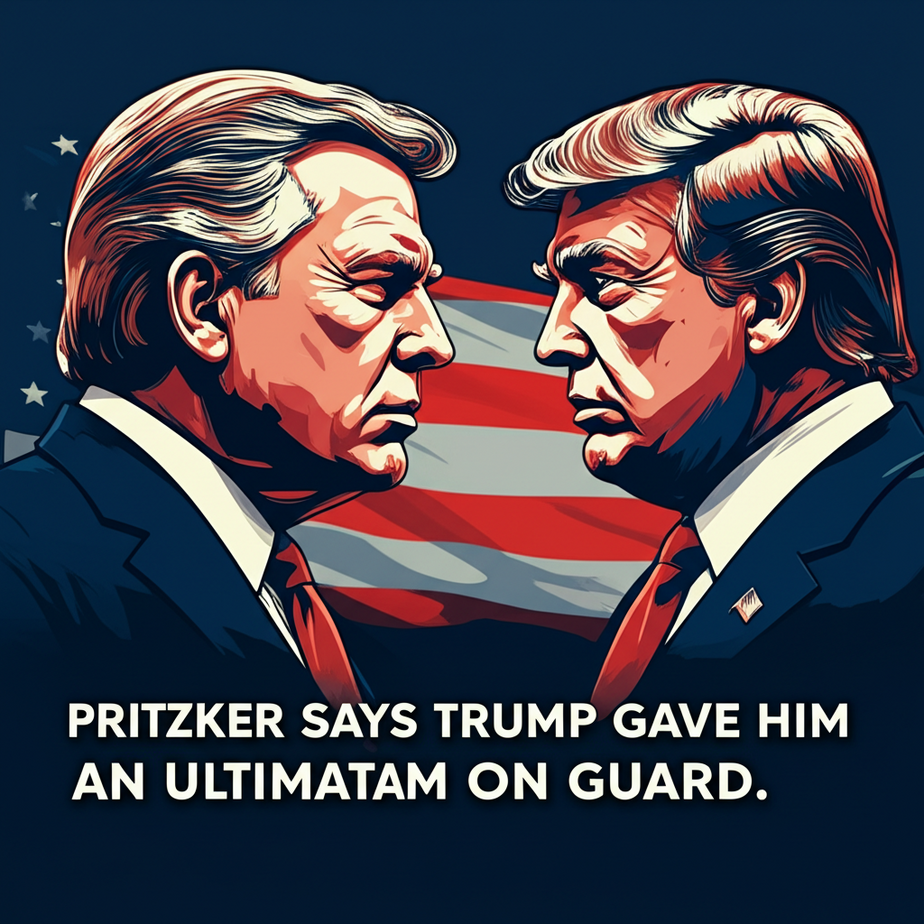
In a surprising political flashpoint that has already caught the attention of national media, Illinois Governor J.B. Pritzker announced that former President Donald J. Trump had issued an ultimatum regarding the state’s National Guard. According to a Politico report, Trump reportedly demanded that Pritzker personally call up 300 Illinois National Guard troops or face a federal intervention that would place those soldiers under direct presidential command. Pritzker described the federal order as “outrageous and un‑American,” igniting a debate over the boundaries of executive authority, state sovereignty, and the role of the National Guard in contemporary U.S. politics.
Understanding the National Guard’s Dual Status
The U.S. National Guard is a unique military institution, serving both state and federal missions. Each state maintains its own Guard, which is typically led by the governor and can be mobilized for local emergencies, natural disasters, and homeland security operations. When the federal government invokes the Title 10 of the U.S. Code, the Guard comes under federal control and can be deployed overseas or for national emergencies.
In the case of Illinois, the Guard’s commander reports to Governor Pritzker. Under normal circumstances, any federal activation requires coordination between the governor and the federal military chain of command. Trump’s alleged ultimatum—pressuring Pritzker to mobilize the troops himself or for the federal government to step in—raises questions about whether the president was attempting to override the state’s traditional authority over its Guard forces.
Trump’s Ultimatum: What Was Claimed?
While the full details of Trump’s message remain undisclosed, Pritzker’s statement suggests a direct threat: “Either you call up these soldiers yourself or the federal government will.” The governor’s response, labeling the request “outrageous and un‑American,” implies that the federal order infringed on the constitutional balance of power. Pritzker’s public remarks were delivered during a press briefing on Saturday, echoing concerns that the former president’s approach was an overreach of executive privilege.
Political observers note that the timing of this claim aligns with ongoing tensions between state leaders and Trump’s administration over issues ranging from public health mandates to immigration enforcement. Although no official confirmation of the ultimatum has surfaced beyond the governor’s account, the story has already fueled speculation about a broader strategy to assert federal dominance over state militias.
Legal and Constitutional Implications
Under the U.S. Constitution, the governor is the commander-in-chief of the state’s National Guard, except when the Guard is called into federal service. However, the federal government can also assume control under specific circumstances—such as a national emergency or a direct request from the governor. Trump’s alleged insistence that Pritzker must decide the Guard’s status places the former president in a delicate position: on one hand, he can request federal control; on the other, he cannot unilaterally override the governor’s prerogative without violating established protocols.
Legal scholars point to the Militia Act of 1903, which formalized the dual status of the Guard and clarified that the governor maintains the authority to direct the Guard’s deployment for state missions unless the federal government provides a clear directive for national service. In the absence of an official federal order—beyond the governor’s claims—this situation may be more rhetorical than legally binding.
Potential Precedent
Should a formal federal intervention occur, it could set a precedent for future governors to resist presidential directives that they deem politically motivated. The incident also underscores the importance of clear communication between the executive branch and state officials when the Guard’s deployment is at stake.
Reactions from Key Stakeholders
Governor Pritzker’s statement drew swift responses from both state and federal officials. The Illinois National Guard’s official website issued a statement emphasizing that the Guard remains under state control until a formal federal activation is authorized. “The Guard remains committed to safeguarding Illinois residents,” the statement read.
On the federal side, no direct comment was provided by former President Trump or his spokespersons. However, political analysts suggest that the absence of a rebuttal may indicate a strategic choice to avoid escalating the dispute further. Some commentators argue that the incident may be a test of Trump’s influence over state militias, while others see it as a political maneuver aimed at drawing attention to broader federal-state power struggles.
Public Opinion and Political Fallout
Public reaction appears divided along partisan lines. Supporters of Trump applaud the former president’s assertiveness, framing it as a defense against what they perceive as a “soft” state government. Critics, meanwhile, condemn the move as an overreach that could destabilize civil-military balance. Social media discussions have amplified these views, with trending hashtags such as #GuardUnderTrump and #PritzkerStance reflecting the polarized atmosphere.
Broader Context: The National Guard in Modern Politics
Historically, the National Guard has served as a stabilizing force during times of civil unrest, natural disasters, and military conflicts. In recent years, however, the Guard’s role has intersected with contentious political issues. The 2020 presidential election protests, for example, saw Guard units deployed to secure state capitals and support law enforcement. The current dispute underscores how the Guard can become a focal point for broader debates about federalism and executive power.
Experts predict that this incident will be analyzed in the context of the Trump administration’s frequent use of the National Guard for domestic purposes. The question remains whether this ultimatum was a genuine policy initiative or a political signal intended to galvanize supporters.
What Lies Ahead for Illinois and the National Guard?
At this juncture, the status of Illinois’ National Guard remains unchanged. Governor Pritzker has not yet issued an order to activate the 300 troops, and no federal command has taken effect. The situation may evolve as both sides weigh their options—particularly as national elections approach and partisan divisions deepen.
Governance experts recommend that Illinois maintain a transparent dialogue with federal authorities while safeguarding the Guard’s autonomy. Such communication could prevent misunderstandings and ensure that the Guard’s readiness is not jeopardized by political maneuvering.
Implications for Future Executive-Branch Interactions
If Trump’s ultimatum were to become a formal federal directive, it could alter the traditional relationship between state governors and the national government. The precedent could embolden future presidents to assert more direct control over state militias, potentially eroding the balance envisioned by the Constitution.
Conclusion: Navigating the Fine Line Between Authority and Autonomy
The Pritzker–Trump National Guard dispute may seem like a brief flash in the political spotlight, yet it reflects deep-seated tensions inherent in the U.S. federal system. The governor’s characterization of the order as “outrageous and un‑American” signals a defense of state sovereignty that has echoed throughout American history—from the Civil War to the Civil Rights era.
For Illinois, the outcome hinges on a delicate negotiation between state and federal interests. For the nation, the incident serves as a reminder that the National Guard’s dual status is a cornerstone of American democracy—a tool that must be handled with respect for constitutional limits and a shared commitment to public service.
As the story unfolds, stakeholders on all sides will likely monitor how this episode shapes the evolving dynamics between governors and the federal government. In a political landscape where power is often contested in subtle ways, the National Guard stands as a tangible symbol of the enduring balance that defines the United States.