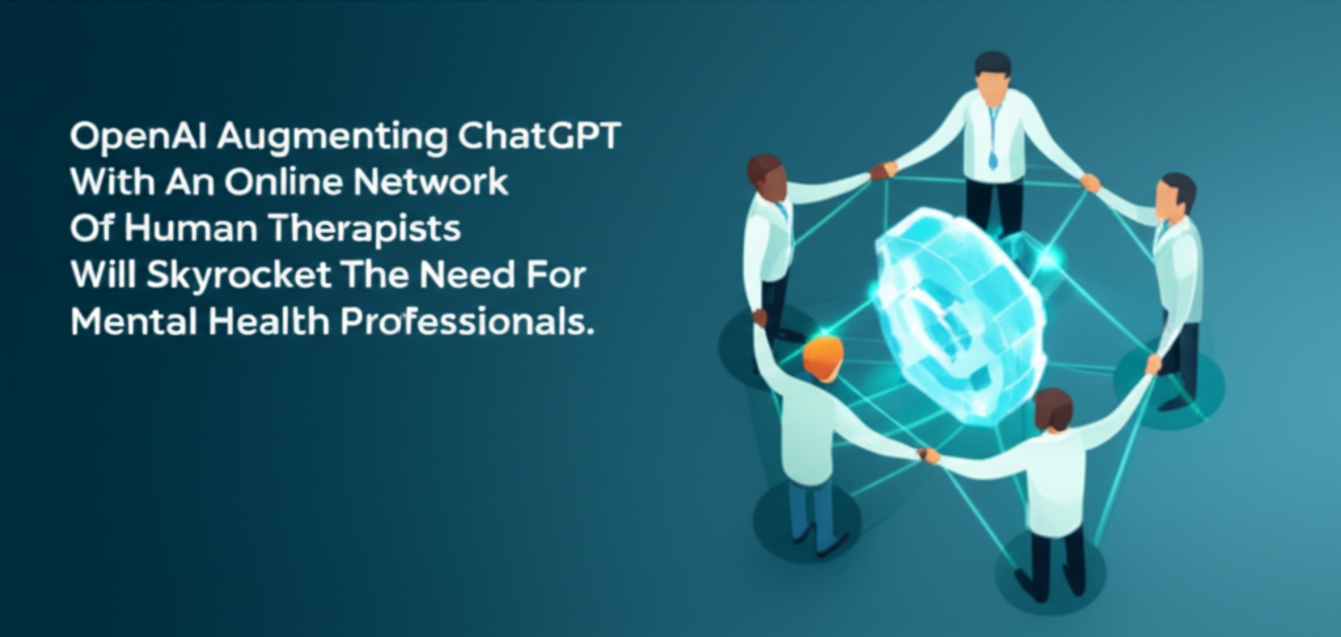
OpenAI’s latest initiative—integrating an online network of human therapists into the ChatGPT ecosystem—has ignited a whirlwind conversation across tech, healthcare, and regulatory circles. By creating a seamless bridge between AI chat and professional mental‑health support, the company is poised to not only democratize access to counseling but also to dramatically shift the labor market for psychologists, psychiatrists, and counselors. This post dives into the mechanics of the rollout, the opportunities it unlocks, and the potential ripple effects on the mental‑health profession.
What Exactly Is the New ChatGPT‑Therapist Platform?
OpenAI’s announcement outlines a two‑tiered approach. First, users can engage in a self‑service, AI‑driven dialogue that offers coping strategies, mindfulness exercises, and triage prompts. Second, if the conversation signals a more complex or urgent need—such as suicidal ideation, severe anxiety, or depressive episodes—the system automatically routes the user to a vetted human therapist. The therapists are part of a curated network, verified by professional boards and equipped with secure, HIPAA‑compliant video and messaging tools.
From a technical standpoint, the platform uses advanced natural‑language processing (NLP) to flag high‑risk content, while maintaining privacy protocols that prevent data leakage between the AI and therapist layers. The result is a hybrid care model that feels both instantaneous and deeply personal.
Why This Move Could Turbocharge Demand for Mental‑Health Professionals
- Lowered Barriers to Entry—People in remote or underserved regions now have a low‑cost entry point to professional counseling. The platform’s subscription tier offers a sliding scale, which means more individuals can access help without the stigma or logistical hurdles of traditional therapy.
- Increased Visibility for the Profession—Therapists on the platform are promoted through an in‑app referral system. Every successful session builds an online reputation, boosting visibility in search engines and local directories.
- Upskilling and Continuous Learning—OpenAI is providing therapists with AI‑augmented tools—like real‑time emotion‑analysis dashboards—to help clinicians track patient progress more efficiently. This can attract professionals looking to modernize their practice.
- Expanded Work Hours—The platform’s asynchronous messaging model allows therapists to handle more patients per day, making the profession more scalable and financially attractive.
SEO Benefits for Mental‑Health Providers
Being part of an AI‑driven network automatically boosts online discoverability. The platform’s content engine pushes user testimonials and therapist bios to search‑optimized pages, driving organic traffic. Additionally, the integration of keywords such as “online therapy,” “digital counseling,” and “AI mental health support” into each therapist’s profile enhances local SEO, positioning providers prominently in “near me” searches.
Potential Challenges and Mitigation Strategies
- Quality Assurance—The risk of inconsistent care across a growing network is real. OpenAI has committed to quarterly audits and a continuing education stipend for therapists, ensuring clinical standards remain high.
- Ethical Concerns—Balancing AI triage with human judgment requires transparent algorithms. OpenAI’s policy documents detail how data is used and provide opt‑out options for users who prefer to skip the AI stage.
- Insurance Coverage—Reimbursement models for AI‑facilitated therapy are still nascent. The platform offers a partnership with major insurers to expand coverage, making therapy financially viable for patients.
- Data Privacy—The integration of personal health information (PHI) demands rigorous compliance. OpenAI’s commitment to end‑to‑end encryption and GDPR alignment sets a new standard for digital mental health services.
How Therapists Can Capitalize on the New Ecosystem
For clinicians ready to join the platform, here are actionable steps to maximize their impact:
- Obtain Credentials—Ensure your license is active and in good standing. The platform requires proof of licensure and a malpractice insurance policy.
- Specialize—Identify a niche (e.g., trauma, ADHD, couples counseling) and highlight it in your profile. Specialized expertise attracts clients looking for tailored care.
- Engage with AI Tools—Leverage the AI dashboards to monitor patient sentiment, set reminders, and pre‑populate session notes. This frees up time for deeper therapeutic work.
- Build an Online Presence—Use the platform’s blogging feature to publish mental‑health articles. SEO‑optimized content can drive traffic back to your private practice.
- Gather Testimonials—Encourage satisfied patients to leave reviews. High ratings improve your ranking on the platform and increase referral rates.
The Bigger Picture: A Paradigm Shift in Mental‑Health Care
When AI and human expertise converge in a scalable, user‑centric format, the entire mental‑health landscape evolves. Patients experience faster triage, therapists enjoy more efficient workflows, and the profession sees a surge in demand that could close the gap between need and access. OpenAI’s venture signals the dawn of an era where digital platforms are not just adjuncts but core components of psychological care.
Conclusion: Embracing the Future of Therapy
The integration of an online therapist network into ChatGPT is more than a technological upgrade—it’s a catalyst that could transform how mental‑health services are delivered, accessed, and monetized. For providers, it’s an invitation to adapt, innovate, and expand their reach. For patients, it promises timely, personalized help at the click of a button. As the demand for mental‑health professionals continues to skyrocket, those who embrace AI‑enhanced care will likely find themselves at the forefront of this transformative wave.
OpenAI’s bold move underscores a central truth: technology, when paired with human empathy, can amplify the reach of mental‑health support far beyond what any individual practitioner could achieve alone. The future of therapy is not just online—it’s AI‑augmented, provider‑powered, and patient‑centered.