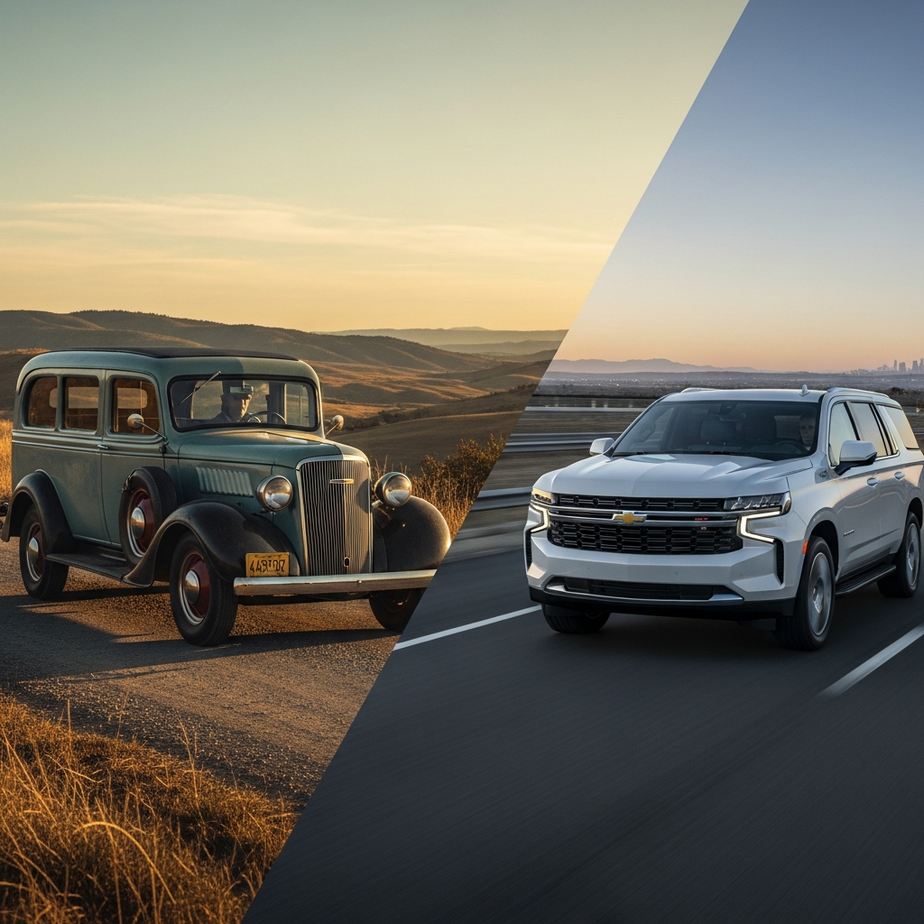
In the fast-paced world of automotive manufacturing, longevity is a rare achievement. Car models come and go with shifting consumer tastes, rising fuel prices, and evolving safety regulations. Names that were once household staples often fade into obscurity, replaced by alphanumeric designations or entirely new branding strategies designed to capture the modern imagination. Yet, amidst this constant churning of the market, one American icon has stood the test of time, weathering the Great Depression, a World War, and the digital revolution. The Chevrolet Suburban is widely recognized as the oldest American car model nameplate still in use today. First introduced to the public in 1935, this vehicle created an entirely new segment of the automobile industry and has remained in continuous production for nearly nine decades. While other legendary vehicles like the Ford Mustang or the Chevrolet Corvette capture the hearts of enthusiasts, the Suburban holds the crown for endurance. It is a testament to the power of adaptability, transforming from a utilitarian workhorse into a luxury status symbol without ever changing its fundamental DNA.
The Birth of the Carryall Suburban
To understand how this vehicle became the oldest American car model nameplate still in use today, we have to look back to the erratic economic landscape of the 1930s. The United States was in the grip of the Great Depression, and the automotive industry was looking for ways to provide practical value to businesses and large families. Before 1935, if you wanted to transport a large group of people and their luggage, your options were limited. Most car-based station wagons were built with wooden bodies that were fragile, high-maintenance, and ill-suited for heavy-duty commercial use. Chevrolet saw a gap in the market for a vehicle that combined the comfort of a passenger car with the rugged durability of a truck. The solution was the 1935 Chevrolet Carryall Suburban. Built on a half-ton truck chassis, the original model was a far cry from the leather-clad luxury liners we see on the roads today. It was a strictly utilitarian machine, featuring two doors, three rows of bench seating, and the capacity to carry eight passengers. The genius of the design was its all-steel body. By moving away from wood, Chevrolet created a vehicle that was safer, quieter, and significantly more durable. It was powered by a “Stovebolt” six-cylinder engine that produced 60 horsepower—a modest figure by modern standards, but sufficient to move families and cargo across the developing American road network. This specific combination of a station wagon body on a truck frame laid the architectural groundwork for what we now call the Sport Utility Vehicle (SUV), decades before the term was even coined.
Evolution Through the War and Post-War Era
The true test of any long-standing product is how it survives global crises. During World War II, civilian production of automobiles halted as American factories pivoted to support the war effort. However, the Suburban nameplate did not disappear. Instead, it was drafted into service. The platform was modified for military transport, serving as a troop carrier and ambulance. This period cemented the vehicle’s reputation for mechanical reliability under the harshest conditions. When civilian production resumed in 1946, the Suburban entered what is known as the “Advance Design” era. This generation, which ran from 1947 to 1955, is often regarded by classic car enthusiasts as one of the most beautiful truck designs ever produced. It featured a wider, more comfortable cabin and integrated headlights, moving away from the separate pods used in the 1930s. During this time, the vehicle began its slow transition from a pure commercial hauler to a family vehicle. The growing American middle class was moving to the suburbs—fittingly enough—and the need for a vehicle that could haul a Little League team or tow a camper became more pronounced. Chevrolet responded by introducing the Hydra-Matic automatic transmission in 1954, making the large truck much easier to drive for the average consumer.
The Introduction of the V8 Engine
A pivotal moment in the history of the oldest American car model nameplate still in use today occurred in 1955. This was the year Chevrolet launched its legendary Small Block V8 engine. Prior to this, the Suburban relied on inline-six engines that emphasized torque over speed. The arrival of the V8 changed the character of the vehicle entirely. Suddenly, the Suburban had the power to merge onto the newly constructed interstate highway system with confidence. It offered better towing capacity and improved acceleration, making it an even more attractive option for recreational use. This era also saw the introduction of factory-installed four-wheel drive in 1957. While initially popular with forestry services and utility companies, the 4WD option would eventually become a defining feature of the modern SUV, allowing families to venture off-road and navigate inclement weather safely.
The Modern SUV Takes Shape
As the decades progressed, the Suburban continued to grow in size and capability. The generation introduced in 1973, often referred to as the “Square Body” generation, ran for an incredible 18 years until 1991. This is the era where the Suburban truly became a household name and solidified its place in American culture. During the 1970s and 80s, the vehicle shifted from being a niche product to a mainstream choice for large families. It became the default option for towing boats, horse trailers, and campers. Chevrolet added rear doors on both sides, creating a four-door layout that vastly improved accessibility for rear passengers. This change effectively bridged the gap between the station wagon and the full-size van. This era also highlighted the importance of technological adaptation. In 1987, Chevrolet introduced electronic fuel injection to the Suburban lineup. This replaced the aging carburetor systems, offering better fuel efficiency, easier cold starts, and more consistent performance at different altitudes. It was a clear signal that even a heavy-duty truck needed to embrace modern automotive technology to survive.
Technological Innovation in a Historic Package
When discussing the oldest American car model nameplate still in use today, it is easy to focus on nostalgia, but the Suburban’s survival is actually due to its embrace of the future. The category of technology plays a massive role in the vehicle’s modern iterations. If the Suburban had remained a simple steel box on a frame, it would have been regulated out of existence years ago due to safety and emissions standards. The 2000s marked a shift toward luxury and advanced electronics. General Motors began equipping the Suburban with features that were previously reserved for high-end sedans. This included advanced stability control systems which helped prevent rollovers—a critical safety concern for high-profile vehicles.
Suspension and Performance Tech
One of the most impressive technological feats in the modern Suburban is the implementation of Magnetic Ride Control. Originally developed for Cadillac and the Chevrolet Corvette, this suspension technology uses a magnetorheological fluid in the shock absorbers. Sensors read the road surface up to 1,000 times per second and adjust the viscosity of the fluid instantly to smooth out the ride. This means a vehicle weighing nearly three tons can handle corners with surprising agility while absorbing potholes on the highway. Furthermore, recent models have introduced independent rear suspension, replacing the solid rear axle that had been a staple since 1935. This engineering shift dramatically increased interior cargo space and improved the ride quality for third-row passengers, proving that Chevrolet is not afraid to alter the formula to keep the nameplate competitive.
Connectivity and Safety
In the current automotive landscape, technology often refers to digital connectivity. The modern Suburban serves as a rolling Wi-Fi hotspot, capable of connecting multiple devices simultaneously. It features massive touchscreens, heads-up displays that project speed and navigation onto the windshield, and multiple camera angles that allow the driver to see around the immense vehicle when parking or towing. Safety technology has also kept this massive vehicle viable on modern roads. Features like lane-keeping assist, automatic emergency braking, and adaptive cruise control mitigate the risks associated with driving such a large machine. These innovations ensure that the oldest American car model nameplate still in use today is as safe as it is historic.
Why It Outlasted the Competition
There have been many challengers to the Suburban’s dominance over the years. The International Harvester Travelall, the Ford Excursion, and various large wagons have all tried to claim the heavy-duty family hauler segment. Yet, they have all ceased production while the Suburban marches on. One reason for this endurance is the model’s incredible versatility. It occupies a unique position in the market where it serves vastly different demographics simultaneously. You are just as likely to see a Suburban in a Secret Service motorcade protecting the President as you are to see one in a school drop-off line or on a construction site. This broad appeal insulates the model from shifting market trends that might kill off a more niche vehicle. According to data from the automotive research firm iSeeCars, the Chevrolet Suburban consistently ranks among the top vehicles most likely to reach 200,000 miles or more. This reputation for long-term durability encourages repeat buyers. Families often hand these vehicles down or trade them in for newer versions, creating a cycle of loyalty that is difficult for competitors to break. Another factor is the fleet market. Government agencies, police forces, and limousine companies buy Suburbans in bulk. This consistent commercial demand provides a financial safety net for the manufacturer, ensuring that the production lines keep moving even when retail sales dip during economic downturns.
Comparing Legends: The Suburban vs. Other Icons
While the Chevrolet Suburban is the oldest American car model nameplate still in use today, it sits in good company with other long-running American legends. Contextualizing its age helps us appreciate the achievement. The Ford F-Series, for example, is the best-selling vehicle in America, but it didn’t arrive until 1948—thirteen years after the Suburban. The Chevrolet Corvette, America’s sports car, debuted in 1953. The Ford Mustang, often considered the symbol of American automotive freedom, didn’t hit the road until 1964. Even globally, the Suburban’s longevity is rare. The Volkswagen Beetle had a massive run, but the original air-cooled design was discontinued, and the nameplate has since been retired. The Toyota Land Cruiser launched in 1951, also falling short of the Suburban’s tenure. This puts the Chevy Suburban in a very exclusive club of industrial products that have remained relevant for nearly a century.
Shared DNA with the Silverado
A key component of the Suburban’s economic viability is its relationship with the Chevrolet Silverado pickup truck. By sharing engines, transmissions, chassis components, and interior parts with the high-volume pickup trucks, General Motors keeps the development costs of the Suburban manageable. If the Suburban were a standalone platform, it might be too expensive to engineer and update every few years. However, because it is essentially a Silverado with a different body and rear suspension, it benefits from the massive R&D budget allocated to the truck division. This synergy has allowed the nameplate to survive eras where large SUVs fell out of favor due to high gas prices.
The Cultural Impact of the Suburban
Beyond the nuts and bolts, the Suburban has become a cultural icon. It has appeared in over 1,750 films and television shows. It is the vehicle of choice for the protagonists in action movies and the entourage vehicle for villains. In 2019, the Hollywood Chamber of Commerce actually awarded the Chevrolet Suburban its own star on the Hollywood Walk of Fame—the first vehicle to ever receive such an honor. This cultural ubiquity reinforces the brand. When people think of a “black car” for VIP transport, they picture a Suburban. When they think of an overland expedition vehicle, the vintage square-body Suburban comes to mind. This emotional connection keeps the nameplate valuable. General Motors understands that retiring the name “Suburban” would mean throwing away nearly 90 years of brand equity.
Looking Toward the Future
As the automotive industry pivots toward electrification, many wonder if the oldest American car model nameplate still in use today can survive the next transition. The answer seems to be yes. General Motors has already announced huge investments in electric vehicle (EV) technology, and the architecture that supports the Silverado EV is expected to underpin future iterations of full-size SUVs. The transition to electric power makes sense for a vehicle like the Suburban. Electric motors provide instant torque, which is excellent for towing and moving heavy loads. Furthermore, the large footprint of the vehicle provides ample space for battery packs, potentially offering impressive range figures. By adapting to electrification, the Suburban will likely solve its biggest historic drawback: fuel economy. An electric or hybrid Suburban could offer the same space and utility that families have loved since 1935, but with a fraction of the operating costs and environmental impact. This willingness to evolve is exactly why the nameplate has survived this long.
A Legacy of Constant Reinvention
The story of the Chevrolet Suburban is not just about a car; it is a history of American transportation needs. It started as a solution for moving work crews during the Depression, served the military in wartime, facilitated the suburban explosion of the 1950s, and morphed into the luxury family fortress of the 21st century. It has survived because it never stayed the same. It adopted automatic transmissions, V8 engines, fuel injection, active safety systems, and modern connectivity exactly when the market demanded them. It is a technological paradox: an ancient nameplate that is consistently on the cutting edge of what a passenger vehicle can do. For those in the market for a vehicle with history, capability, and presence, the Suburban offers something unique. It connects the driver to a lineage of engineering that stretches back to a time before interstate highways existed. If you have never experienced the commanding view of the road from behind the wheel of this automotive icon, head to your local dealership for a test drive. You won’t just be driving an SUV; you will be driving a piece of living history.