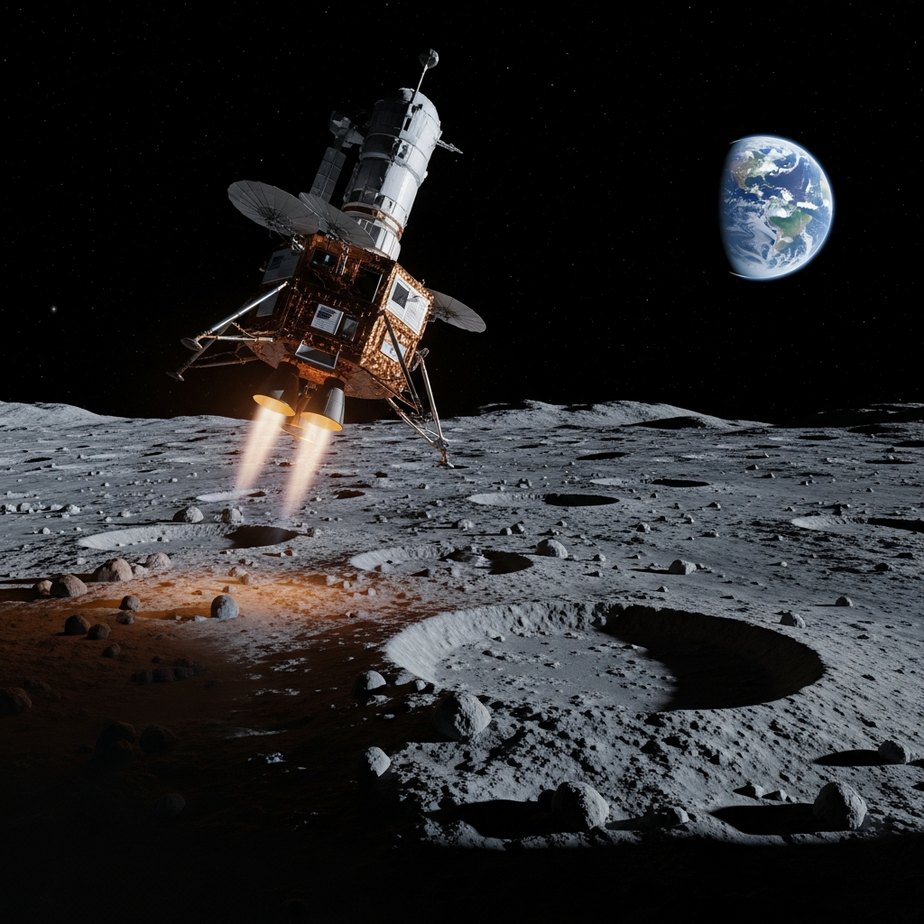
It has been over half a century since humanity last ventured beyond the protective embrace of low-Earth orbit, a fact that makes the upcoming Artemis II flight both thrilling and terrifying. Next year, four astronauts are scheduled to climb aboard the Orion capsule, sit atop the colossal Space Launch System rocket, and blast off toward the moon. While the public looks on with awe, industry experts and safety analysts are scrutinizing the flight plan with a critical eye. There is a growing consensus that NASA’s new moon mission is accepting a level of risk that may not be entirely necessary given modern capabilities. The brave crew will undertake a lunar flyby, pushing the boundaries of human exploration further than they have been pushed since 1972. However, unlike the Apollo era, where the race against the Soviet Union justified immense calculated risks, today’s context is different. We have the technology to test systems more thoroughly, yet the flight profile for Artemis II involves testing critical life-support and reentry systems with humans on board for the first time. Understanding why this approach is controversial requires a deep dive into the engineering, the testing history, and the specific hardware involved.
The Architecture of the Artemis Program
To understand the risks, one must first understand the vehicle. The Artemis program relies on two primary components: the Space Launch System (SLS) and the Orion spacecraft. The SLS is a behemoth, standing taller than the Statue of Liberty, designed to generate the massive thrust needed to break Earth’s gravity and send a heavy payload to the moon. It represents a mix of legacy hardware from the Space Shuttle era and modern avionics, a combination intended to save money and development time, though it has ultimately done neither. Sitting atop this rocket is Orion, the vessel that will house the four astronauts. This capsule is a marvel of modern engineering, designed to sustain life in the harsh environment of deep space for weeks at a time. It is larger and more capable than the Apollo command modules of the past. However, complexity brings its own set of challenges. The more systems involved, the higher the probability of unforeseen interactions between those systems. The mission profile for Artemis II is a “free-return” trajectory. This means the spacecraft will loop around the moon using gravity to slingshot back to Earth without requiring a major engine burn to return. While this is the safest trajectory for a test flight, the duration of the trip means that if a critical failure occurs days away from Earth, there is no quick way home. This reality makes the reliability of every onboard system paramount.
The Heat Shield Anomaly
Perhaps the most glaring concern regarding NASA’s new moon mission centers on the heat shield. During the uncrewed Artemis I test flight in 2022, the Orion capsule performed well in many respects, but the heat shield did not behave exactly as predicted. As the capsule slammed into the Earth’s atmosphere at Mach 32—speeds far greater than returns from the International Space Station—the heat shield experienced unexpected “char loss.”
Understanding Char Loss
Heat shields on spacecraft like Orion are ablative. This means they are designed to burn away slowly, carrying the intense heat of reentry away from the capsule. Engineers expect a smooth, gradual erosion of the material. However, during Artemis I, chunks of the heat shield material broke off rather than eroding evenly. While the capsule survived and the internal temperatures remained within safe limits, the behavior of the material defied the computer models.
The Decision to Proceed
Following the mission, NASA spent months analyzing the data. Recently, the agency decided that despite these irregularities, the heat shield is safe enough for the crewed Artemis II mission. This decision has raised eyebrows among independent safety advisory panels. The concern is not necessarily that the shield will fail catastrophically, but that the root cause of the unexpected behavior is not fully resolved. When you introduce human lives into the equation, “good enough” is a precarious standard. If the char loss is more severe on the next flight due to slight variations in atmospheric entry angle or crew weight, the safety margins could evaporate. proceeding with astronauts on board without a redesign or a second uncrewed validation flight is a bold, and some would say risky, strategy.
Testing Life Support with Lives on the Line
Another significant point of contention is the testing sequence for the Environmental Control and Life Support System (ECLSS). This is the hardware responsible for providing breathable air, removing carbon dioxide, maintaining pressure, and managing water. It is the absolute difference between life and death in the vacuum of space.
The Skip in Protocol
In traditional aerospace engineering, especially during the Gemini and Apollo eras, critical systems were often tested in an “all-up” configuration without a crew before astronauts were allowed to rely on them. Artemis I, the uncrewed test flight, did not carry a fully functional life support system. It carried sensors and mannequins, but the machinery required to keep humans alive was not fully installed or active in the way it will be for Artemis II. This means that Artemis II will be the first time the complete life support system is tested in the deep space environment. The four astronauts on board are essentially the test subjects for the equipment keeping them alive. If the CO2 scrubbers malfunction or the oxygen generation system fails halfway to the moon, the crew cannot simply open a window or dock with the International Space Station for rescue.
Why This Risk is Being Taken
The rationale behind this decision is largely driven by budget and schedule. flying another uncrewed mission to test the life support system would cost billions of dollars and delay the program by several years. NASA is under immense political pressure to show progress and to return Americans to the lunar surface before the end of the decade. Consequently, the agency is relying on extensive ground testing to validate these systems. While ground testing is sophisticated, it cannot perfectly replicate the microgravity and radiation environment of deep space. History has taught us, through tragedies like Apollo 1 and Apollo 13, that hardware behaves differently in space than it does in a vacuum chamber on Earth. By combining the first crewed flight with the first active life support test, NASA’s new moon mission is stacking risks in a way that recalls the pressure-cooker environment of the early Space Race.
The Shadow of the Space Shuttle
To understand the current safety culture and the fears surrounding it, one must look back at the Space Shuttle program. The tragedies of Challenger in 1986 and Columbia in 2003 were not caused by a lack of engineering talent, but by the normalization of deviance. This is a phenomenon where engineers and managers become desensitized to risks because previous flights succeeded despite technical anomalies.
Echoes of the Past
With the Shuttle, O-ring erosion and foam debris strikes were known issues that were deemed “acceptable risks” because they hadn’t caused a catastrophic failure—until they did. The situation with the Orion heat shield bears a haunting resemblance to these historical lessons. We are seeing an anomaly (chunking of the heat shield) that deviates from the model, yet the mission is proceeding because the previous result was technically survivable. Safety advisory groups, including NASA’s own Aerospace Safety Advisory Panel, have issued cautions regarding the ambitious schedule. They have noted that schedule pressure can subtly influence decision-making, leading managers to accept risks they might otherwise reject if they had unlimited time.
Complexity of the Abort Systems
One advantage Artemis has over the Space Shuttle is a functional Launch Abort System (LAS). If the SLS rocket malfunctions during the climb to orbit, the LAS can pull the Orion capsule away to safety. This is a critical safety feature that saved lives during the Soyuz MS-10 failure in 2018. However, the abort system itself is complex. It involves high-powered solid rocket motors that must fire instantly and perfectly. Furthermore, once the spacecraft leaves Earth’s orbit and begins the translunar injection burn, the LAS is jettisoned. From that point on, the crew is committed to the journey. If a failure occurs after the spacecraft has left Earth but before it reaches the moon, the options for survival narrow drastically. The Apollo 13 crew survived because their Lunar Module (LM) could be used as a lifeboat. The Artemis II crew will not have a Lunar Module attached. They are entirely dependent on the Orion service module. If the service module engine fails or an explosion occurs, there is no backup spacecraft to retreat to.
The Commercial Alternative Context
The risk calculation for NASA’s new moon mission is further complicated by the rapid advancement of the commercial space sector. Companies like SpaceX are developing the Starship vehicle, and Blue Origin is working on New Glenn. These programs are iterating rapidly, blowing up hardware in testing so that flight vehicles are proven. NASA is currently stuck between two eras. It is using the “Old Space” methodology of slow, expensive development cycles (SLS/Orion) but is attempting to move with the speed demanded by “New Space” competition. This hybrid approach can be dangerous. It discourages the iterative testing (blow it up and try again) that makes SpaceX successful because SLS is too expensive to waste, but it also skips the ultra-cautious, step-by-step uncrewed validation that defined NASA’s past successes.
Balancing Exploration and Survival
It is important to clarify that spaceflight can never be perfectly safe. By definition, sitting on top of a controlled explosion and riding it into a vacuum is a hazardous activity. Astronauts understand this and accept these risks willingly in the name of science and exploration. However, the goal of a space agency should be to minimize those risks to the lowest possible level. The question is whether the current plan for Artemis II meets that standard. Is skipping a full-up uncrewed dress rehearsal of the life support system necessary? Is accepting the heat shield behavior prudent? Many observers argue that a delay of two years to fly an uncrewed “Artemis 1.5” mission would be a small price to pay to ensure the safety of the crew. History remembers the triumphs, but it never forgets the tragedies. The loss of a crew on the first return mission to the moon would likely ground the US human spaceflight program for a generation. It would be a devastating blow not just to NASA, but to the spirit of exploration globally.
Final Thoughts on the Mission Ahead
As we approach the launch window, the excitement will undoubtedly build. Seeing the massive rocket on the pad and watching the countdown clock tick toward zero will be a moment of national pride and global inspiration. The astronauts aboard Artemis II are heroes, ready to pave the way for a permanent human presence on the moon and eventually Mars. However, admiration for their bravery should not silence the valid questions regarding the engineering choices that are sending them there. We must hope that the engineers have calculated the margins correctly and that the anomalies of the past do not become the failures of the future. The drive to explore is fundamental to being human, but so is the responsibility to protect those we send into the unknown. If you are interested in the technical details of spaceflight or want to stay updated on the status of the Artemis program, keep a close watch on the upcoming safety reviews. Public engagement and scrutiny are vital parts of a healthy space program. Read the reports, follow the independent safety panels, and advocate for a pace of exploration that prioritizes the lives of the explorers above the schedule of the mission.