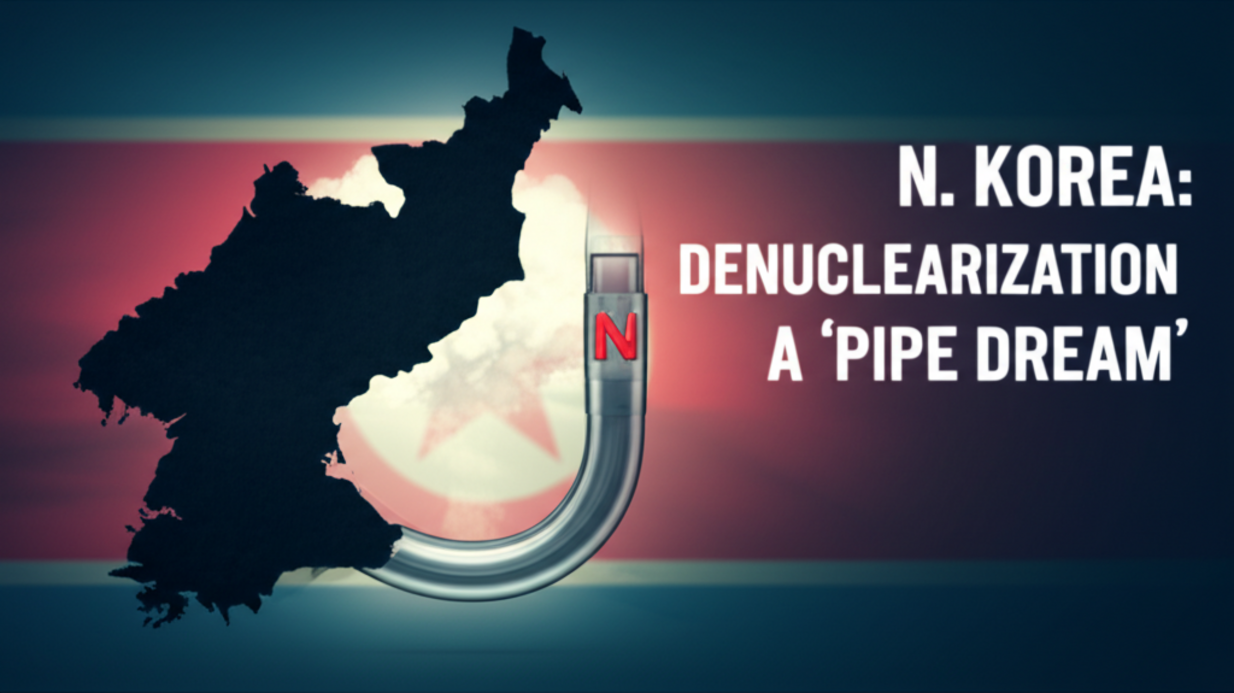
North Korea’s recent declaration that the denuclearization of the Korean Peninsula is a “pipe dream” has ignited a fresh wave of skepticism and alarm across diplomatic circles. The statement, released moments before a high‑stakes summit between South Korean President Lee Jae‑myung and Chinese President Xi Jinping, underscores the persistent chasm between the Pyongyang regime’s security rhetoric and the international community’s push for a nuclear‑free peninsula.
Context: The 2024 Summit and Its Stakes
The forthcoming summit in Pyongyang represents the first face‑to‑face meeting between the leaders of South Korea and China in several years. While the South Korean administration has openly pursued a “peaceful solution” to the North’s nuclear program, China remains a crucial ally for Pyongyang, offering economic lifelines and political legitimacy. In this high‑profile forum, both presidents are expected to outline a roadmap to curb the North’s missile arsenal and, ideally, lay the groundwork for a future denuclearization treaty.
Against this backdrop, North Korea’s statement—issued via the Korean Central News Agency—issued a stark warning: any attempt to dismantle its nuclear capabilities is futile, a “pipe dream.” The comment arrives at a time when the U.S. and its allies are intensifying diplomatic and economic pressures on Pyongyang, and when the Korean Peninsula’s security architecture is at a crossroads.
Why North Korea Calls Denuclearization a “Pipe Dream”
North Korea’s nuclear strategy has historically been anchored in deterrence and prestige. The regime views its missile and nuclear arsenal as indispensable bargaining chips against perceived external threats, especially from the U.S. and its allies. By branding denuclearization as a pipe dream, the Pyongyang leadership is reinforcing several key points:
- Deterrence Logic – The regime insists that nuclear weapons are a cornerstone of its national defense. Removing them would leave the country vulnerable to coercion or invasion.
- Political Legitimacy – Nuclear success has been a rallying point for domestic propaganda, cementing the Kim dynasty’s narrative of resilience.
- Economic Calculus – A nuclear program attracts international attention and, paradoxically, sanctions that can be leveraged against the West.
These factors create a formidable barrier to any genuine disarmament dialogue, even if the leadership publicly signals willingness to negotiate.
Historical Precedent: The 2018-2019 Summit and Stalled Negotiations
The 2018 summit between President Trump and Kim Jong‑un, followed by the 2019 talks in Singapore, momentarily suggested that a denuclearization path existed. Yet, the talks stalled over issues such as the United States’ insistence on a formal denuclearization treaty, the inclusion of China as a signatory, and the South Korean demand for concrete timelines. Subsequent U.S. administrations have struggled to maintain momentum, further eroding North Korea’s confidence in the process.
Consequently, the “pipe dream” assertion is not merely rhetorical; it is rooted in a pattern of diplomatic setbacks and unmet expectations.
Implications for South Korea and China
For President Lee Jae‑myung, the statement presents both a diplomatic challenge and an opportunity. On one hand, it signals that any progress will require a nuanced approach that balances deterrence with economic incentives. On the other, it provides a platform to emphasize the necessity of a multilateral framework that includes the United States, the Republic of Korea, China, and Japan.
China’s position is equally complex. As a permanent member of the UN Security Council and a key economic partner of North Korea, China faces a strategic dilemma: support Pyongyang’s nuclear ambitions or back a denuclearization framework that may reduce its influence on the peninsula. The summit could serve as a lever for China to push for a comprehensive, enforceable agreement that limits nuclear proliferation while preserving its own geopolitical interests.
Strategic Options for Moving Forward
- Incremental Confidence‑Building Measures (CBMs) – Establishing a series of small, verifiable steps—such as limited missile test suspensions—can gradually reduce tensions without demanding immediate disarmament.
- Economic Incentives – Leveraging China’s economic ties to offer phased sanctions relief in exchange for concrete denuclearization milestones can align Pyongyang’s incentives with global objectives.
- Multilateral Framework – A treaty that involves all regional stakeholders—South Korea, China, Japan, and the United States—can ensure shared responsibilities and verification protocols, making the path to denuclearization more credible.
- Public Diplomacy and Narrative Shifts – Engaging in a narrative transformation that portrays nuclear disarmament as a means to national prosperity rather than vulnerability could gradually shift domestic perceptions within North Korea.
SEO‑Focused Takeaways for Readers
In the rapidly evolving landscape of Korean Peninsula security, this “pipe dream” declaration highlights the ongoing tension between nuclear deterrence and global disarmament goals. For policymakers, analysts, and concerned citizens, understanding the nuances behind this statement is vital:
- The declaration underscores North Korea’s entrenched security doctrine.
- It reflects historical diplomatic setbacks that have eroded trust.
- It challenges South Korea and China to rethink strategic approaches.
- It calls for innovative, multilateral solutions that balance deterrence with incentives.
As the summit proceeds, the world will watch closely to see whether the leaders can turn rhetoric into tangible progress or whether the notion of a nuclear‑free Korean Peninsula will remain an elusive pipe dream. The outcomes will have profound implications not only for regional stability but also for the global non‑proliferation regime.