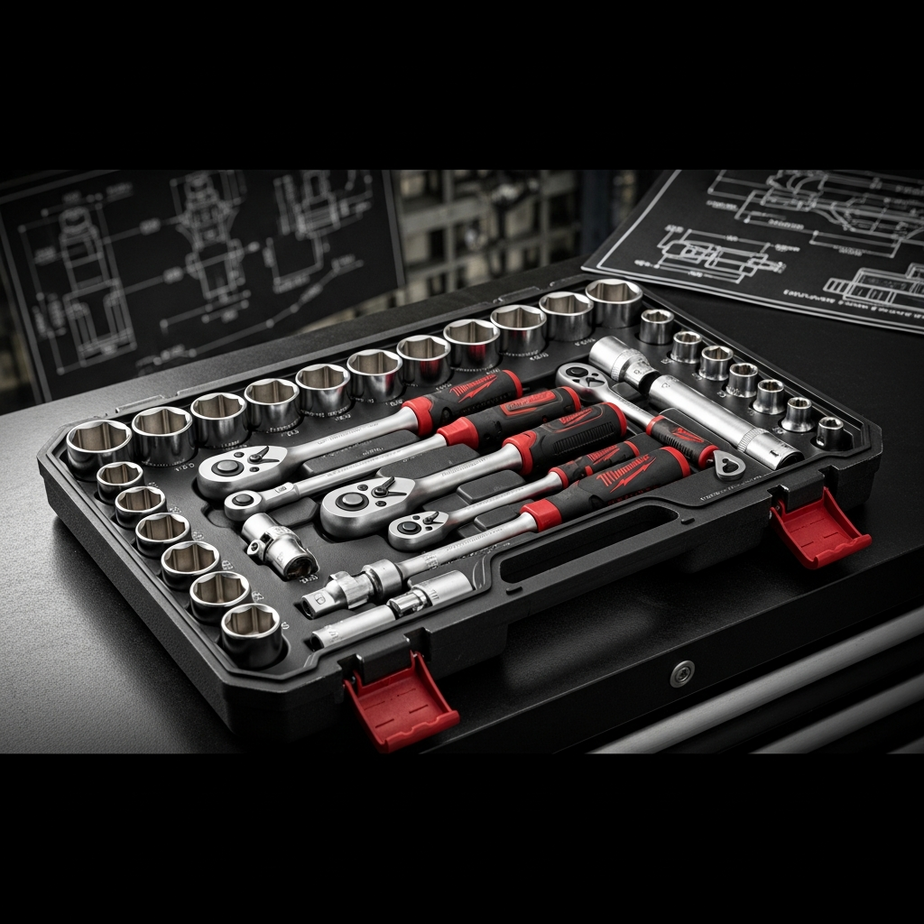
The Milwaukee Red: Unpacking the Story Behind the Sockets
Walk into any job site or serious home garage, and you’re bound to see a sea of red. Milwaukee tools have earned a reputation for rugged durability and professional-grade performance that few brands can match. While their power tools often steal the spotlight, their hand tools, especially their socket sets, are equally respected. This leads many discerning buyers to ask a critical question: in an age of global manufacturing, **who makes Milwaukee’s socket sets** and does their origin live up to the brand’s legendary name? The answer is more nuanced than a simple factory location; it’s a story of American engineering, global partnerships, and an unwavering commitment to quality control.
Understanding where your tools come from is about more than just a label on a box. It’s about trusting that the ratchet in your hand won’t fail under pressure and that the socket will fit perfectly, every time. For those invested in the Milwaukee ecosystem, knowing the manufacturing story provides peace of mind and a deeper appreciation for the tool’s journey from design to your toolbox. Let’s pull back the curtain on the manufacturing process and explore the details you need to know.
A Legacy Forged in America: The Milwaukee Electric Tool Corporation
Before we dive into the specifics of modern manufacturing, it’s essential to understand the foundation upon which Milwaukee was built. The brand wasn’t born in a global boardroom; it was forged in the industrial heartland of America with a clear mission: to create the best heavy-duty tools for professional tradespeople.
The Early Days of Innovation
The Milwaukee Electric Tool Corporation was officially founded in 1924 by A.F. Siebert in Milwaukee, Wisconsin. Its early success was built on improving existing tools. The company’s first product was the “Hole-Shooter,” a lightweight and portable one-handed 1/4-inch capacity drill that was a significant improvement over the heavier, more cumbersome models of the time. This focus on practical, user-driven innovation became a core part of Milwaukee’s identity.
For decades, Milwaukee was synonymous with “Made in the USA.” Their reputation grew as they introduced iconic tools like the Sawzall Reciprocating Saw in 1951 and the Hole-Hawg high-torque drill, cementing their place as a favorite among plumbers, electricians, and construction workers. This deep American heritage is a source of immense pride for the brand and its loyal customers.
Maintaining a US Presence
While the manufacturing landscape has changed dramatically, Milwaukee continues to invest heavily in its American operations. The company maintains its global headquarters in Brookfield, Wisconsin, which remains the central hub for research, development, and engineering. They have also expanded their manufacturing footprint within the United States, with facilities in Mississippi, Indiana, and Tennessee dedicated to producing a range of power tools, accessories, and other products. This commitment ensures that the core engineering and design philosophy remains firmly rooted in the USA.
The Modern Reality: Global Manufacturing and the TTI Connection
The simple days of a single factory producing a tool from start to finish are largely gone for major global brands. To understand **who makes Milwaukee’s socket sets** today, we must first understand the role of its parent company and the nature of the modern supply chain. This global approach allows companies to leverage specialized manufacturing expertise from around the world.
Meet Techtronic Industries (TTI)
In 2005, Milwaukee Tool was acquired by Techtronic Industries (TTI), a Hong Kong-based global powerhouse in the power tool and home improvement industry. This acquisition was a pivotal moment, providing Milwaukee with the resources and global manufacturing network needed to expand its product lines and accelerate innovation.
TTI is a massive player in the tool world, owning a portfolio of well-known brands, including:
– Ryobi
– RIDGID (under license)
– Hoover
– Hart Tools
– Oreck
– Vax
Being part of the TTI family means Milwaukee can leverage a vast, efficient, and technologically advanced manufacturing network. TTI operates factories across the globe, including in China, Vietnam, Mexico, Europe, and the United States. This structure allows them to produce tools and components where it makes the most economic and logistical sense, without sacrificing the quality standards set by each individual brand. According to TTI’s corporate information, their strategy focuses on investing in powerful brands and innovative products, a philosophy that has greatly benefited Milwaukee.
OEM vs. In-House Manufacturing
Many people assume that if a product isn’t made in a company’s “own” factory, its quality is inferior. However, the reality is more complex. Major brands like Milwaukee utilize a mix of in-house manufacturing at TTI-owned facilities and partnerships with specialized Original Equipment Manufacturers (OEMs).
An OEM is a company that has exceptional expertise in producing a specific type of product. In the hand tool industry, certain regions and factories are world-renowned for their ability to forge and machine high-quality steel. By partnering with these specialists under strict guidelines, a brand can ensure it gets a best-in-class product. The key is that Milwaukee doesn’t just buy an off-the-shelf socket set and slap their logo on it. They control the entire process from start to finish.
The Answer: Who Makes Milwaukee’s Socket Sets?
With the corporate and manufacturing context established, we can now directly address the core question. Milwaukee’s socket sets are primarily manufactured in Taiwan, with some production also occurring in China, through TTI’s robust supply chain and manufacturing partners. This isn’t a secret the company tries to hide; in fact, it’s a testament to their commitment to quality.
Why Taiwan is the Go-To for Premium Hand Tools
For decades, Taiwan has cultivated a reputation as a global leader in high-end hand tool manufacturing. Unlike mainland China, which is often associated with mass-market production, Taiwan’s industrial sector is known for precision, quality materials, and advanced manufacturing techniques.
There are several reasons why sourcing from Taiwan is a strategic choice for premium sockets:
1. **Superior Steel Quality:** Taiwan has access to high-grade chrome vanadium and chrome molybdenum steel, which are essential for creating durable, long-lasting sockets that can withstand high torque without cracking or deforming.
2. **Advanced Forging and Machining:** Taiwanese factories have perfected the art of cold forging and precision machining. This results in sockets with tighter tolerances, more accurate sizing, and a superior fit on fasteners, reducing the risk of rounding nuts and bolts.
3. **Skilled Workforce:** The region boasts a highly skilled and experienced workforce specializing in tool manufacturing, ensuring consistent quality control and attention to detail.
4. **A Hub for Top Brands:** Milwaukee is not alone. Many other top-tier tool brands, including some professional lines from Snap-on’s international divisions and other reputable names, source their premium hand tools from the same expert factories in Taiwan.
So, when you see “Made in Taiwan” on a Milwaukee socket, you can be confident that it comes from a facility known for producing some of the best hand tools in the world.
The Milwaukee Difference: Design and Quality Control
The most crucial takeaway is this: regardless of the factory’s location, a Milwaukee tool is always a Milwaukee tool. The brand maintains absolute control over the entire process.
American-Led Engineering
The journey of a Milwaukee socket set begins long before it hits the production line. It starts with teams of engineers and product managers at their headquarters in Wisconsin. They are responsible for:
– **Design and Innovation:** Developing unique features like the FOUR FLAT™ sides that prevent sockets from rolling away.
– **Material Specification:** Dictating the exact type and grade of steel to be used.
– **Performance Standards:** Setting rigorous testing protocols for torque strength, durability, and corrosion resistance.
– **Final Approval:** Every design must meet their strict internal standards before any manufacturing begins.
On-Site Quality Assurance
Milwaukee and TTI don’t just send blueprints overseas and hope for the best. They have dedicated quality control teams on the ground at their partner facilities. These teams ensure that every single step of the manufacturing process—from the raw steel to the forging, heat treatment, chrome plating, and laser etching—adheres to Milwaukee’s uncompromising standards. Any batch that doesn’t meet the specifications is rejected. This hands-on approach guarantees that a socket made in Taiwan is built to the same exacting standard as a power tool assembled in Mississippi.
Decoding the Features: What Sets Milwaukee Sockets Apart?
Knowing the manufacturing story is important, but what truly matters is how the tool performs in your hands. Milwaukee has integrated several innovative, user-focused features into their socket sets that are a direct result of their American-led design process.
FOUR FLAT™ Sides
This is perhaps the most recognizable feature of Milwaukee sockets. The squared-off design on four sides prevents the socket from rolling off a workbench or angled surface. It’s a simple but brilliant solution to a common frustration and also provides a better gripping surface for your fingers.
90-Tooth Ratchet Design
Most standard socket sets come with a 72-tooth ratchet. Milwaukee’s ratchets feature a 90-tooth design, which provides a tight 4-degree arc swing. This may sound like a minor detail, but it makes a massive difference when working in tight spaces, such as in an engine bay or under a dashboard, where you only have a few inches of clearance to move the handle.
Clear, Stamped-and-Inked Markings
There’s nothing more annoying than grabbing a socket and not being able to read the size. Milwaukee sockets feature deep, stamped markings that are filled with high-contrast red ink. This makes them incredibly easy to identify at a glance, even in low light or when they’re covered in grease.
Durable and Organized Storage
Milwaukee pays as much attention to the storage case as they do to the tools themselves. Their socket set cases are known for being robust and well-designed, with removable inner trays that can be placed directly into a toolbox drawer for ultimate organization.
Milwaukee’s unwavering commitment to quality is also backed by one of the best warranties in the business. Their mechanic’s hand tools, including all sockets and ratchets, come with a lifetime guarantee. This demonstrates the company’s confidence in its design, materials, and manufacturing processes, regardless of where the tools are made.
The debate over domestic versus international manufacturing will always exist, but the story of Milwaukee’s socket sets shows that the answer isn’t black and white. While the physical production primarily takes place in world-class facilities in Taiwan, the heart, soul, and brains of the operation remain firmly planted in the USA. The brand’s rigorous oversight, from initial design in Wisconsin to final quality checks at the factory, ensures that every socket bearing the Milwaukee name lives up to its hard-earned reputation.
Ultimately, the most important factor is not the country stamped on the steel, but the quality standards upheld by the brand. Milwaukee has proven that by combining American engineering with the best global manufacturing partners, they can deliver a product that is innovative, reliable, and built to last a lifetime. So, the next time you pick up a Milwaukee socket, you can feel confident knowing it’s the result of a truly global effort to create a best-in-class tool.