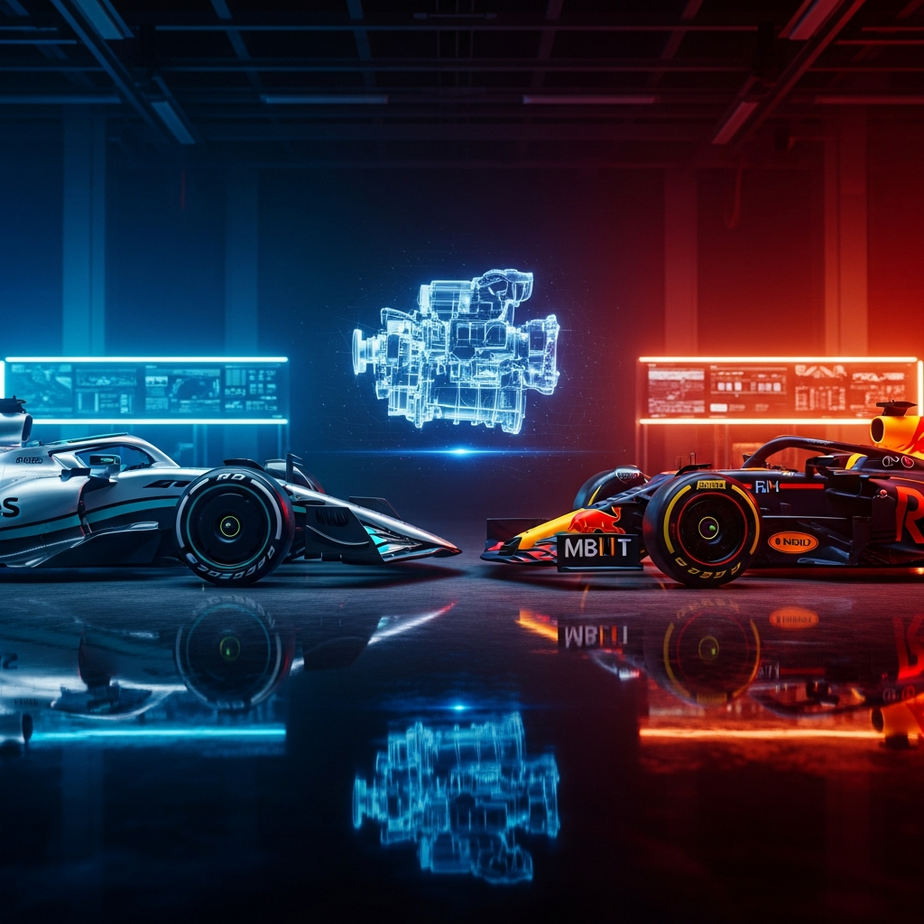
The 2026 Engine Regulations: A Radical Shift in F1’s Power Dynamics
While the current Formula 1 season captivates millions, a storm is brewing behind the scenes, centered on the very heart of the cars: the power unit. The 2026 regulations promise the most significant overhaul in a decade, and a major controversy surrounding the future **Mercedes & Red Bull F1 engines** is already threatening to redefine the competitive landscape before a single wheel is turned. This isn’t just a technical debate; it’s a high-stakes political battle between established champions and ambitious newcomers, with the future of F1’s on-track spectacle hanging in the balance.
The upcoming changes are not merely an evolution; they are a revolution. Designed to make the sport more sustainable, road-relevant, and attractive to new manufacturers, these regulations are forcing every team back to the drawing board. Understanding this technical reset is crucial to grasping the depth of the current disagreement.
A New Formula for Power
At the core of the 2026 regulations is a fundamental change in how F1 cars will generate their immense power. The goal is to create a more balanced and sustainable power unit.
The key changes include:
– Increased Electrical Power: The electrical output from the Energy Recovery System (ERS) will be dramatically increased, rising from 120kW to 350kW. This means nearly half the car’s power will come from electricity.
– Removal of the MGU-H: The complex and costly Motor Generator Unit-Heat (MGU-H), which recovered energy from the turbocharger’s heat, has been eliminated. This was a major barrier to entry for new manufacturers.
– 100% Sustainable Fuels: F1 will switch to fully sustainable ‘e-fuels’, a move designed to position the sport as a leader in green technology without sacrificing the roar of the internal combustion engine (ICE).
– Simplified Internal Combustion Engine: While the V6 turbo-hybrid format remains, the ICE itself will be simplified to work in tandem with the more powerful electrical systems.
The result is a targeted 50/50 split in power delivery, with half coming from the traditional engine and the other half from the battery. This ambitious target is the source of all the current friction.
The Goals Behind the Great Reset
The FIA, motorsport’s governing body, had clear objectives when drafting these rules. The primary goal was to entice new manufacturers into the sport, a feat they successfully achieved. Audi is set to enter as a full works team, and Ford is partnering with Red Bull’s new powertrain division.
Furthermore, by ditching the MGU-H and focusing on powerful hybrid systems and sustainable fuels, F1 aims to enhance its road relevance. The technology developed for the track could, in theory, find its way into future consumer vehicles, strengthening the sport’s connection to the global automotive industry. This pivot towards sustainability is seen as essential for F1’s long-term survival and appeal.
The Heart of the Controversy: A Paddock Divided
The debate over the 2026 regulations has split the paddock into two distinct camps. On one side, you have Red Bull Racing, the reigning world champions, who are venturing into engine manufacturing for the first time with their Red Bull Powertrains (RBPT) division, supported by Ford. On the other side are the established powertrain giants, most notably Mercedes and Ferrari.
This divide isn’t just about a difference of opinion; it’s a fundamental disagreement over the feasibility and consequences of the new rules. The intense debate surrounding the next-generation **Mercedes & Red Bull F1 engines** is exposing deep-seated strategic maneuvering as teams jockey for position in the new era.
Red Bull’s “Frankenstein Car” Fears
Red Bull team principal Christian Horner has been the most vocal critic of the 2026 regulations. His primary concern is that the 50/50 power split will have unintended and detrimental effects on the chassis design and the quality of the racing itself. He fears the regulations will create “Frankenstein cars” where the chassis is unnaturally compromised to serve the demands of the power unit.
Red Bull’s main arguments center on a few key predictions:
– Loss of Power on Straights: The powerful battery will deplete quickly down long straights, forcing drivers to potentially downshift while at full throttle simply to help recharge the system. This would be an unprecedented and, some argue, bizarre feature of top-tier racing.
– The Rise of Active Aerodynamics: To compensate for the power unit’s characteristics and massive drag, cars will likely require complex and heavy active aerodynamics. This means moveable wings on both the front and rear of the car to shed drag on the straights, adding another layer of complexity and potential reliability issues.
– Compromised Chassis Design: The weight and packaging of the larger battery and electrical components could force designers into making compromises that hurt the car’s handling and nimbleness in corners.
These concerns are magnified by the fact that Red Bull is a newcomer to the engine game. While they have recruited top talent, they lack the decades of institutional knowledge possessed by their rivals, making their development challenge even steeper.
Mercedes and Ferrari’s Rebuttal: “It’s Too Late”
In the opposite corner, Mercedes and Ferrari have firmly pushed back against any suggestion of a late overhaul of the regulations. Their stance is clear: the rules were agreed upon by all parties years ago, and extensive resources have already been invested in the current development path.
Mercedes team boss Toto Wolff has suggested that Red Bull’s complaints may be a sign that their own powertrain project is falling behind schedule. From his perspective, changing the rules now would unfairly penalize the teams that have diligently worked towards the agreed-upon targets. This sentiment is echoed by Ferrari, which also sees any last-minute changes as a form of political gamesmanship.
Their argument is that the challenges are part of the engineering competition that defines Formula 1. It’s up to each team’s engineers to find the most elegant and effective solution to the problems presented by the regulations. The public dispute over the future **Mercedes & Red Bull F1 engines** is a classic example of F1’s blend of high-tech engineering and shrewd political maneuvering.
Who Stands to Gain from the 2026 Shake-Up?
Every major regulation change in Formula 1 creates winners and losers. The last significant overhaul in 2014 catapulted Mercedes into an era of unprecedented dominance, while Red Bull and Ferrari were left playing catch-up for years. The 2026 shift is poised to trigger a similar competitive reset, and teams are desperately trying to ensure they land on the right side of it.
The current controversy is not just a technical debate; it’s a pre-emptive strike in the war for future supremacy. Understanding the motivations behind each team’s position reveals the strategic undercurrents driving the conflict.
Established Giants vs. Ambitious Newcomers
The established power unit manufacturers—Mercedes, Ferrari, and Renault (Alpine)—have a significant head start. They have spent the last decade mastering the complexities of hybrid technology. While the MGU-H is gone, their deep understanding of energy recovery, battery management, and system integration provides a powerful foundation. For them, the 2026 rules are an evolution of their existing expertise.
In contrast, Red Bull Powertrains and Audi are starting from a much lower base. While they can hire experienced engineers from rival teams, they cannot instantly replicate the years of accumulated data and practical knowledge. This disparity is central to the controversy. Red Bull’s calls for a revised power ratio—perhaps shifting to a 55/45 or 60/40 ICE/electric split—could be interpreted as an attempt to de-risk their entry and play more to the strengths of a traditional combustion engine, an area where their partner Ford has extensive experience.
The fierce debate shows how the development of the **Mercedes & Red Bull F1 engines** is becoming a proxy war for the future balance of power on the grid.
The Potential Impact on the Racing Spectacle
Ultimately, what matters most to the fans is the quality of the on-track action. The fear is that the new regulations, as they stand, could lead to a less engaging racing product. If cars are heavily dependent on battery deployment, strategies could become dominated by “lift and coast” tactics to save energy, and overtaking could become programmatic rather than instinctual.
The prospect of drivers managing complex energy systems on the straights, potentially even losing speed to recharge, could detract from the image of F1 as the pinnacle of flat-out racing. However, proponents of the rules argue that these new challenges will simply create a different kind of strategic racing, rewarding the cleverest teams and drivers. The FIA is betting that the combined genius of the F1 engineering world will overcome these hurdles and produce cars that are both technologically advanced and thrilling to watch.
The FIA’s Position and the Inevitable Path Forward
Caught in the middle of this manufacturer feud is the FIA. The governing body has acknowledged the concerns raised by Red Bull and others, but they have remained steadfast in their commitment to the core principles of the 2026 regulations. FIA single-seater director Nikolas Tombazis has stated that while minor adjustments are possible, there will be no fundamental rewrite of the rules.
According to a report on Motorsport.com, the FIA believes the simulations projecting “weird” driver behavior may be immature and that teams will find solutions as their designs mature. They are confident that the framework they have created is sound. The deadlines for major regulatory changes have long passed, and manufacturers are now too far down their development paths for a significant pivot.
The reality is that teams are locked in. The debate may continue in the media, but behind closed doors, engineers at all ten teams are working tirelessly to solve the puzzle presented by the 2026 rules. The battle is no longer about changing the game; it’s about mastering it better than anyone else.
The focus on the **Mercedes & Red Bull F1 engines** highlights the two different philosophies at play, but every single engine manufacturer on the grid, including Ferrari, Renault, and the incoming Audi, is facing the exact same set of challenges.
As the 2026 season inches closer, the war of words will slowly be replaced by the quiet hum of dynamometers and the intense whir of computer simulations. The true winners and losers of this regulatory era will not be decided in press conferences, but in the innovation labs and on the test tracks. The controversy serves as a tantalizing prelude to what promises to be one of the most unpredictable and fascinating periods in modern Formula 1 history.
The battle for 2026 is already being fought, not on the asphalt, but in the engineering departments and boardrooms of motorsport’s biggest names. This high-stakes technological chess match, epitomized by the public friction between the **Mercedes & Red Bull F1 engines** development camps, will define the next generation of Grand Prix racing. As teams push the boundaries of innovation, the ultimate question remains: who will crack the code first? Share your predictions for the 2026 pecking order in the comments below and stay connected for every update on this evolving story.