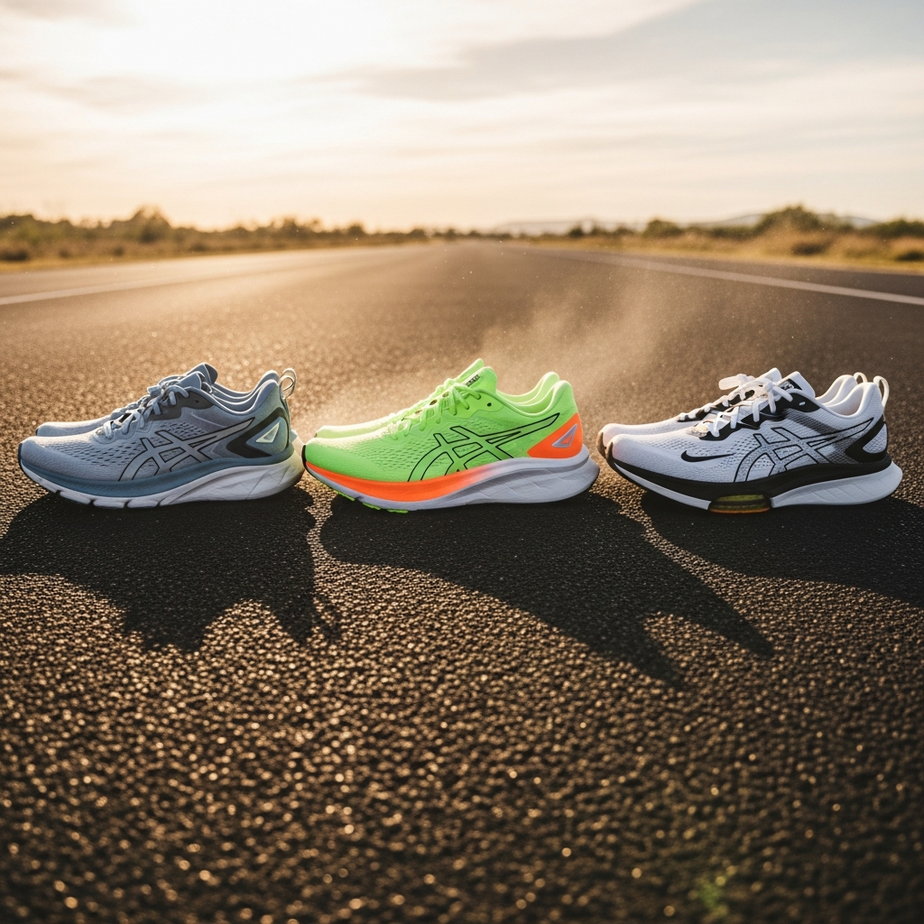
Why Every Runner Should Consider a Running Shoe Rotation
The steam rising from the pavement after a summer rainstorm, the rhythmic slap of my shoes, the feeling of pushing through that final mile—these are the moments I live for as a marathoner. But I learned a hard lesson early in my training: the gear matters just as much as the grit. For my first marathon, I did everything in a single, beat-up pair of trainers. The result? Shin splints, sluggish long runs, and a shoe that was completely dead by race day. That’s when I discovered the transformative power of a **running shoe rotation**, a strategy that has since become the cornerstone of my training, keeping me healthier, faster, and surprisingly, more economical.
At its core, a **running shoe rotation** is the simple practice of using two or more different pairs of running shoes for different types of workouts. It’s not about having a closet full of expensive sneakers for the sake of it. It’s a deliberate, strategic approach to training that aligns the technology in your shoes with the specific goal of each run. This method leverages different shoe designs to maximize performance and minimize the repetitive stress that can lead to injury.
Many runners hesitate, thinking it’s an unnecessary expense. I used to think the same way. But what I’ve found is that this small investment upfront pays huge dividends in performance, injury prevention, and even the lifespan of the shoes themselves. It’s one of the most effective and often overlooked tools a runner has at their disposal.
The Science-Backed Benefits of Rotating Your Running Shoes
Switching to a **running shoe rotation** isn’t just about feeling fresh; it’s a decision grounded in biomechanics and material science. The benefits extend far beyond just having a dry pair of shoes ready for your next run.
Benefit 1: Significant Injury Reduction
This is the single most important reason I recommend a **running shoe rotation** to every runner I meet. Running is a high-impact, repetitive motion. Every single footstrike sends forces equal to several times your body weight up through your legs. When you wear the same shoe for every run, you are loading your muscles, tendons, and bones in the exact same pattern, day after day.
This repetitive stress is a leading cause of common running injuries like plantar fasciitis, Achilles tendinopathy, and runner’s knee. By rotating between different shoes—with varying cushion levels, heel-to-toe drops, and stability features—you introduce variability into how those forces are distributed. Each shoe slightly alters your footstrike and running mechanics, engaging and strengthening different supporting muscles.
Think of it like cross-training for your feet. A 2013 study published in the Scandinavian Journal of Medicine & Science in Sports found that runners who used more than one pair of shoes during the study period had a 39% lower risk of running-related injury than those who did all of their running in a single pair. That’s a massive reduction in risk for a relatively simple change in habit.
Benefit 2: Enhanced Performance for Every Workout
Your training plan isn’t one-size-fits-all, so why should your shoes be? A marathon plan typically includes several distinct types of runs, each with a different purpose:
– Long, slow distance runs to build endurance.
– Tempo runs at a comfortably hard pace to improve lactate threshold.
– Interval sessions on the track to boost speed and VO2 max.
– Easy recovery runs to aid muscle repair.
Using a single “jack-of-all-trades” shoe means you’re compromising on every single one of these workouts. A max-cushion shoe that’s perfect for protecting your legs on a 20-mile long run will feel heavy and unresponsive during fast track intervals. Conversely, a lightweight, snappy racing shoe won’t provide the support and comfort needed for daily mileage. A proper **running shoe rotation** allows you to match the tool to the job, maximizing the benefit of every session.
Benefit 3: Increased Shoe Lifespan
This might seem counterintuitive, but investing in multiple shoes can actually save you money in the long run. The magic is in the midsole foam—the part of the shoe responsible for cushioning and energy return. This foam, typically made of EVA or more advanced materials like PEBA, compresses with every footstrike to absorb impact.
After a run, the foam needs time to decompress and return to its original state. Experts suggest this can take at least 24 to 48 hours. If you run in the same pair of shoes every day, the foam never fully recovers. It breaks down faster, loses its protective qualities, and forces you to buy a new pair sooner.
By rotating between two or three pairs, you give each shoe’s midsole ample time to rebound. This not only ensures you get the intended cushioning and support on every run but also extends the total mileage you can get out of each pair. A shoe that might last 300 miles with daily use could last 400-500 miles when used as part of a rotation.
Building Your Ideal 3-Shoe Running Rotation
Getting started with a **running shoe rotation** doesn’t have to be complicated or expensive. For most marathoners, a three-shoe rotation is the sweet spot, covering all the essential training needs. Here’s a breakdown of the three core shoes and their roles.
Shoe 1: The Daily Trainer (The Workhorse)
This is the foundation of your rotation and the shoe you’ll log the most miles in. It’s designed for comfort, durability, and protection. You’ll use this shoe for your easy and moderate-effort runs, which should make up the bulk of your weekly mileage.
What to look for:
– Ample Cushioning: Look for a generous amount of midsole foam to absorb impact and keep your legs fresh. This is often referred to as a “max cushion” shoe.
– Durability: The outsole should have plenty of tough rubber to withstand high mileage, and the upper should be comfortable yet robust.
– A Stable Platform: It should feel inherently stable and supportive without being overly controlling (unless you specifically need a stability shoe for overpronation).
– Examples: Hoka Clifton, Brooks Ghost, New Balance Fresh Foam 880, Saucony Ride.
Shoe 2: The Speed Day Shoe (The Engine)
This shoe is built for your quality workouts: tempo runs, intervals, and fartleks. The goal here is not maximum comfort, but responsiveness and energy return to help you hit your paces. It will feel lighter, firmer, and more connected to the ground than your daily trainer.
What to look for:
– Lighter Weight: Less weight means less effort to turn your legs over quickly.
– Responsive Foam: Midsoles are often made from more advanced, “bouncier” foams like PEBA-based compounds (e.g., Nike ZoomX, Saucony PWRRUN PB).
– Propulsion Technology: Many speed shoes incorporate a nylon plate or other stiffening element in the midsole to provide a snappy, propulsive feeling at toe-off.
– A Snug Fit: The upper is typically more streamlined for a secure lockdown when you’re running fast.
– Examples: Saucony Endorphin Speed, Hoka Mach, Asics Magic Speed, New Balance FuelCell Rebel.
Shoe 3: The Race Day Shoe (The Secret Weapon)
This is the shoe you save for race day and a few key dress-rehearsal workouts. It represents the pinnacle of running shoe technology, engineered for one thing: making you as fast and efficient as possible over the marathon distance. These are often the most expensive shoes in a rotation, but their impact on performance is undeniable.
What to look for:
– Carbon-Fiber Plate: This is the defining feature. A rigid, full-length carbon plate works in tandem with the foam to stabilize your foot and propel you forward, improving running economy.
– Super Foams: The most advanced, lightest, and highest-energy-return foams are reserved for these models.
– Minimal Weight: Every component is stripped down to save grams, from the paper-thin upper to the minimal rubber on the outsole.
– Rocker Geometry: The sole is curved to encourage a smooth and quick transition from footstrike to toe-off.
– Examples: Nike Vaporfly, Saucony Endorphin Pro, Adidas Adizero Adios Pro, Asics Metaspeed Sky+.
How to Implement and Manage Your Shoe Rotation
Once you’ve assembled your shoes, the key is to use them strategically. A well-managed **running shoe rotation** becomes an intuitive part of your training week.
Step 1: Assign a Purpose to Each Shoe
Before you even run in them, decide what each shoe is for. This mental categorization is critical.
– Your Daily Trainer is for your Zone 2 easy runs and long runs.
– Your Speed Day Shoe is for Tuesday track workouts and Thursday tempo runs.
– Your Race Day Shoe is for that one key long run with marathon-pace miles and, of course, the race itself.
Write it on the box if you have to. This prevents the temptation of using your fancy carbon-plated racer for an easy 4-mile shakeout, which would be a waste of its limited lifespan and defeat the purpose of the rotation.
Step 2: Track Your Mileage
Knowing when to retire a shoe is just as important as knowing which one to wear. Most running shoes are designed to last between 300 and 500 miles. Running in a shoe past its prime is a major injury risk, as the foam no longer provides adequate protection.
Don’t try to guess. Use a running app like Strava, Garmin Connect, or a simple spreadsheet to track the mileage on each pair. In most apps, you can add your shoes to a “Gear” section and assign a shoe to each run you upload. The app will automatically tally the mileage for you and can even notify you when a pair is approaching retirement age. This data-driven approach removes the guesswork from your **running shoe rotation**.
Step 3: Listen to Your Body
While mileage is a great guideline, the ultimate indicator of a shoe’s health is how it feels. Pay attention to new aches and pains. If your shins or knees start to hurt after a run in a shoe that has 400 miles on it, it’s probably time to replace it, even if you thought it had another 100 miles left.
Similarly, if a new shoe doesn’t feel right after a few break-in runs, don’t force it. Shoe fit is highly individual. What works for me might not work for you. Don’t be afraid to return it and try a different model. The goal of a **running shoe rotation** is to make running feel better, not worse.
Take the First Step Toward Smarter Training
The idea of a **running shoe rotation** can seem like an advanced strategy reserved for elite athletes, but the truth is that runners of all levels can benefit. It’s a simple, powerful tool for preventing injuries, improving the quality of your workouts, and getting more value out of your gear. My own journey from an injury-prone beginner to a confident marathoner was profoundly shaped by this single change in my approach.
You don’t need to go out and buy three brand-new, top-of-the-line shoes tomorrow. Start small. The next time your current daily trainers are nearing the end of their life, buy their replacement and one other shoe—perhaps a dedicated speed day model. Begin rotating between just those two pairs.
By introducing this variability into your training, you’re not just investing in footwear; you’re investing in your own longevity and potential as a runner. You’ll feel the difference on your long runs, you’ll see it in your workout times, and most importantly, you’ll spend more time running and less time sidelined with injuries. Take the next step in your running journey and start building your own **running shoe rotation** today.