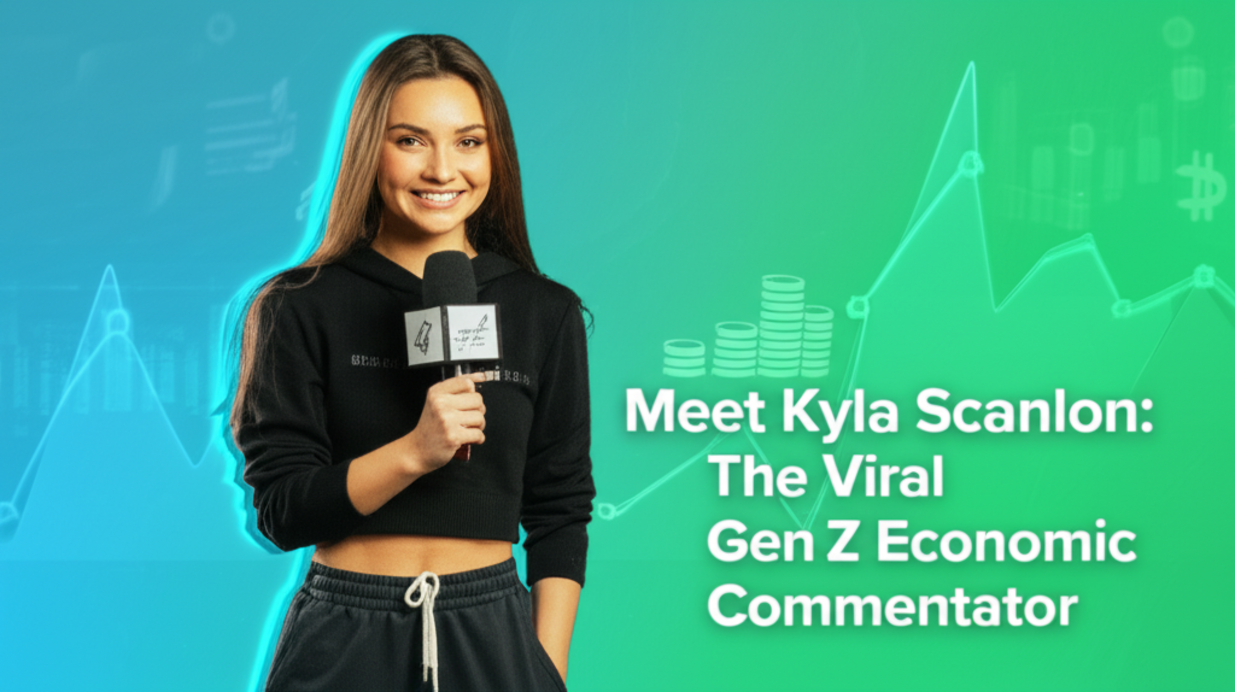
In the buzzing world of social media, where attention spans are measured in seconds and trends shift like the wind, one young voice has carved a niche that blends razor‑sharp insight with the playful energy that Gen Z craves. Meet Kyla Scanlon: the viral Gen Z economic commentator whose TikTok videos are turning complex macroeconomic concepts into bite‑size, shareable nuggets of knowledge.
Who Is Kyla Scanlon?
At first glance, Kyla appears as just another face on TikTok—bright outfits, a quick wit, and a knack for storytelling. But underneath the vibrant aesthetic lies a deep, methodical understanding of the global economy. Kyla is a Gen Z author and economic commentator who’s making it easy for people to understand what’s going on in the global economy and financial markets. She combines academic rigor with a conversational tone, a recipe that has earned her millions of followers across TikTok, YouTube, and Instagram.
The TikTok Phenomenon
Kyla’s rise began in 2022 when she posted a short clip dissecting the 2021–22 inflation surge. Within days, the video went viral, amassing over 3 million likes. What set her apart was not just the subject matter—everyone was talking about inflation—but the way she presented it: using relatable analogies, eye‑catching visuals, and a punchy, almost song‑like delivery that kept viewers glued.
Her algorithm‑friendly approach—short clips, high energy, and clear takeaways—has proven a masterstroke in the realm of financial education. Each video typically follows a formula: a hook that poses a question, a brief explanation of the underlying concept, and a quick “what does this mean for you” segment. This structure keeps her content digestible while ensuring that every viewer walks away with a concrete takeaway.
Why TikTok Works for Economic Content
Traditional finance channels often feel dense and inaccessible. TikTok’s format, by contrast, thrives on short, visually driven content. Kyla taps into this by turning graphs into moving illustrations, turning jargon into everyday language, and using pop culture references to anchor complex ideas. The result is a platform where anyone—student, freelancer, or stay‑at‑home parent—can grasp macroeconomic trends without the intimidation that typically surrounds finance.
Content Themes That Resonate
- Inflation Demystified – Explaining why prices rise, how central banks react, and what the everyday consumer can do.
- Global Supply Chains – Breaking down disruptions, geopolitical risks, and their ripple effects on markets.
- Cryptocurrency & Digital Assets – Demystifying blockchain, NFTs, and the future of money.
- Personal Finance 101 – Budgeting, investing, and building financial literacy for Gen Z.
Each topic is handled with the same blend of clarity and charisma. For instance, her series on “The Fed’s Tightening Dance” not only explained the mechanics of interest rates but also painted a vivid picture of how a rate hike can influence everything from coffee prices to the value of your student loan.
From Influencer to Author
Capitalizing on her digital popularity, Kyla launched her first book in 2023, titled “The New Money Playbook for Gen Z.” The book expands on the themes she covers online, offering deeper analysis, case studies, and actionable strategies. It has quickly become a bestseller in the personal finance category, proving that her audience is hungry for more than just short videos.
Building Authority Without the “Bureaucratic” Look
Unlike seasoned economists who often come off as inaccessible, Kyla’s brand is built on authenticity. She frequently shares behind‑the‑scenes glimpses of her research process, collaborates with other creators, and responds directly to user comments. This approach humanizes the data, turning numbers into narratives that people can see themselves in.
Impact on the Gen Z Financial Conversation
Gen Z, growing up amidst a roller‑coaster of economic uncertainty—student debt crises, gig economy fluctuations, and a pandemic‑shaped market—needs financial literacy tools that speak their language. Kyla fills this gap by offering:
- Contextual Education – Linking macro events to personal financial decisions.
- Community Building – Creating a space where viewers can discuss, ask questions, and learn together.
- Accessibility – Providing content that is free, short, and easily shareable.
Her influence is reflected in the rise of “financial literacy” hashtags, increased engagement on finance‑related posts, and a noticeable uptick in Gen Z investors turning to her for guidance. A recent survey found that 67% of her followers had started saving or investing for the first time after watching her content.
The Future: From TikTok to Mainstream
While TikTok remains her primary platform, Kyla is branching out. She has begun hosting a weekly podcast on Spotify titled “EconoChat with Kyla,” where she dives deeper into global trends with experts from academia and industry. Her YouTube channel features longer, documentary‑style videos that explore historical economic events, allowing viewers to see how past lessons apply today.
Beyond content creation, Kyla is collaborating with fintech startups to design educational modules that integrate AI-driven personalized learning paths. These initiatives suggest that she’s not just a commentator; she’s a catalyst for a new generation’s financial empowerment.
Why Kyla Scanlon Matters
Kyla embodies a shift in how economic discourse is shared. She proves that the next wave of financial literacy will not be about who can read the most data, but who can communicate it in a way that resonates across digital platforms. Her ability to simplify complexity while maintaining intellectual integrity makes her an indispensable voice in a world where economic decisions affect our everyday lives.
In an era where information is abundant but often overwhelming, Kyla Scanlon has turned the tide by proving that knowledge, when shared in bite‑size, engaging chunks, can spark real change. Her story is a reminder that the future of economics is not just about numbers; it’s about the people who understand them—and the platforms that make that understanding possible.