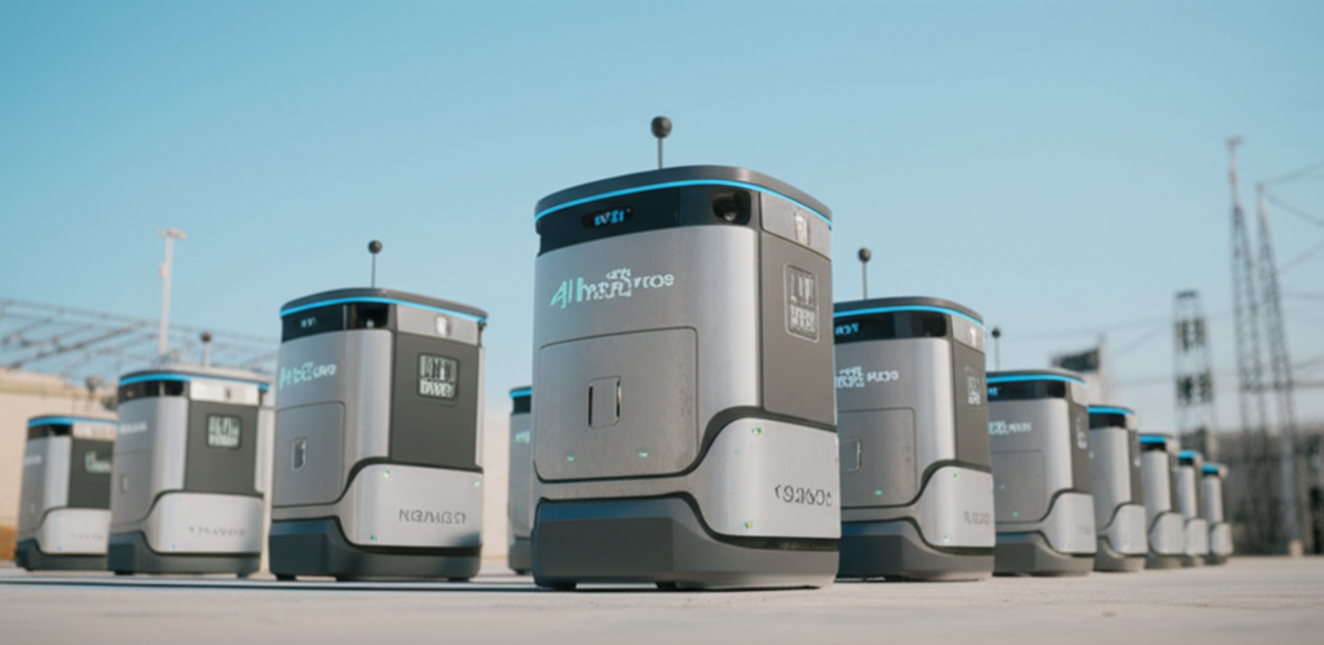
In the wake of a hard‑won ceasefire, Israel is turning its sights from recovery to reinvention. The country’s bustling hospitality and food‑service sectors—worth an estimated $13 billion—are poised for a seismic shift, and at the forefront of this transformation stand a pair of tech pioneers: KEENON Robotics and AIBotics. Their inaugural shipment of service robots to Israel isn’t just a logistical milestone; it signals a broader regional embrace of AI‑driven automation that promises to elevate efficiency, resilience, and the guest experience.
A New Era of Automation in Israel
After months of conflict, Israeli cities are rapidly returning to normalcy. Flights from carriers such as Delta, United, and Air Canada have resumed regular schedules to Tel Aviv, and tourism is surging—reports from the Ministry of Tourism reveal a 16.7% year‑over‑year rise in international arrivals. In this climate of renewed optimism, the demand for cutting‑edge operational solutions has never been higher. AIBotics, a subsidiary of Ehave, Inc., steps into this space by integrating KEENON Robotics’ line of service robots into the country’s hospitality, healthcare, and transportation infrastructure.
Why the Timing Matters
The timing of KEENON’s first shipment is critical. While Israel’s economy rebounds, it faces a scarcity of skilled labor and a pressing need to modernize aging facilities. Automation offers a two‑fold advantage: it bridges workforce gaps and slashes operating costs. Restaurants that once relied on manual delivery now have autonomous units that can navigate busy kitchens and guest floors with precision. Hotels can deploy cleaning robots that maintain spotless rooms while freeing staff to focus on personalized service. By aligning with the nation’s rebuilding momentum, AIBotics and KEENON are not merely selling robots—they’re providing a competitive edge that aligns with Israel’s strategic goals of digital resilience.
AIBotics and KEENON: A Strategic Alliance
Under the agreement, AIBotics will deploy KEENON’s delivery, cleaning, and humanoid robots throughout Israel’s service sectors. Ben Kaplan, CEO of AIBotics, framed the partnership as a “signal flare for what is next.”
“This is more than a shipment. This is a signal flare for what is next,” Kaplan said. “AIBotics’ partnership with KEENON represents the dawn of human‑collaborative robotics across Israel and the Middle East.”
Their collaboration hinges on a shared vision: blending embodied intelligence with AI‑powered decision making to create robots that can interact with humans naturally while executing complex tasks autonomously.
Introducing the XMAN Humanoid Series
AIBotics intends to roll out KEENON’s XMAN series, a breakthrough in humanoid robotics that redefines service operations. The XMAN‑R1, a wheeled humanoid, and the XMAN‑F1, a bipedal model, are engineered for real‑world service tasks such as food delivery, room service, and guest engagement. Their design incorporates advanced sensors, multimodal interaction, and multi‑robot collaboration protocols that enable seamless teamwork with KEENON’s existing fleet of delivery and cleaning units.
Key features include:
- Embodied Intelligence: Natural language processing combined with gesture recognition for intuitive human interaction.
- Dynamic Navigation: AI‑driven path planning that adapts to crowded environments like hotel lobbies and restaurant halls.
- Collaborative Ecosystem: Integration with KEENON’s fleet for synchronized task execution—think a delivery robot handing a tray to a humanoid for room service.
- Modular Payloads: Customizable modules allow the same robot to switch from carrying meals to delivering medical supplies.
These humanoid robots are set to become the face of service automation, combining the familiarity of human presence with the reliability of machine precision.
The Impact on Hospitality and Beyond
For the hospitality sector, the implications are profound. Hotels can deploy a team of XMAN robots to manage check‑in, concierge services, and housekeeping—all while maintaining a high touch, personalized experience. Restaurants can use delivery robots to bring dishes to tables, reducing wait times and freeing staff to focus on culinary creativity. Even hospitals can benefit: from patient transport to medication delivery, the XMAN series can reduce infection risks and improve workflow efficiency.
Moreover, the integration of cleaning robots alongside humanoids offers a comprehensive solution to hygiene challenges—a paramount concern in the post‑pandemic era. The combined fleet can perform scheduled sanitization, respond to real‑time requests, and report on room readiness, providing managers with actionable data.
Looking Ahead: The Future of Human‑Robot Collaboration
As the Middle East looks toward the future, AIBotics and KEENON’s partnership illustrates a blueprint for regional adoption. Their approach—leveraging AI to create adaptable, collaborative robots—addresses not only immediate operational needs but also long‑term workforce planning. By embedding robotics into the core of service operations, businesses can future‑proof against talent shortages and market volatility.
Beyond Israel, the implications ripple across the entire Middle Eastern market. Cities such as Dubai, Riyadh, and Doha are investing heavily in smart infrastructure, and robotics offers a scalable solution that aligns with their Vision 2030 and national digital agendas.
In the end, the shipment of KEENON’s robots to Israel represents more than a commercial transaction. It is a statement of intent: that automation, powered by AI and embodied intelligence, will be the backbone of a resilient, efficient, and customer‑centric service economy. As Ben Kaplan’s words echo through the lobby of the new hotels and the halls of the hospitals, the future of human‑robot collaboration is not just on the horizon—it’s already arriving.