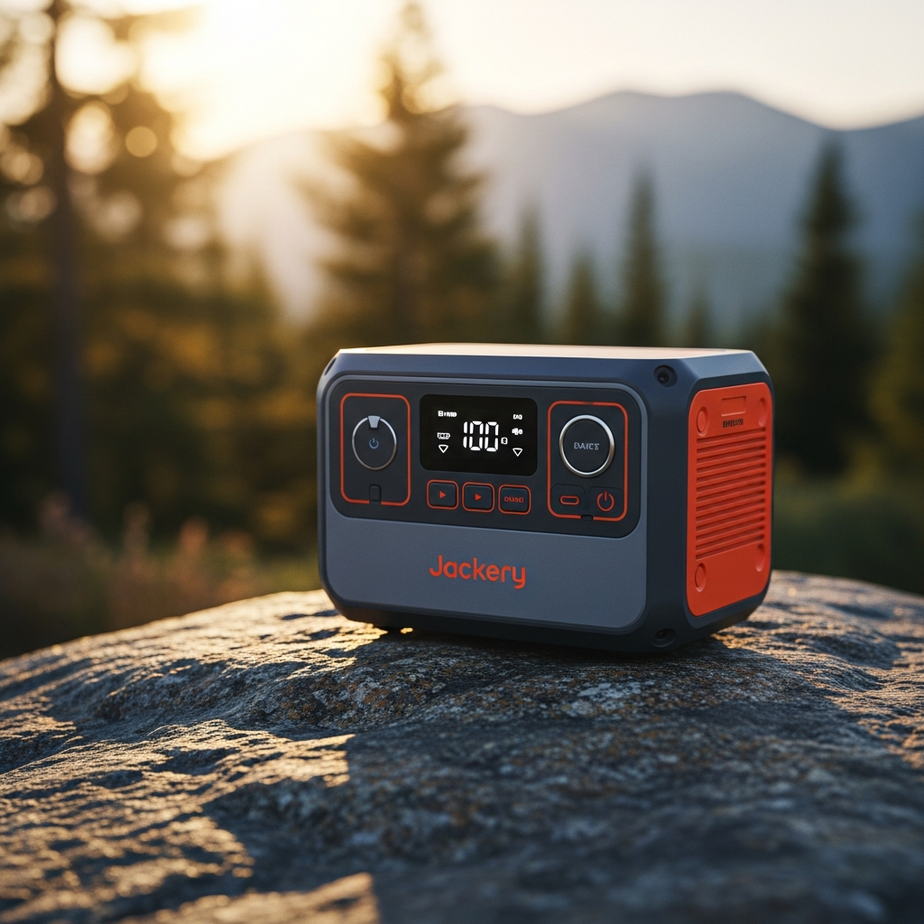
There is rarely a convenient time for the power to go out, and anyone who has spent a stormy night fumbling for flashlights knows the value of reliable backup energy. Whether you are preparing for severe weather season, planning a remote work getaway in a cabin, or simply want to keep your essential devices running during a grid failure, having a robust portable power station is no longer a luxury—it is a necessity. The market is flooded with options, but few offers catch the eye quite like the current discount on the Jackery Explorer 1000 V2. With a massive price reduction currently available, this unit has shifted from a premium investment to an incredibly accessible tool for safety and recreation. When you look at the landscape of portable energy, the Jackery Explorer 1000 V2 stands out not just because of the brand heritage, but because of the specific upgrades made over the previous generation. It strikes a difficult balance between high capacity, portability, and modern battery longevity. For homeowners and outdoor enthusiasts alike, seeing a price drop of this magnitude usually signals the perfect moment to buy. However, understanding exactly what you are getting for your money is crucial before making the investment. This deep dive will explore why this specific model is a smart pick right now and how it fits into a modern preparedness strategy.
Why the V2 Upgrade Matters Significantly
If you have researched portable power stations in the past, you are likely familiar with the original Explorer 1000. It was an industry standard for years. However, the release of the Jackery Explorer 1000 V2 represents a major leap forward in technology, specifically regarding the heart of the machine: the battery chemistry. The most critical update in the V2 model is the switch to LiFePO4 (Lithium Iron Phosphate) battery chemistry. In the world of battery technology, this is a game-changer for longevity. Older lithium-ion batteries typically offered around 500 charge cycles before their capacity degraded to 80 percent. The LiFePO4 cells found in the V2 model are rated for approximately 4,000 cycles before hitting that same degradation point. To put that in perspective, if you drained and recharged the unit every single day, it would take over a decade to notice a significant drop in capacity. This shift in chemistry also improves safety. LiFePO4 batteries are much more stable at high temperatures and are less prone to thermal runaway compared to traditional lithium-ion chemistries. When you are keeping a large battery in your home or the trunk of your car, that added layer of safety provides genuine peace of mind.
Faster Charging Capabilities
Another pain point with older power stations was the “refuel” time. Waiting seven or eight hours to charge a battery from a wall outlet is frustrating, especially if you are in the middle of a multi-day storm and only have brief windows of grid power. The Jackery Explorer 1000 V2 addresses this with emergency charge speeds that can top up the battery in roughly one hour via a standard AC wall outlet. This rapid charging feature is essential for emergency preparedness. If you know a storm is approaching, you can plug the unit in and have a fully ready backup system in the time it takes to pack an emergency bag.
Analyzing the Value Proposition of the Discount
When evaluating a deal like $600 off, it is helpful to look at the “price per watt-hour,” which is the standard metric for determining value in the solar generator market. Generally, a high-quality portable power station costs roughly one dollar per watt-hour of capacity. The Explorer 1000 V2 offers just over 1000 watt-hours (1kWh) of capacity. At its full retail price, the unit sits at the premium end of the market. However, with a $600 discount, the price per watt-hour drops significantly below the market average, pushing it into budget-friendly territory while retaining premium features. This is rare for a brand with Jackery’s reputation. Usually, budget prices are reserved for generic brands with questionable quality control or lack of customer support. Getting a flagship model from a top-tier manufacturer at this price point is an anomaly in the market. This reduction makes the unit accessible to people who may have previously relied on loud, gas-guzzling generators or small power banks that can only charge a phone. It opens the door for users to power larger appliances like CPAP machines, mini-fridges, and televisions without breaking the bank.
Real-World Scenarios: Cabin Life and Camping
While emergency backup is a primary driver for sales, the Jackery Explorer 1000 V2 shines brightest when taken off the grid. For cabin owners and campers, silence is a major part of the experience. Traditional gas generators destroy the tranquility of nature with constant engine noise and exhaust fumes.
Powering the Essentials
In a cabin or campsite setting, 1000 watt-hours is a “Goldilocks” size—not too heavy to move, but big enough to do real work. Here is what you can realistically expect to run with this unit during a trip: – Portable Refrigerators: High-efficiency 12V portable fridges can run for 15 to 30 hours depending on the ambient temperature and insulation.
– Lighting: LED string lights and lanterns can run for days on end without making a dent in the battery.
– Cooking Appliances: The unit can handle smaller coffee makers, electric skillets, or slow cookers, provided they stay within the 1500W output limit.
– Digital Devices: Laptops, cameras, and drones can be recharged dozens of times, which is vital for photographers and content creators working in the field. Because the V2 model is compatible with solar input, you can essentially create a self-sustaining energy loop. By pairing the station with portable solar panels, you can harvest energy during the day to replenish what you use at night. This capability transforms the device from a simple battery into a true solar generator.
Emergency Home Backup: What It Can Actually Run
It is important to manage expectations regarding home backup. A 1000Wh battery will not run your central air conditioning, your electric dryer, or your entire kitchen. However, it will keep the critical “survival” appliances running during a blackout. The most common use case is the kitchen refrigerator. A standard full-size refrigerator draws a surge of power to start the compressor, then settles into a lower running wattage. The Jackery Explorer 1000 V2 has a surge capacity that can handle most modern energy-efficient fridges. Depending on how often you open the door and the efficiency of the appliance, you can expect to keep a fridge running for anywhere from 7 to 14 hours.
Medical Devices and Connectivity
For many users, power is a medical necessity. CPAP users, for example, rely on continuous power to sleep safely. With the humidifier function turned off, this power station can run a CPAP machine for several nights on a single charge. Additionally, keeping communication lines open is vital during a disaster. This unit can keep your WiFi router running (if your ISP is still active), charge smartphones repeatedly, and even power a small television or radio to stay updated on weather alerts. The pure sine wave inverter ensures that sensitive electronics receive clean electricity, preventing damage that can occur with cheaper, modified sine wave inverters.
Portability and Form Factor Design
One of the defining features of the Jackery brand is the physical design. The Jackery Explorer 1000 V2 retains the ergonomic handle that is molded directly into the case. While some competitors use folding handles to allow for flat stacking, the fixed handle on the Jackery offers superior durability and grip. Weighing in at roughly 24 pounds, the unit is portable enough for most adults to carry short distances with one hand. This is a significant advantage over larger 2000Wh or 3000Wh units, which often require wheels or two people to move safely. The size is compact enough to fit easily on a closet shelf, in the trunk of a compact car, or under a desk. This “grab-and-go” nature is what makes it superior to permanent standby generators for renters or people living in apartments who cannot install permanent infrastructure.
Input and Output Ports: The Connectivity Suite
The utility of a power station is defined by how many things you can plug into it at once. The V2 update brings the port selection into the modern era. You get multiple AC outlets for standard wall plugs, which are spaced well enough to accommodate bulky power bricks. However, the USB section is where the modernization is most apparent. The inclusion of high-speed USB-C PD (Power Delivery) ports means you can charge modern laptops, tablets, and phones directly without needing their bulky AC adapters. This is more efficient, as it skips the conversion from DC to AC and back to DC, saving precious battery life. The unit also features a regulated 12V car socket (cigarette lighter style). This is crucial for running 12V appliances like tire inflators, portable fridges, or vacuum cleaners. The regulation ensures that even as the battery voltage drops, the output remains a steady 12V, which prevents devices from shutting off prematurely.
Comparing Jackery to the Competition
The portable power market is crowded with competitors like EcoFlow, Bluetti, and Anker. How does the Jackery Explorer 1000 V2 stack up against them? Competitors often highlight features like app connectivity or complex modular expandability. While the V2 does offer app control for monitoring usage and changing settings remotely, Jackery has historically focused on simplicity and ruggedness over extreme feature density. For example, some competing units have moved to completely flat tops for wireless charging or stacking. While convenient, these designs can sometimes be harder to carry. Jackery prioritizes the rugged, outdoor aesthetic and usability. Furthermore, Jackery’s solar charging efficiency is widely cited by outdoor enthusiasts as being top-tier. Their proprietary solar panels (often sold in bundles) are easy to set up and highly efficient at converting sunlight into stored energy, even in less-than-ideal conditions.
The Importance of Solar Integration
Since we are discussing a major discount, it is worth considering using some of those savings to invest in solar panels. The Jackery Explorer 1000 V2 is designed to accept high solar input, allowing for fast recharging off-grid. When pairing panels, you need to look at the input limits. This model can handle significant solar wattage, meaning if you have 200W or 400W of solar panels deployed, you can recharge the unit fully in just a few hours of peak sunlight. This capability is what allows for indefinite off-grid living or extended endurance during a week-long power outage. If you are buying this for emergency prep, the battery alone is a finite resource. Once it is empty, it is a paperweight until the grid comes back. Adding solar panels turns it into a renewable energy source.
Maintenance and Longevity Tips
To get the most out of your investment, treating the battery correctly is important, even with the durable LiFePO4 chemistry. – Avoid Deep Discharge Storage: Try not to store the unit at 0 percent battery for long periods. If you are putting it away for months, keep it charged between 60 and 80 percent.
– Temperature Control: While the unit can operate in various temperatures, batteries are happiest at room temperature. severe cold will reduce capacity temporarily, while severe heat can degrade the cells over time.
– Regular Use: Batteries like to be used. If you have no emergencies, take the unit out once every few months to charge devices in the backyard, then top it back up. This keeps the internal management systems calibrated.
Final Thoughts on the Deal
The portable power station market is evolving rapidly, but the Jackery Explorer 1000 V2 remains a benchmark for a reason. It balances weight, power, and durability in a package that is unintimidating for new users yet capable enough for experts. The current discount of $600 fundamentally changes the calculus of buying this device. It moves the unit from a “nice to have” luxury item into the territory of an essential household safety purchase. Whether you are looking to safeguard your family against unpredictable weather, planning a season of camping trips, or need reliable power for a remote job, the value provided here is difficult to beat. Opportunities to secure top-tier technology at mid-tier prices are rare. By securing this power station now, you are not just buying a battery; you are buying the resilience to handle whatever the grid—or nature—throws your way next. If you have been waiting for the right moment to upgrade your emergency kit or camping gear, this is the signal to act.