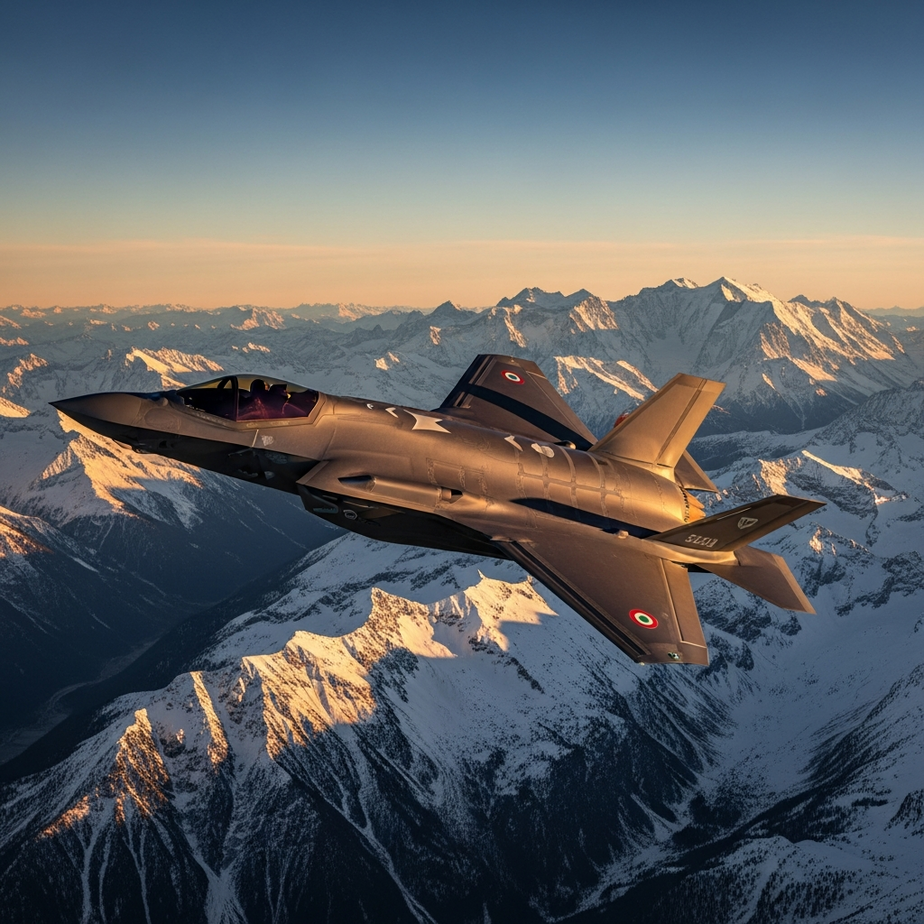
When you think of Italy, what comes to mind? For many, it’s the grandeur of the Colosseum, the winding canals of Venice, or the taste of authentic Neapolitan pizza. It’s a country steeped in art, history, and culinary tradition, a global touchstone for culture and beauty. But beyond the familiar landscapes and masterpieces lies a different kind of powerhouse, one defined not by ancient frescoes but by advanced aeronautics and strategic foresight. In recent years, Italy has quietly but firmly established itself as a critical hub in the world of modern defense technology, particularly through its deep involvement with the sophisticated F-35 fighter jet program. This evolution is reshaping not only the nation’s role on the world stage but also the strategic landscape of Europe and its allies.
Beyond the Renaissance: Italy’s Modern Industrial Might
While celebrated for its past glories, Italy has never ceased to be a nation of innovators. The same ingenuity that produced Leonardo da Vinci’s flying machines now fuels a robust and highly advanced industrial sector. This modern capability is often overlooked by those who only see the country through a historical lens. Today, Italy is home to global leaders in aerospace, defense, and engineering, with a skilled workforce and a network of cutting-edge manufacturing facilities that are among the best in the world.
At the forefront of this industrial prowess is Leonardo S.p.A., a partially state-owned multinational company that stands as one of the top ten defense contractors globally. This industrial giant is a testament to Italy’s capacity for producing highly complex technological systems, from helicopters and electronics to advanced aircraft. The nation’s expertise is not accidental; it is the result of decades of sustained investment in research, development, and high-skilled training. This deep-seated competence in engineering and manufacturing provides the foundation for the country’s ambitious role in multinational defense projects.
This transition from a historical heavyweight to a modern technological leader is crucial to understanding its current strategic positioning. It’s this very industrial backbone that enabled Italy to become a tier-two partner in the F-35 program, a commitment that goes far beyond simply purchasing aircraft. It involves manufacturing, maintenance, and now, advanced training, cementing its status as an indispensable player in 21st-century defense.
The F-35 Program: A Linchpin for Global Alliances
The F-35 Lightning II is far more than just another fighter jet; it represents a monumental leap in military technology. As a fifth-generation fighter, its capabilities in stealth, advanced sensor fusion, and network-enabled operations provide a decisive advantage. But its true significance lies in its role as a unifying platform for allied air forces. The program brings together the United States and a consortium of key partners in a collaborative effort to build, maintain, and operate this next-generation aircraft, ensuring interoperability and shared strategic strength.
For the nations involved, participation is a long-term strategic investment. It guarantees access to the world’s most advanced aerial platform and fosters deep technological and military cooperation. Within this framework, Italy has carved out a uniquely important niche. It is not merely a customer but a core partner in the entire F-35 ecosystem. This privileged position includes hosting the only Final Assembly and Check Out (FACO) facility for the F-35 outside of the United States, located at Cameri Air Base.
This facility serves not only the Italian Air Force and Navy but also assembles aircraft for other European partners, like the Netherlands. This central role in the production and sustainment chain highlights the trust that the United States and other allies place in Italy’s industrial and technical capabilities. It’s a clear signal that the nation is viewed as a reliable and highly competent partner in one of the most complex and expensive defense projects in history.
A Strategic Hub: The Multinational F-35 Training Center
Building on its success with the FACO facility, Italy has taken another significant step by establishing the first multinational F-35 pilot training center outside of the U.S. While the example titles mentioned Sicily, the development of the International Flight Training School (IFTS) in Sardinia at Decimomannu Air Base, in partnership with Leonardo and the Italian Air Force, is a major part of this puzzle. This initiative is designed to train pilots from allied nations on advanced jet trainers that serve as a precursor to flying fifth-generation aircraft like the F-35.
This center offers several strategic advantages:
- – It positions Italy as the premier European destination for advanced fighter pilot training, attracting air forces from across the continent and beyond.
- – It deepens military and diplomatic ties with the United States and other NATO allies who will send their pilots to train there.
- – It generates significant economic activity, creating high-skilled jobs and reinforcing the nation’s aerospace and defense sector.
- – It enhances the operational readiness of European air forces by providing a state-of-the-art training environment closer to home, reducing reliance on U.S.-based facilities.
This move is a calculated and intelligent use of the country’s resources and expertise. By becoming a center for knowledge and skill transfer, Italy ensures its relevance and influence in the defense community for decades to come. It’s a powerful example of leveraging industrial capability to achieve significant geopolitical influence.
Balancing the Books: Defense Investment and National Priorities
Major defense investments invariably raise questions about economic priorities. The cost of programs like the F-35 is substantial, and citizens rightfully wonder how this spending impacts other essential public services. Italian leaders have been keen to address these concerns head-on. As noted by officials like Economy Minister Giancarlo Giorgetti, the government’s stance, detailed in reports by outlets like Reuters, is that these strategic defense expenditures are managed in a way that will not compromise social spending. This assurance is key to maintaining public support for the nation’s long-term security strategy.
The economic argument for these investments extends beyond the immediate costs. The F-35 program, for instance, is not just an expense but a source of economic growth. The FACO facility and the new training centers create thousands of high-paying jobs and foster a vibrant ecosystem of suppliers and service providers. Furthermore, the technological expertise gained from such a high-tech project has valuable spin-off applications in the civilian aerospace and manufacturing sectors.
Ultimately, the government frames this as a necessary investment in national and collective security. In an increasingly uncertain world, having a technologically advanced and interoperable military is not a luxury but a necessity. By investing wisely, Italy aims to protect its national interests while contributing to the stability of the broader European and Mediterranean regions, ensuring that security and social well-being are not mutually exclusive goals.
The Strategic Ripple Effect for Italy and Europe
Italy’s deep integration into the F-35 program creates a powerful ripple effect that extends far beyond its borders. By becoming a production and training hub, the nation solidifies its role as a pillar of European security within the NATO alliance. This enhanced stature gives it a stronger voice in discussions about the future of European defense and foreign policy. It is no longer just a participant but a leader, shaping the capabilities and strategies of allied air forces.
In the Mediterranean, this strategic enhancement is particularly significant. The region faces a complex array of security challenges, and Italy’s advanced aerial capabilities provide a potent tool for ensuring stability and protecting vital sea lanes. Its ability to project power and gather intelligence with the F-35 makes it a more influential actor in North Africa and the Middle East, areas of critical importance to European security.
This long-term vision positions Italy not just as a consumer of advanced technology but as a key shaper of it. Its partnership in the F-35 program is a springboard for future collaborative projects, ensuring that its aerospace and defense industry remains at the cutting edge. This forward-thinking approach is about securing the nation’s future, both economically and strategically, in a rapidly changing world.
The story of Italy’s role in the F-35 program is a compelling chapter in the nation’s ongoing evolution. It’s a narrative that moves beyond the ancient ruins and Renaissance art to reveal a modern, dynamic, and technologically sophisticated nation that is actively shaping the future. It proves that Italy’s legacy of innovation is alive and well, soaring into the 21st century on the wings of the world’s most advanced aircraft. The next time you think of Italian excellence, consider that its influence extends from the art galleries of Florence to the skies above Europe and beyond. To truly understand modern Italy is to recognize the depth of its vision and its crucial role on the global stage.