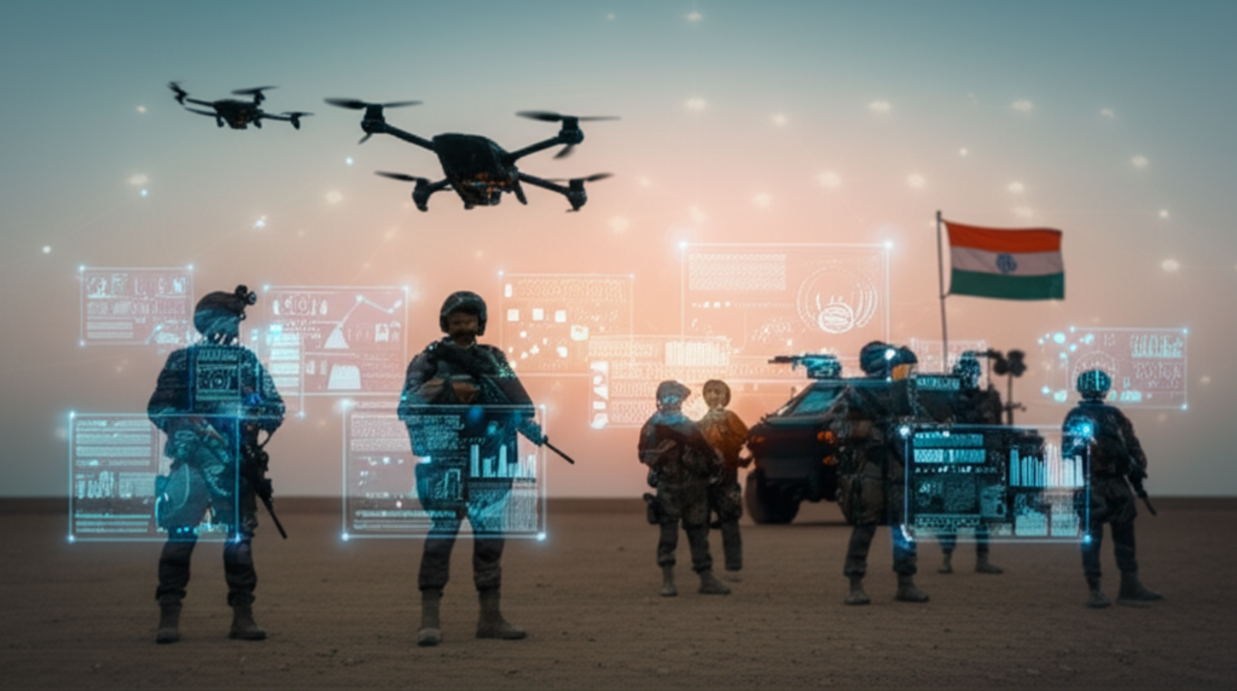
India’s defense establishment is on the brink of a technological revolution. In a decisive move to stay ahead in an era of rapidly evolving warfare, the Indian government is pouring billions of rupees into artificial intelligence (AI) research, development, and deployment across its armed forces. This bold strategy is not merely about acquiring cutting‑edge gadgets; it is a comprehensive blueprint to reshape operational doctrines, bolster deterrence, and secure the nation’s strategic autonomy.
Strategic Imperatives Behind AI Adoption
Modern battlefield dynamics demand speed, precision, and data‑driven decision making. Conventional warfare has evolved into a multidomain environment where information superiority can tip the scales. AI offers the ability to process vast datasets from satellite feeds, drones, cyber‑intelligence, and human‑source reports in real time. For India, whose geographical terrain ranges from the Himalayas to the Indian Ocean, AI-powered situational awareness can mean the difference between swift troop deployments and costly delays.
Moreover, geopolitical tensions along the northern and western borders, coupled with maritime challenges in the Bay of Bengal and the Arabian Sea, underscore the need for an AI‑augmented force. By integrating AI into command, control, communications, and intelligence (C3I) systems, India seeks to close the technological gap with potential adversaries while maximizing the efficiency of its existing hardware.
Key Investment Areas
- Autonomous Vehicles & Drones: The Ministry of Defence (MoD) is channeling funds into unmanned aerial vehicles (UAVs) that can navigate complex terrains, conduct surveillance, and even deliver munitions without risking pilots.
- Predictive Analytics & Logistics: AI-driven maintenance schedules can predict component failures before they occur, reducing downtime for tanks, aircraft, and naval vessels.
- Cyber‑Defense & Threat Detection: Machine‑learning algorithms are being employed to identify zero‑day exploits and shield critical infrastructure from cyber incursions.
- Training & Simulation: Immersive AI‑based simulators provide soldiers with realistic combat scenarios, enabling rapid skill acquisition without expending physical resources.
These investments are part of a broader vision outlined in the National Defence Policy 2021, which emphasizes “innovation, indigenisation, and resilience.” By marrying AI with indigenous platforms like the Advanced Light Combat Aircraft (ALCA) and the Arjun MBT, the armed forces aim to achieve self‑reliance and reduce dependency on foreign technology.
Collaborations and Partnerships
India’s AI ambitions are being propelled through a mix of public‑private partnerships and international collaborations. The Defence Research and Development Organisation (DRDO) has set up dedicated AI labs in collaboration with top Indian tech firms such as Tata Consultancy Services, Wipro, and startups from the Bengaluru and Hyderabad ecosystems.
On the global stage, India has signed Memoranda of Understanding (MoUs) with the United States, United Kingdom, and Israel to share insights on AI in defense. These agreements cover joint research on autonomous weapon systems, data‑fusion algorithms, and ethical AI frameworks. Such bilateral engagements not only expedite technology transfer but also help India establish standards for the responsible use of AI in warfare.
Operational Impact on the Armed Forces
In practical terms, AI is already reshaping battlefield dynamics:
- Rapid Reconnaissance: UAVs equipped with computer‑vision models can detect enemy troop movements and supply routes in minutes, providing commanders with up‑to‑date intel.
- Targeting Efficiency: AI‑assisted weapon systems can calculate ballistic trajectories under variable weather conditions, increasing hit probability and reducing collateral damage.
- Force Multiplication: Autonomous logistics convoys can transport ammunition and medical supplies across hostile zones, freeing up infantry for front‑line duties.
- Decision Support: Command centers now use AI dashboards that synthesize data from multiple sources, allowing leaders to evaluate scenarios and make informed choices swiftly.
These capabilities translate into tangible gains: faster mission execution, lower casualty rates, and enhanced deterrence posture.
Challenges and Ethical Considerations
Despite the undeniable benefits, AI integration poses significant hurdles. Data privacy remains a concern, especially when sensitive military information is processed on cloud platforms. Cybersecurity experts emphasize the need for hardened AI models that resist adversarial attacks.
Ethics in autonomous weaponry is another hotbed of debate. India has voiced caution in the United Nations, advocating for clear international norms that prevent unintended escalations. The defense community is also grappling with the “black‑box” problem, where AI decisions can be opaque. Ensuring transparent and explainable AI is critical to maintaining accountability on the battlefield.
Financially, large‑scale AI deployments demand sustained funding beyond initial procurement. The MoD is therefore exploring mixed‑finance models and encouraging private sector participation to share costs and risks.
Future Outlook
India’s AI roadmap envisions a fully integrated, data‑centric force by the 2030s. The country plans to set up dedicated AI research clusters across its defense academies, fostering talent in machine‑learning, robotics, and cyber‑security.
With the pace of technological advancement, India must continue to refine its AI governance framework, ensuring that ethical guidelines keep pace with capabilities. By doing so, it can harness AI’s transformative potential while safeguarding democratic values and regional stability.
In sum, India’s hefty investment in artificial intelligence is more than a fiscal decision—it is a strategic pivot toward a smarter, more resilient military that can navigate the complexities of 21st‑century warfare. As the world watches, India’s journey with AI will likely set a benchmark for other emerging powers aiming to modernize their defense architectures.