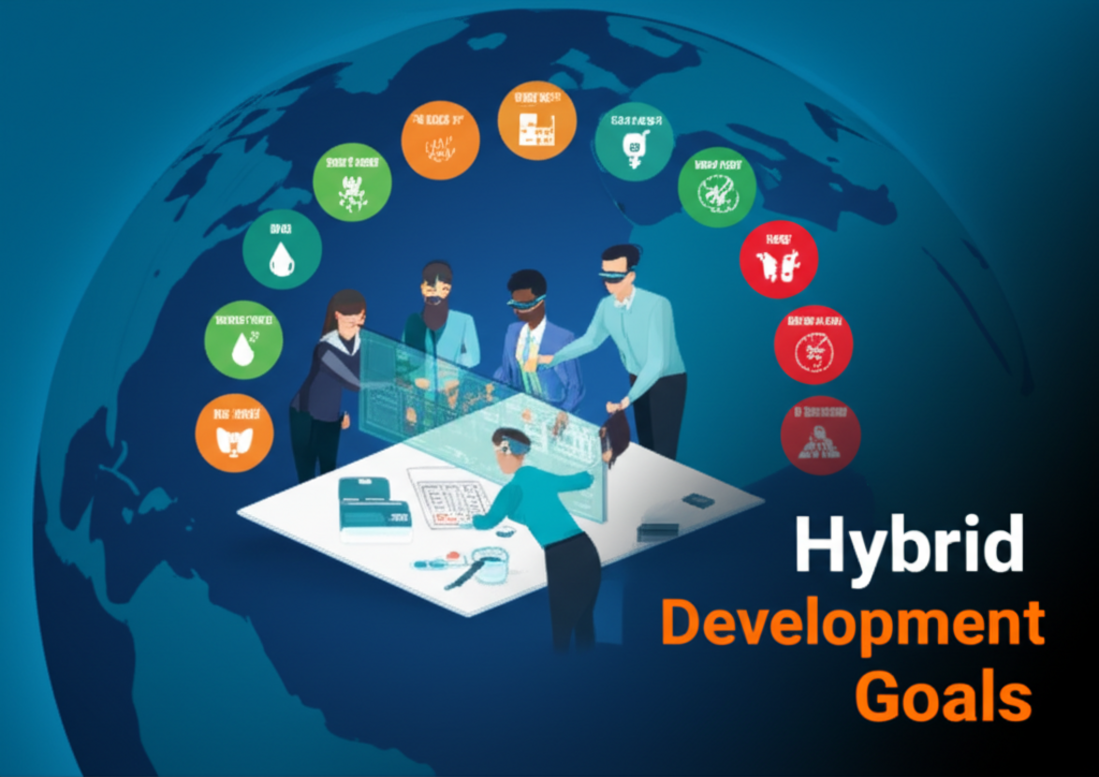
In the years following the 2030 Sustainable Development Goals (SDGs) milestone, the world faces a growing complexity of challenges—from climate change and resource scarcity to digital inequality and pandemics. To meet these intertwined threats, a new paradigm is emerging: hybrid development goals. This approach blends the strengths of natural intelligence—human creativity, ethical judgment, and ecological stewardship—with the computational power of artificial intelligence (AI) to craft solutions that are both human-centered and planet-positive.
Why the SDGs Alone Are No Longer Enough
The SDGs were designed as a universal framework, covering 17 goals that range from poverty eradication to climate action. Their ambition lies in their breadth, yet their implementation often suffers from siloed efforts, fragmented funding, and a lack of actionable metrics. As the world moves beyond 2030, the pace of change—particularly in technology and environmental dynamics—surpasses the incremental progress envisioned by the original agenda. Consequently, the SDGs need to evolve into a more agile, interconnected system that can harness emerging tools and cross-sector collaboration.
Hybrid Development Goals: A Conceptual Bridge
Hybrid development goals propose a synergistic model in which AI systems complement human decision-making processes. Rather than viewing AI as a replacement for human expertise, this model positions AI as a partner that can process vast datasets, simulate outcomes, and identify patterns invisible to the human eye. In return, human stakeholders bring ethical oversight, contextual knowledge, and an understanding of local realities. By fusing these dimensions, hybrid goals become more actionable, measurable, and adaptable.
The Role of Natural Intelligence in Planetary Flourishing
Natural intelligence—our innate capacity for empathy, moral reasoning, and cultural adaptability—remains indispensable when navigating the complex socio-ecological landscapes of the SDGs. For instance, community-led conservation initiatives often succeed because of deep-rooted local knowledge and stewardship values that AI alone cannot replicate. Hybrid goals acknowledge this by embedding human-centered design principles into AI-driven projects, ensuring that technological interventions do not override the socio-cultural fabric of affected populations.
Artificial Intelligence: Amplifying Impact Across SDG Areas
AI’s analytical and predictive capabilities are already transforming key SDG sectors:
- Health (Goal 3): Machine learning models forecast disease outbreaks, optimize resource allocation, and accelerate drug discovery.
- Education (Goal 4): Adaptive learning platforms personalize instruction, addressing diverse learning styles and language barriers.
- Climate Action (Goal 13): AI-driven climate models improve the accuracy of temperature projections and inform adaptive infrastructure planning.
- Sustainable Cities (Goal 11): Smart city sensors manage traffic flow, energy consumption, and waste collection in real time.
When coupled with natural intelligence, AI’s potential multiplies, creating a feedback loop where human insight refines algorithmic outputs and AI, in turn, uncovers new opportunities for human action.
Operationalizing Hybrid Goals: A Practical Roadmap
To embed hybrid development goals into national and global agendas, the following steps are essential:
- Cross-Sector Partnerships: Governments, academia, industry, and civil society must co-create frameworks that allow for data sharing while protecting privacy and local sovereignty.
- Ethical AI Governance: Robust policies that ensure transparency, accountability, and bias mitigation are crucial to maintain public trust.
- Capacity Building: Investing in digital literacy and STEM education will empower communities to co-design AI tools tailored to their contexts.
- Measurement and Feedback: Hybrid goals require new metrics that capture both technological outputs and human well-being indicators, facilitating iterative improvement.
Case Study: AI-Enhanced Agroecology in Sub-Saharan Africa
In Kenya’s arid regions, a collaborative initiative between local NGOs and a tech startup deployed AI-powered soil sensors and satellite imagery to guide farmers on optimal planting schedules. While the AI provided precise crop forecasts, local agronomists interpreted results through the lens of traditional knowledge—considering cultural practices and market access. The outcome was a 30% increase in yield and a significant reduction in water usage, illustrating the power of hybrid solutions.
Ensuring Equity: The Human Element Must Not Be Overlooked
Hybrid development goals risk exacerbating existing inequalities if AI systems are deployed without inclusive input. Therefore, the human component—representation, empowerment, and participatory governance—must be central to all AI interventions. By actively engaging marginalized voices in the design process, hybrid goals can address systemic injustices rather than merely treating their symptoms.
Conclusion: Toward a Resilient, Inclusive Future
The urgency of climate change, pandemics, and socio-economic disparities demands a fresh approach that leverages the best of both natural and artificial intelligences. Hybrid development goals are not an optional addendum to the SDGs; they represent a necessary evolution of global development thinking. By fostering collaboration, ethical governance, and capacity building, we can create a resilient, inclusive framework that nurtures human prosperity while safeguarding planetary health. The time to act is now—our future depends on it.