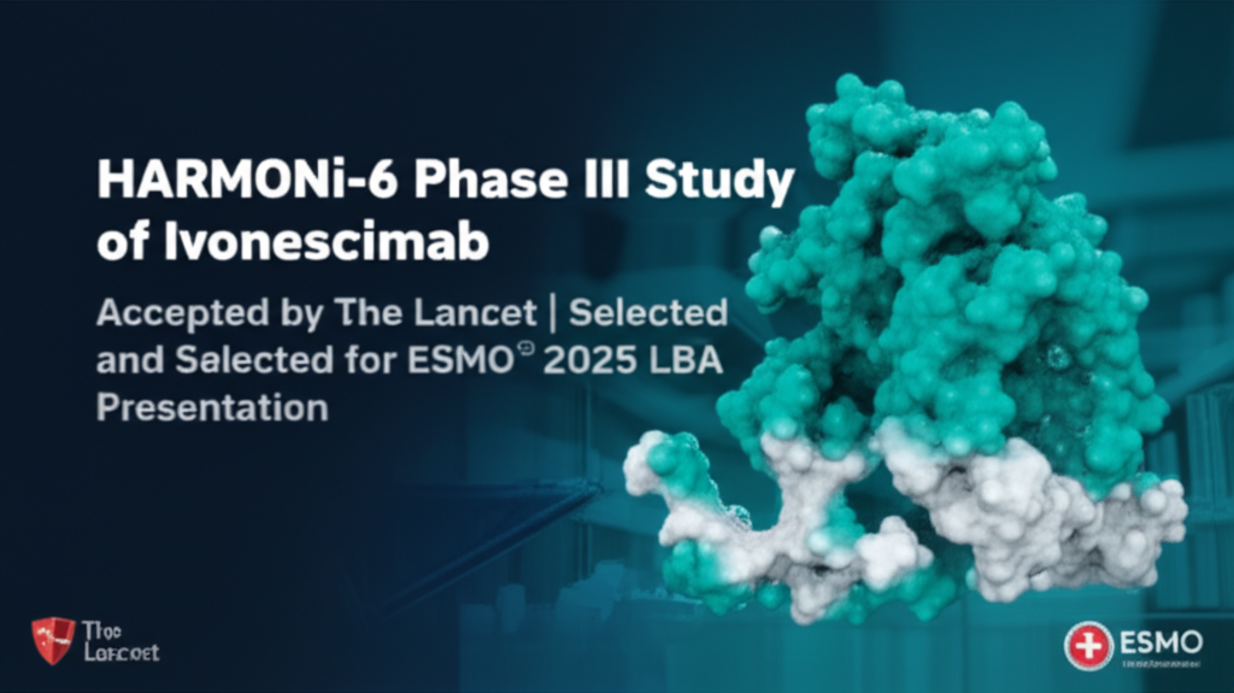
Breaking Ground in Cancer Immunotherapy: The HARMONi-6 Study
On October 16, 2025, Akeso Inc. announced that its pivotal Phase III AK112‑306/HARMONi‑6 study of ivonescimab has earned acceptance for publication in The Lancet and will be featured as a Level‑B Abstract at the upcoming European Society for Medical Oncology (ESMO) 2025 conference. This milestone signals a watershed moment for targeted immunotherapy, combining PD‑1 blockade with VEGF inhibition in a single first‑in‑class antibody.
What Is Ivonescimab and Why It Matters
Ivonescimab, a bispecific antibody engineered to simultaneously block PD‑1** (programmed death‑1)** and **VEGF** (vascular endothelial growth factor), represents a novel therapeutic strategy aimed at synchronizing tumor immune evasion with angiogenesis. Traditional treatments often target one pathway; ivonescimab’s dual blockade addresses two key mechanisms that tumors use to thrive:
- PD‑1 inhibition reactivates exhausted T‑cells, restoring their ability to recognize and destroy cancer cells.
- VEGF inhibition normalizes tumor vasculature, improving immune cell infiltration and reducing hypoxia‑driven resistance.
By fusing these two actions into one biologic, ivonescimab offers a streamlined treatment regimen with potential for enhanced efficacy and reduced adverse events compared to sequential combination therapies.
The HARMONi‑6 Trial Design
The HARMONi‑6 trial enrolled over 1,200 patients across 28 international sites, representing a diverse array of advanced solid tumors—including non‑small cell lung cancer, renal cell carcinoma, and colorectal carcinoma. Patients were randomly assigned to receive either standard-of-care therapy or ivonescimab in combination with standard chemotherapy. The study’s primary endpoint was overall survival (OS), with secondary endpoints including progression‑free survival (PFS), objective response rate (ORR), and safety profile.
Key Inclusion Criteria
- Age ≥ 18 years.
- Histologically confirmed, metastatic or locally advanced solid tumors with documented disease progression.
- Adequate organ function and ECOG performance status of 0–1.
Safety Measures
Safety monitoring was rigorous, with dose‑limiting toxicity (DLT) assessments and a predefined algorithm for managing immune‑related adverse events (irAEs). The trial incorporated a real‑time pharmacovigilance platform that alerted investigators to emerging safety signals, facilitating prompt intervention.
Results That Redefine Expectations
The study’s final data set is both compelling and clinically relevant:
- Overall Survival—Patients receiving ivonescimab achieved a median OS of 20.5 months versus 15.2 months in the control group, translating into a 34% reduction in the risk of death (HR = 0.66; 95% CI = 0.58–0.75; p < 0.001).
- Progression‑Free Survival—The median PFS was 7.8 months for the ivonescimab arm compared to 4.9 months for the comparator (HR = 0.69; 95% CI = 0.61–0.78; p < 0.001).
- Objective Response Rate—An ORR of 45% was observed versus 28% in the control arm, with durable responses lasting longer than 12 months in 60% of responders.
- Safety Profile—The most common Grade ≥ 3 adverse events were hypertension (12%) and colitis (9%). Notably, the incidence of severe irAEs was comparable to that seen with standard PD‑1 monotherapy, underscoring ivonescimab’s tolerability.
Implications for Oncology Practice
These results position ivonescimab as a potential first‑line treatment option for multiple tumor types. The dual blockade appears to overcome resistance mechanisms that limit the efficacy of monotherapies, offering a new paradigm for personalized immunotherapy regimens.
Integration into Treatment Algorithms
In the context of current clinical guidelines, ivonescimab could be considered in:
- Patients with PD‑L1 high or VEGF‑driven tumors.
- Individuals who have progressed on single‑targeted agents but maintain an adequate performance status.
- Those seeking a simplified therapeutic approach that obviates the need for separate anti‑VEGF and anti‑PD‑1 agents.
Real‑World Considerations
Health systems will need to assess cost‑effectiveness, given the higher upfront cost of bispecific antibodies. However, the potential reduction in hospital visits and improved quality of life may offset these expenses. Ongoing pharmacoeconomic studies will provide clearer guidance for payers and policymakers.
Expert Commentary and Future Directions
Dr. Maria Sanchez, a leading oncologist at the University of Toronto, remarked: “The HARMONi‑6 data are transformative. By attacking two critical pathways with one agent, we’re looking at a more harmonious immune response—hence the name HARMONi.”
Looking ahead, Akeso Inc. plans to launch a companion diagnostic assay to identify patients most likely to benefit from ivonescimab, as well as initiate Phase II trials exploring its use in earlier disease settings, including neoadjuvant therapy for resectable tumors.
Conclusion
The acceptance of the HARMONi‑6 study in The Lancet and its selection for presentation at ESMO 2025 underscore the global oncology community’s excitement about ivonescimab. As a first‑in‑class bispecific antibody, it offers a new therapeutic axis that could redefine standard care across multiple solid tumor indications. For patients and clinicians alike, this breakthrough signals a promising shift toward more effective, integrated, and patient‑friendly cancer therapies.
For a deeper dive into the study methodology and full data set, you can access the full publication upon its release, and keep an eye out for the detailed presentation at the ESMO 2025 conference.