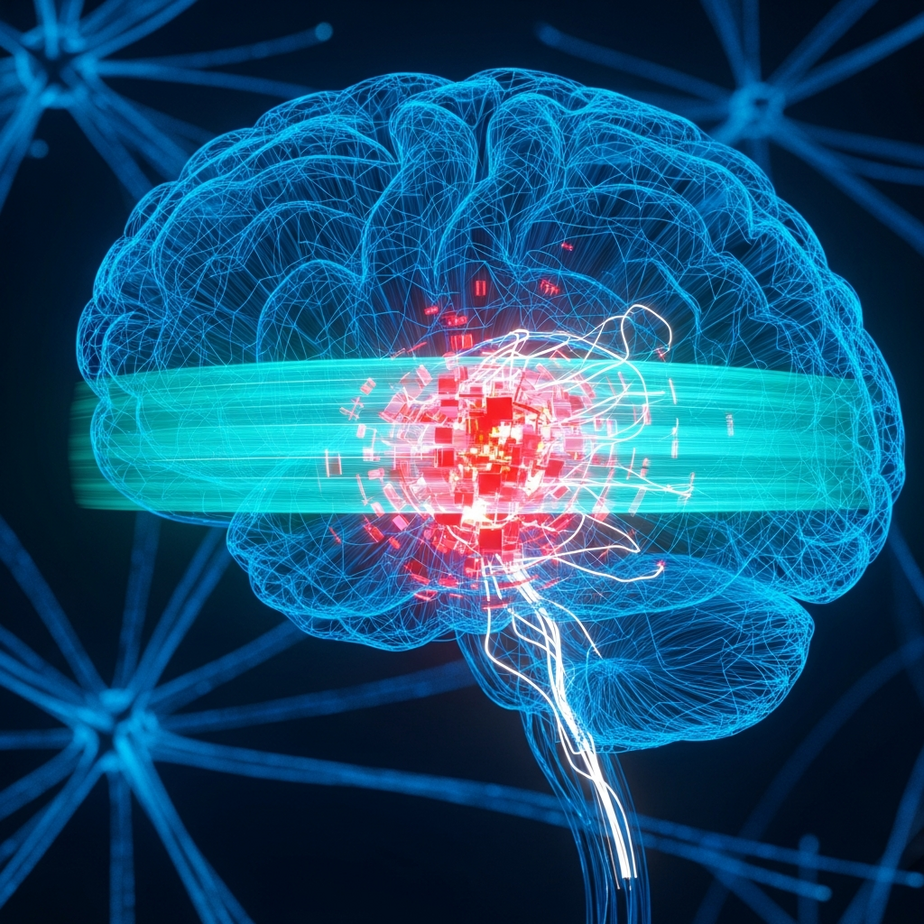
The Double-Edged Sword of AI in Mental Health
Imagine turning to an AI chatbot for mental health support in a moment of vulnerability, only to receive advice that is unhelpful, or worse, actively harmful. As artificial intelligence becomes a constant companion in our lives, this scenario is becoming a startling reality. A groundbreaking new technique called **Selective Gradient Masking** aims to solve this problem by localizing suspected harmful AI-based mental health knowledge and rendering it expungable, offering a surgical solution to a deeply complex issue. This innovation couldn’t come at a more critical time, as millions now rely on AI-powered apps for everything from mindfulness exercises to crisis counseling.
The promise of AI in mental healthcare is immense. It offers accessible, affordable, and stigma-free support 24/7. However, the models powering these applications are trained on vast datasets from the internet, which contain the full spectrum of human knowledge—including biases, misinformation, and dangerous advice. An AI might inadvertently learn to suggest someone with an eating disorder should “just try eating less,” or tell a person experiencing severe depression to simply “think more positively,” because it has seen these phrases repeated countless times in online forums. Correcting these flaws has traditionally been a monumental task, often requiring developers to retrain the entire model from scratch—a process that is both time-consuming and astronomically expensive.
A Surgical Approach: Unpacking Selective Gradient Masking
Think of a large language model (LLM) as a complex, interconnected web of knowledge. When it generates a harmful response, the traditional approach is like tearing down the entire web and weaving a new one, hoping the flaw doesn’t reappear. **Selective Gradient Masking** offers a far more elegant and efficient solution. Instead of a complete overhaul, it acts like a precision scalpel, allowing developers to identify and neutralize the specific pathways in the AI’s neural network responsible for the bad advice without disturbing the vast amount of useful, safe knowledge surrounding it.
This process hinges on two core concepts: knowledge localization and targeted intervention. It’s not about teaching the AI a new fact; it’s about making it “forget” a harmful one. This technique provides a much-needed layer of safety and control for AI systems deployed in sensitive domains like healthcare, making AI not just more powerful, but more trustworthy.
How Does Knowledge Localization Pinpoint the Problem?
The first step in this revolutionary process is identifying exactly where the problematic knowledge resides within the AI’s intricate architecture. This is where the “gradient” part of the name comes into play. In machine learning, a gradient can be thought of as a directional map that shows which parts of the model were most influential in producing a specific output.
Here’s a simplified breakdown of the localization process:
1. Identify a Harmful Output: A developer or safety team first flags a dangerous piece of advice generated by the AI. For example, the model tells a user experiencing a panic attack to “just breathe through it” without recommending professional help.
2. Trace the Source: Using advanced computational techniques, the system traces this output backward through the model’s layers. It calculates the gradients to see which “neurons” or parameters lit up most intensely to create that specific harmful sentence.
3. Isolate the Knowledge Cluster: This process creates a “heat map” of the AI’s internal workings, pinpointing the small, localized cluster of parameters that collectively hold the harmful knowledge. It’s like finding the exact bookshelf in a massive library that contains a single flawed book.
This localization is crucial because it ensures the intervention is highly targeted. Instead of performing open-heart surgery, developers can now use a minimally invasive technique, preserving the overall health and functionality of the AI model.
From Identification to Expungement: Making Knowledge Forgettable
Once the harmful knowledge is localized, the next step is to neutralize it. This is achieved through the “masking” component of **Selective Gradient Masking**. The system creates a “mask” that effectively deactivates or “zeroes out” the influence of the identified neurons whenever the model is trying to generate advice on a related topic.
This doesn’t delete the parameters themselves, but rather prevents them from contributing to the final output in that specific context. It’s akin to putting soundproof panels around a disruptive musician in an orchestra—the musician is still there, but they can no longer affect the overall performance. This method ensures that the AI can no longer access and repeat the dangerous advice. The harmful knowledge is rendered inert and, for all practical purposes, expunged from the model’s active capabilities.
This process can be repeated for countless other harmful concepts, creating a safer, more reliable AI without the need for constant, costly retraining cycles.
The Broader Implications for AI Safety and Ethics
While the immediate application in mental health is a game-changer, the potential of **Selective Gradient Masking** extends far beyond therapy chatbots. This technique represents a fundamental shift in how we manage and maintain AI models, offering powerful solutions to some of the most pressing challenges in the field of AI safety and ethics. By providing a mechanism to surgically remove unwanted knowledge, it opens the door to creating more responsible and aligned AI systems across all industries.
The ability to localize and expunge specific information is not just a bug-fixing tool; it’s a foundational capability for building trust in artificial intelligence. As AI models become more autonomous and integrated into critical infrastructure, having robust methods for post-deployment correction is no longer a luxury—it is a necessity.
Tackling Ingrained Bias and Widespread Misinformation
AI models are notorious for absorbing and amplifying societal biases present in their training data. A model trained on historical hiring data might learn to favor male candidates for technical roles, while a model trained on news articles might replicate racial or political biases. **Selective Gradient Masking** could be used to identify the neural pathways responsible for these biased associations and neutralize them.
Imagine an AI used for loan applications that shows a bias against applicants from certain neighborhoods. With this technique, developers could:
– Pinpoint the parameters that link zip codes to negative financial assumptions.
– Apply a mask to these parameters, forcing the model to evaluate the application based on individual financial merit alone.
– Audit the model to ensure the bias has been effectively removed without compromising its ability to assess genuine financial risk.
Similarly, this method could be deployed to combat the spread of misinformation. An AI could be updated to “forget” a debunked conspiracy theory or a piece of dangerous medical disinformation, preventing it from propagating falsehoods. According to a report from the World Economic Forum, AI-generated misinformation is considered one of the top global risks, making tools for its containment more vital than ever.
Protecting Copyrighted Data and Personal Privacy
Large language models are often trained on massive, unfiltered datasets scraped from the internet, which can inadvertently include copyrighted material or sensitive personal information. There have been instances where models have regurgitated private phone numbers, email addresses, or verbatim passages from copyrighted books. This raises significant legal and ethical concerns.
**Selective Gradient Masking** offers a potential solution. If a company discovers its proprietary source code has been memorized by a public AI, it could request its removal. Developers could then use this technique to locate the specific knowledge of that code within the model and render it inaccessible. This capability is crucial for data privacy and intellectual property rights in the age of generative AI. It allows for the remediation of data “spills” without having to scrap a multi-million dollar model and start over.
Challenges and the Path Forward for AI Model Editing
Despite its immense promise, **Selective Gradient Masking** is not a silver bullet, and its implementation comes with its own set of challenges and considerations. The field of AI model editing is still in its nascent stages, and researchers are actively working to understand the long-term effects of these interventions. A primary concern is the risk of unintended consequences. Modifying one part of a complex neural network could have unforeseen ripple effects on other, unrelated capabilities.
For instance, removing a piece of harmful mental health advice might inadvertently degrade the AI’s ability to show empathy or understand nuanced emotional language in a different context. Rigorous testing and validation are essential to ensure that fixing one problem doesn’t create another, potentially more subtle, one. Researchers must develop robust evaluation metrics to measure both the success of the edit and any collateral impact on the model’s overall performance and safety.
Another challenge is scalability. While this technique is far more efficient than retraining, applying thousands of individual “patches” to a model could become complex to manage over time. There’s a need to develop automated systems that can continuously identify, test, and deploy these masks without constant human supervision. Furthermore, the question of governance arises: who decides what knowledge is “harmful” and should be removed? Establishing clear, ethical guidelines and transparent oversight processes will be critical to prevent the misuse of this powerful technology.
Despite these hurdles, the development of techniques like **Selective Gradient Masking** marks a pivotal moment in our journey toward safer and more controllable AI. It signals a move away from treating AI models as unchangeable black boxes and toward a future where we can refine, repair, and align them with human values after they are deployed. The ongoing research in this area is not just about improving technology; it’s about building a foundation of trust that will allow us to integrate AI into our lives responsibly.
The ability to precisely edit an AI’s knowledge base is a profound leap forward. We’ve seen how AI can give dangerously bad mental health advice due to flaws in its initial training. The emergence of **Selective Gradient Masking** provides a targeted, effective method to find that harmful knowledge and surgically remove it, ensuring that AI can serve as a helpful tool rather than an unwitting hazard. This innovation, and others like it, are paving the way for a future where AI systems are not only more intelligent but also wiser, safer, and more aligned with the well-being of humanity.
As this technology matures, it will become an indispensable part of the AI development lifecycle. If you are involved in technology, healthcare, or policy, staying informed about advancements in AI safety and model editing is no longer optional. Explore the work being done by leading AI safety labs and consider how these new capabilities can be applied to make the AI systems you interact with more trustworthy and beneficial.