Exploring the New Frontier of Digital Afterlife
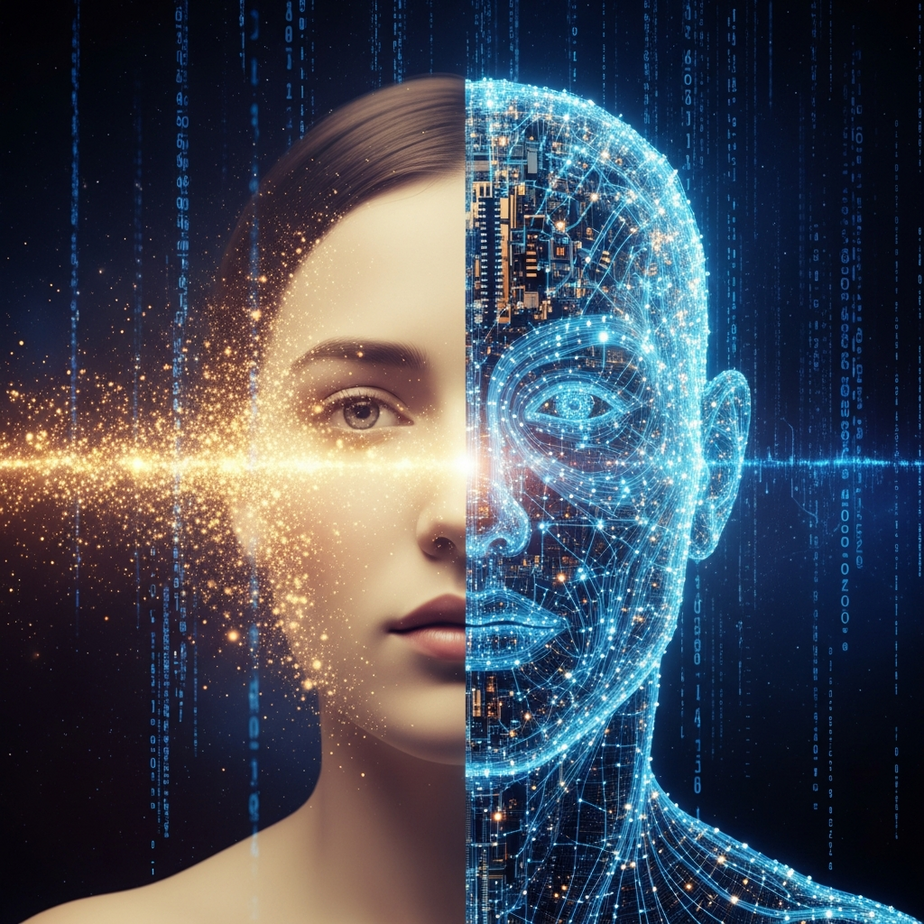
What if you could ask your great-grandmother about her childhood, hearing the story in her own voice, long after she has passed away? This is no longer just a hypothetical question from a science fiction movie. We are now living in an era where the startling combination of generative AI and reincarnation is becoming a tangible, albeit controversial, reality. This technology is creating “digital ghosts” or interactive avatars of the deceased, forcing us to confront profound questions about memory, grief, and what it truly means to be human. As we venture into this uncharted territory, we must explore both the incredible potential and the deep ethical complexities that arise when technology promises to blur the lines between life and death.
What Is Generative AI and How Does It Connect to ‘Digital Reincarnation’?
To understand how we can seemingly bring back the dead, we first need to grasp the core technology driving this revolution: generative AI. It’s a concept that has rapidly moved from tech circles into our daily lives, powering everything from chatbots to art creation tools.
A Primer on Generative AI
At its heart, generative artificial intelligence is a type of AI that can create new, original content. Unlike older AI that could only analyze or categorize existing data, generative models learn the underlying patterns and structures from vast datasets—text, images, sounds—and then use that knowledge to produce something entirely new. Think of it like a musician who has listened to thousands of classical pieces. They don’t just replay those songs; they internalize the rules of melody, harmony, and rhythm to compose a brand-new symphony in the classical style.
This is the principle behind popular tools like ChatGPT, which generates human-like text, and Midjourney, which creates stunning images from simple prompts. These systems are powered by complex algorithms called Large Language Models (LLMs) and diffusion models, which have been trained on a significant portion of the internet. Their ability to understand context, mimic style, and generate coherent output is the foundation for creating digital personas.
The Leap to Digital Immortality
The connection to “reincarnation” happens when this powerful generative technology is focused on a single individual. The process involves feeding a generative AI model with a person’s complete digital footprint. This data can include:
– Emails and text messages
– Social media posts and comments
– Voicemails and audio recordings
– Videos, journals, and personal letters
The AI analyzes this deeply personal data to build a comprehensive model of the individual’s personality, communication style, vocabulary, humor, and even their core beliefs. The result is a conversational AI, or “griefbot,” that can interact with you in a way that uncannily mimics the deceased person. This digital echo offers a form of immortality, a way for a person’s essence to persist beyond their physical life, leading to the startling combination of generative AI and reincarnation.
The Technology Behind Bringing the Past to Life
Creating a convincing digital avatar of a deceased individual is not a simple task. It requires a sophisticated blend of several cutting-edge AI technologies working in concert to create a multi-sensory, interactive experience that feels authentic to those left behind.
Large Language Models (LLMs) as the Digital Brain
The “brain” of any digital persona is a Large Language Model. These are the engines, like OpenAI’s GPT-4 or Google’s Gemini, that process and generate text. When trained on an individual’s written communications, the LLM learns their unique linguistic quirks. It understands their typical sentence structure, their favorite phrases, their sense of humor, and even the emotional tone they used in different contexts.
This allows the AI to do more than just spit back recorded phrases. It can generate entirely new sentences in response to novel questions, making conversations feel dynamic and real. If you ask about a memory you shared, the AI can construct a response based on contextual clues from the data it was trained on, creating a semblance of shared experience.
Voice and Image Synthesis for a Lifelike Presence
While text is powerful, true immersion comes from sight and sound. This is where other forms of generative AI come into play.
Voice Cloning Technology
Using just a few minutes of a person’s recorded audio, AI-powered voice synthesis tools can create a complete digital replica of their voice. These models can then “speak” the text generated by the LLM with the correct pitch, cadence, and intonation. Hearing a loved one’s voice again can be an incredibly powerful and emotional experience, making the interaction feel far more personal than reading text on a screen. Companies like HereAfter AI specialize in this, helping users create interactive story-preserving avatars that speak in the user’s own voice.
Generative Video and Avatars
To complete the illusion, companies are using generative video technology. By training an AI on photographs and videos of a person, they can create a realistic, animated avatar that can be displayed on a screen. This avatar can mimic facial expressions, make eye contact, and gesture in response to the conversation. For example, the company StoryFile creates “digital humans” that allow users to have real-time, conversational video interactions. Their technology was notably used to preserve the stories of Holocaust survivors, enabling future generations to ask them questions directly. This demonstrates how the startling combination of generative AI and reincarnation is already being applied in meaningful ways.
The Ethical Minefield of a Digital Afterlife
The ability to digitally resurrect the dead opens a Pandora’s box of ethical dilemmas. While the technology may offer comfort to some, it walks a fine line between therapeutic tool and emotional crutch, raising critical questions about consent, psychological impact, and authenticity. The cultural conversation around this topic was famously explored in the *Black Mirror* episode, “Be Right Back,” which now seems less like science fiction and more like a documentary.
The Paramount Question of Consent
The most pressing ethical issue is consent. Did the deceased individual ever agree to have their digital identity used to create an AI avatar after their death? In most cases today, the answer is no. The data is often collected and used by grieving family members who mean well, but this raises serious privacy concerns.
A person’s digital footprint contains their most intimate thoughts, private jokes, and even secrets. Using this data without explicit permission is a form of posthumous identity appropriation. As this technology becomes more mainstream, there is a growing need for legal frameworks, such as “digital wills,” where individuals can clearly state their wishes for how their data should be handled after they pass away.
The Psychological Impact on the Living
For those left behind, the psychological effects can be complex and deeply personal.
– Potential for Healing: For some, interacting with a digital avatar can be a healthy part of the grieving process. It might allow them to say a final goodbye they never got to say, or to feel a continued connection that eases the immediate pain of loss.
– Risk of Prolonged Grief: Conversely, relying on an AI persona could prevent healthy grieving. It can create a dependency that stops people from accepting the finality of death and moving forward with their lives. Instead of processing their loss, they may become trapped in a simulated relationship that offers no genuine growth or new experiences. According to an article in the MIT Technology Review, psychologists warn that such technologies could complicate bereavement, creating an “indefinite and unsettling state.”
Authenticity vs. A Polished Echo
It is crucial to remember that a digital avatar is not the person. It is a simulation—an echo created from past data. This AI cannot grow, change its mind, or form new memories. It is fundamentally frozen in time, reflecting the person as they were, not as they would have become.
Furthermore, a digital footprint is often a curated and incomplete version of a person. It rarely captures their flaws, their bad days, or their private struggles. The resulting AI is often a sanitized, idealized version of the deceased. This raises philosophical questions about memory itself. Are we preserving a person’s true legacy, or are we creating a comforting but ultimately false idol that smooths over the beautiful complexity of a real human life?
The Startling Combination of Generative AI and Reincarnation in Practice
The concept of digital resurrection is not just theoretical; it’s a rapidly growing industry. A number of startups and tech companies are already offering services that promise to preserve legacies and offer a new way to connect with those who have passed on, showcasing practical applications of this technology.
Commercial Ventures and Startups
Several companies have emerged as pioneers in the “grief tech” or “digital immortality” space. Each offers a slightly different approach to creating a digital persona.
– You, Only Virtual: This company focuses on creating highly realistic “Virtual Personas” that can live on forever. They gather extensive data, including written materials, audio, and video, to build a comprehensive AI model that can engage in open-ended conversations.
– HereAfter AI: This platform focuses on preserving memories. It invites living users to answer conversational prompts about their life, stories, and personality. After they pass, their family members can interact with this AI-powered avatar to hear those stories and ask questions, all in the person’s own voice.
– StoryFile: As mentioned earlier, StoryFile creates interactive, conversational video. Their platform allows users to record answers to hundreds of potential questions. The AI then selects and plays the correct video response during a conversation, creating a lifelike interaction that feels like a real-time video call with the individual.
These services are often marketed not just as tools for grief, but as revolutionary ways to preserve family history and personal legacies for generations to come.
Beyond Personal Grief: Preserving Historical Legacies
The applications of this technology extend far beyond individual families. Imagine being a history student who could “interview” a digital version of Albert Einstein or Maya Angelou. By training an AI on a historical figure’s complete body of work—their writings, speeches, and interviews—it’s possible to create an interactive educational tool that brings history to life in an unprecedented way.
This application allows us to preserve the knowledge and wisdom of influential figures, making them accessible to future generations in a dynamic and engaging format. It shifts the startling combination of generative AI and reincarnation from a purely personal tool to one with broad societal and educational benefits. We could preserve the oral histories of cultural elders, the insights of pioneering scientists, and the experiences of key historical witnesses long after they are gone.
Navigating the Future of Our Digital Existence
As we stand on the cusp of this new era, we are faced with the urgent need to address the profound societal shifts this technology will bring. The lines between the physical and digital, life and death, are becoming increasingly blurred. Proactively shaping this future requires thoughtful regulation, personal planning, and a deep, collective conversation about what we value in memory and human connection.
The Need for Regulation and Digital Wills
Currently, the digital afterlife is a legal Wild West. There are few laws governing the use of a person’s data after death. This regulatory vacuum creates a significant risk for privacy violations and the exploitation of personal data. To move forward responsibly, we need to establish clear legal frameworks.
This includes encouraging the widespread adoption of “digital wills” or “digital estate plans.” These legal documents would allow individuals to specify exactly how they want their digital assets—including social media accounts, emails, and their very likeness—to be managed or deleted after they die. It puts control back in the hands of the individual, ensuring their posthumous identity is handled according to their own wishes, not the decisions of a tech company or even well-meaning relatives.
Redefining Our Relationship with Death and Memory
Ultimately, the startling combination of generative AI and reincarnation forces us to ask fundamental questions about our relationship with death. For millennia, memory has been a reconstructive act, shaped by stories, photographs, and our own imperfect minds. It has always been a living, evolving process.
Introducing perfect, interactive digital replicas changes that dynamic entirely. Does having a permanent, unchanging AI to talk to devalue the personal, internal work of remembering? Does it change the very nature of legacy from something we carry within us to something we access on a screen? This technology challenges us to define what is truly irreplaceable about human connection and to decide whether a perfect simulation can ever be a worthy substitute for the authentic, messy, and beautiful process of holding someone in our memory.
The journey into the world of digital immortality is just beginning. It offers incredible promise for preserving stories and potentially easing the immediate pain of loss. However, it is a path fraught with ethical perils that demand our caution and careful consideration. This isn’t just a technological advancement; it’s a cultural one that will redefine how future generations experience loss, memory, and the enduring bonds of family.
As we move forward, the conversation about these powerful tools is essential. The decisions we make today will shape the digital landscape for years to come, determining whether this technology serves to deepen our humanity or create a hollow echo of it. What are your thoughts on using AI to communicate with the departed? Join the dialogue and share your perspective on this new frontier.