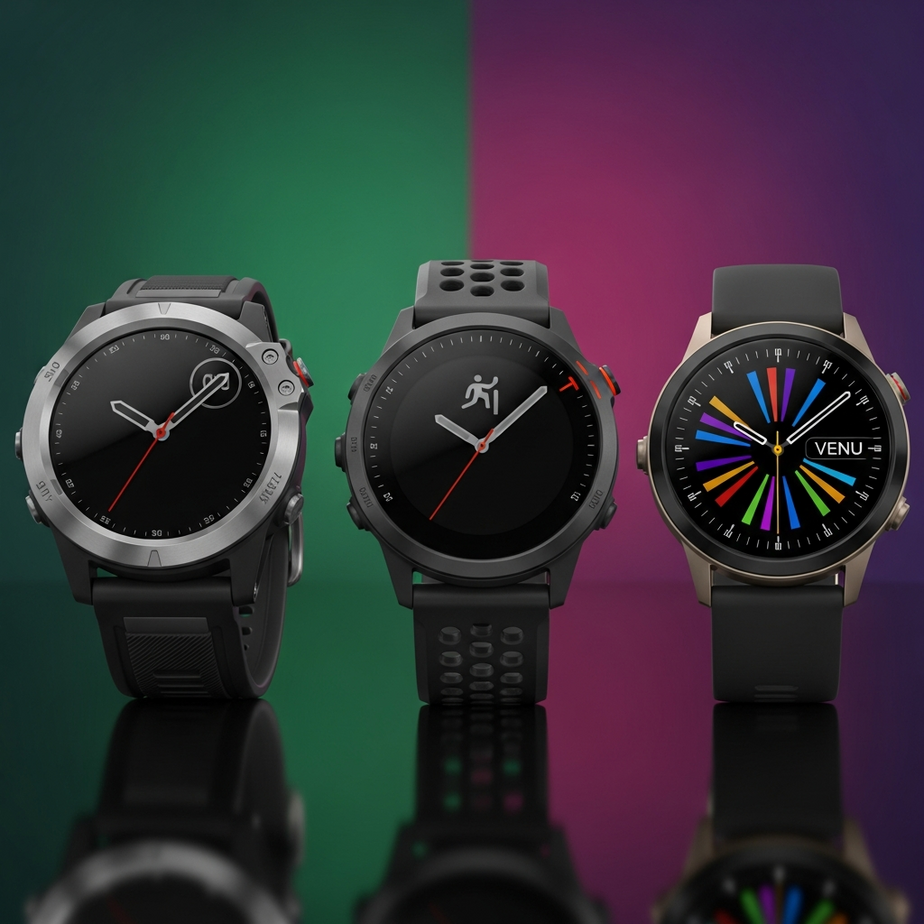
Choosing the perfect fitness tracker can feel like navigating a dense forest without a map, especially when looking at the extensive catalog offered by Garmin. While the brand is synonymous with GPS accuracy and rugged durability, the sheer number of options can be overwhelming for both newcomers and seasoned athletes. If you are currently debating between the Garmin Fenix vs Forerunner vs Venu, you are likely trying to balance your desire for advanced fitness metrics with your need for daily smart features and aesthetic appeal. These three product lines represent the core pillars of the Garmin ecosystem, each targeting a specific type of lifestyle. Understanding the nuance between them is the key to investing in a device that you will actually enjoy wearing every day.
Understanding the Core Philosophy of Each Series
Before diving into the technical specifications and sensor arrays, it is helpful to understand the design philosophy behind each family of watches. Garmin does not simply release different shapes of the same watch; they build specific software and hardware experiences tailored to distinct user groups. While they all share the Garmin Connect app and foundational health tracking like heart rate and steps, the experience on the wrist varies significantly. The Forerunner series is exactly what it sounds like. It is a lineage of devices built specifically for runners and triathletes who prioritize weight and performance metrics above all else. These watches are designed to disappear on your wrist during a long marathon training block. On the other hand, the Fenix series is built like a tank. It represents the pinnacle of outdoor multisport durability. These watches are constructed to survive mountains, oceans, and impact, often using premium materials like titanium and sapphire crystal. They are status symbols as much as they are tools. The Venu series is the outlier in the traditional Garmin lineup. It was created to bridge the gap between a dedicated sports watch and a modern lifestyle smartwatch. With vibrant screens and touch-first interfaces, the Venu line competes directly with the likes of the Apple Watch or Samsung Galaxy Watch, prioritizing daily convenience and style while still offering respectable fitness tracking.
The Forerunner Series: Performance Without the Weight
For decades, the Forerunner has been the gold standard for runners. If your primary goal is to improve your 5K time, train for a marathon, or compete in a triathlon, this is likely where your search should begin. The defining characteristic of the Forerunner line is its construction. These watches primarily use fiber-reinforced polymer cases. In simple terms, they are made of high-quality plastic. While some users might interpret plastic as cheap, runners know it means one thing: lightweight comfort. When you are swinging your arms for three hours during a long run, a heavy metal watch can become irritating and inaccurate if it bounces around. The Forerunner hugs the wrist and stays put. The Forerunner line is also incredibly diverse. It ranges from entry-level models that cover the basics of GPS and heart rate to high-end triathlon watches that offer full-color mapping and weeks of battery life. However, across the board, the software on these watches is obsessed with training data. You get access to features like PacePro, which helps you plan your race strategy, and daily suggested workouts that adapt to your recovery levels. One of the most critical aspects of the Forerunner series is the “Training Readiness” and “Body Battery” integration. While most Garmins have Body Battery, the Forerunner’s training analysis goes deeper, telling you if you are peaking, productive, or overreaching in your training load. For data nerds who live and die by their split times, the Forerunner is the ultimate tool.
The Fenix Series: Rugged Luxury and Infinite Battery
If the Forerunner is a sleek sports car, the Fenix is a rugged off-road vehicle equipped for an apocalypse. When comparing the Garmin Fenix vs Forerunner vs Venu, the Fenix stands out immediately due to its physical presence. It is heavy, thick, and undeniably robust. The Fenix series is designed for the multisport athlete who might hike a mountain on Saturday, ski on Sunday, and commute to a corporate office on Monday. The build quality utilizes stainless steel or titanium bezels and often features scratch-resistant sapphire lenses. This makes the watch significantly heavier than the Forerunner or Venu, but it also gives it a premium feel that looks appropriate with a business suit. Battery life is the crown jewel of the Fenix line. These watches are designed to go weeks, and sometimes over a month, without needing a charger. This is achieved through larger batteries and, in many models, solar charging capabilities integrated into the display face. If you plan on doing multi-day trekking or ultra-marathons where you cannot charge your device, the Fenix is often the only logical choice. Beyond battery and build, the Fenix excels in navigation. While high-end Forerunners have maps, the Fenix series often boasts the most comprehensive navigation features, including preloaded TopoActive maps, ski resort maps, and golf courses. It acts as a standalone GPS unit on your wrist. Newer iterations even include built-in LED flashlights, a feature that sounds gimmicky until you use it to navigate a dark campsite or find your keys under the car seat.
The Venu Series: The Smartwatch Hybrid
The Venu series was Garmin’s answer to the changing market. As consumers began to favor the vibrant AMOLED displays of general-purpose smartwatches, Garmin realized that the duller, memory-in-pixel (MIP) displays of the Fenix and Forerunner might not appeal to everyone. The Venu is characterized by its stunning, high-resolution AMOLED touchscreen. It is bright, colorful, and easy to read indoors. The user interface is also different; it leans heavily on swipes and taps, whereas the Fenix and Forerunner rely mostly on physical buttons (though newer models are adopting hybrid approaches). For the casual fitness enthusiast, the Venu offers a perfect middle ground. It tracks runs, yoga, swims, and strength training with the legendary accuracy of Garmin’s sensors. However, it strips away the overwhelming data that regular people might not need. You generally will not find complex “Training Status” or “Recovery Time” metrics on a Venu. Instead, you get a “Health Snapshot” and intuitive visuals that encourage general wellness. The Venu also brings smart features to the forefront. It is currently one of the few Garmin lines that includes a microphone and speaker on the wrist, allowing you to take calls or use a voice assistant directly from the watch. If you want a watch that looks great at a dinner party, notifies you of texts, and tracks your morning jog accurately, the Venu is the strong contender.
Display Technology and Battery Trade-offs
One of the most significant differences when analyzing the Garmin Fenix vs Forerunner vs Venu is the screen technology, as this directly dictates the battery life and user experience. The classic Fenix and older Forerunner models use Memory-in-Pixel (MIP) displays. These screens look somewhat dim indoors and do not have the vibrancy of a smartphone screen. However, they rely on ambient light to be visible. This means that the brighter the sun shines, the easier they are to read. They are always on and consume very little power, which is how the Fenix achieves its legendary battery life. The Venu series uses AMOLED screens. These are like your smartphone: beautiful, rich blacks, and vibrant colors. However, they fight against the sun. In direct, bright sunlight, an AMOLED screen has to crank up its brightness to be legible, which drains the battery. Interestingly, Garmin has started blurring these lines. High-end Forerunners and even the newest Fenix models are now being offered with AMOLED screens as options. However, the rule of thumb remains: if you want a watch you only charge twice a month, the MIP display found on the classic Fenix or mid-range Forerunner is superior. If you want a watch face that pops and looks modern, the Venu or the AMOLED versions of the premium watches are the way to go.
Navigation and Mapping Capabilities
If your activities involve venturing into the unknown, the distinction between these three lines becomes sharp. The Venu series offers “breadcrum” navigation on some models, but it is not a true mapping device. It relies on GPS to track where you are, but you cannot pull up a topographical map of the area to see nearby trails or rivers. It is designed for environments where you generally know where you are going. The Forerunner series is split. The lower-end models do not have maps. However, the top-tier Forerunners (usually the 900-series) have full-color mapping capabilities almost identical to the Fenix. This makes the high-end Forerunner a secret weapon for hikers who want mapping without the heavy weight of a metal watch. The Fenix series is the king of maps. It handles map rendering quickly and includes a massive database of points of interest. If you are lost in the woods, a Fenix can route you back to the start using a path you have never taken before, calculating the route on the fly just like a car GPS.
Smart Features and Daily Livability
We cannot ignore what happens during the other 23 hours of the day when you are not working out. How these watches handle notifications, music, and payments matters. All three lines support Garmin Pay (contactless payments) and can control music. They all display notifications from your phone. However, the Venu is the only one designed to interact back significantly. As mentioned, the Venu Plus models allow for phone calls and voice assistant access. The Forerunner and Fenix are passive smartwatches. They will vibrate when you get a text, and if you are on Android, you might be able to send a generic canned response. But you cannot dictate a reply or have a phone conversation through the watch. They are designed to let you disconnect, whereas the Venu is designed to keep you connected.
Price to Value Ratio
Budget is often the final tiebreaker. The Forerunner series offers the widest price spread. You can buy an entry-level Forerunner for a few hundred dollars, or a top-tier one for significantly more. This makes it accessible to almost anyone. The Venu generally sits in the mid-range. It is positioned as a premium consumer electronic device, priced competitively against the Apple Watch SE or Series. The Fenix is a significant investment. It is a premium multisport tool, and the price reflects that. You are paying for the metal build, the sapphire glass, the licensing for the maps, and the advanced battery technology. However, Fenix watches retain their value well and tend to last for many years due to their durable construction.
Which Garmin is Right for You?
Making the final decision on the Garmin Fenix vs Forerunner vs Venu debate comes down to identifying your primary “user identity.” You should choose the Forerunner if running is your main passion. If you care about cadence, vertical oscillation, and shaving seconds off your pace, this is your watch. The lightweight design is unbeatable for daily training, and the high-end models give you almost all the features of a Fenix without the bulk. You should choose the Fenix if you are hard on your gear or love the outdoors. If you scratch your watch against rocks while climbing, or if you need a battery that can last a two-week hiking trip, the Fenix is the only option. It is also the right choice if you prefer the aesthetic of a rugged, substantial analog watch over a sleek digital pebble. You should choose the Venu if you want a smartwatch first and a fitness tracker second. If you love the screen on your phone and want that same visual fidelity on your wrist, the Venu is the winner. It is perfect for the person who goes to the gym, runs a few times a week, and wants a stylish accessory that helps manage their digital life.
Getting the Most Out of Your Choice
Regardless of which model you choose, the real power lies in the Garmin ecosystem. All three watches feed data into Garmin Connect, one of the most comprehensive health platforms available. By wearing your device 24/7, you unlock insights into your sleep quality, stress levels, and overall energy reserves. The “best” watch is simply the one that fits your specific needs comfortably enough that you never want to take it off. Whether that is the featherweight Forerunner, the tank-like Fenix, or the sleek Venu, you are buying into a system that prioritizes your health and performance. Take a moment to assess your actual weekly routine. Be honest about whether you need topographical maps or if you just need a bright screen to read texts. Once you align your purchase with your reality, you will find a training partner that pushes you to move more and rest better.