Ecorobotix Unveils a Game‑Changing AI for Precision Herbicide Use at Agritechnica 2025
Last week in Yverdon‑Les‑Bains, Switzerland, Ecorobotix, the Swiss pioneer in ultra‑high precision (UHP) spraying, took the stage at Agritechnica with a breakthrough that could reshape the future of crop protection. Their newly launched “Plant‑by‑Plant™” AI technology promises farmers the ability to apply non‑selective contact herbicides only where weeds truly need them—eliminating chemical drift, safeguarding yields, and dramatically reducing environmental footprints.
Why Non‑Selective Herbicides Still Matter
Non‑selective herbicides, such as glyphosate and paraquat, are among the most widely used weed‑control agents in modern agriculture. Their potency lies in their ability to kill virtually any plant tissue they contact. However, this broad spectrum comes at a cost: accidental spray drift can damage neighbouring crops, and over‑application can harm soil microbiota and downstream ecosystems. Traditionally, farmers either accept the risk of collateral damage or opt for expensive, species‑specific herbicides that require precise timing and application rates.
Ecorobotix’s innovation turns this dilemma on its head. By pairing state‑of‑the‑art machine vision with advanced AI algorithms, the company can discern a weed’s exact position and health status in real time, delivering chemical payloads only where they’re needed.
How the Plant‑by‑Plant™ AI Works
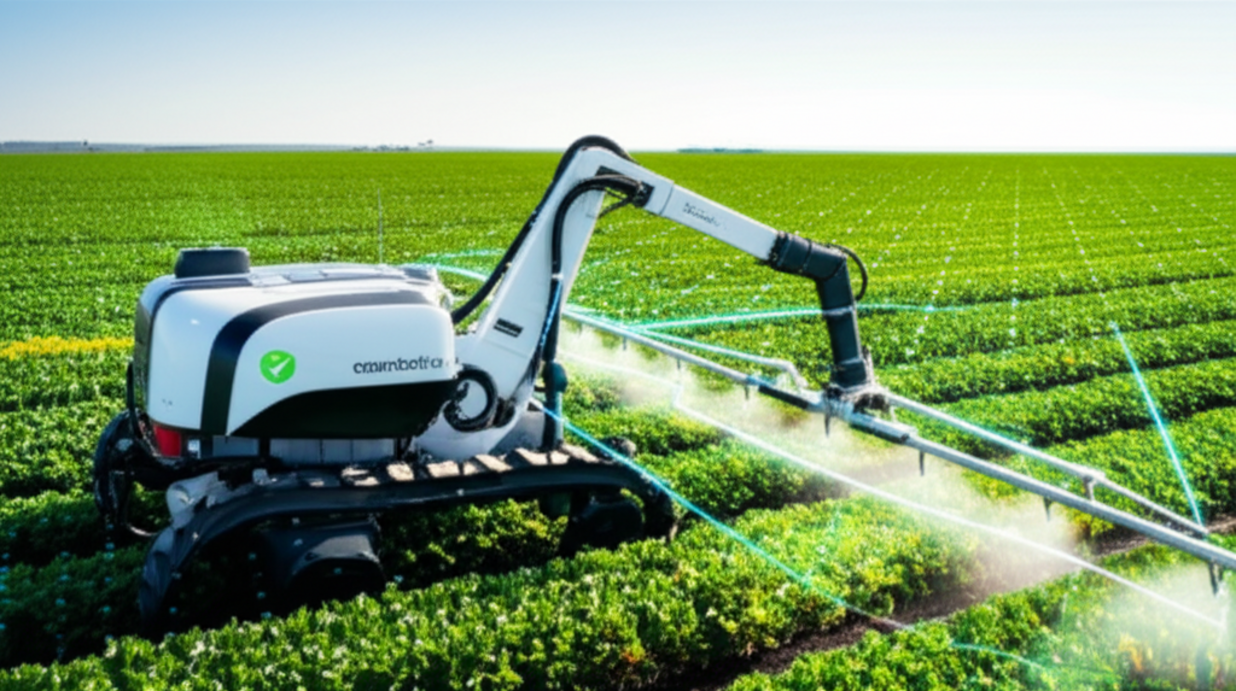
At its core, the Plant‑by‑Plant™ system is a sophisticated blend of hardware and software. The UHP sprayer is mounted on a self‑propelled cart that navigates the field at speeds up to 15 km/h. A high‑resolution RGB camera captures thousands of images per second, feeding them to an onboard GPU that runs convolutional neural networks (CNNs) trained on millions of annotated plant images.
The AI performs three critical tasks in a single pass:
- Identification: Distinguish between crop and weed species, even under varying lighting conditions.
- Localization: Pinpoint the exact coordinates of each target plant within the sprayer’s frame.
- Decision‑Making: Decide whether a particular plant requires treatment based on weed density, crop stage, and environmental constraints.
Once a target is confirmed, the sprayer deploys a micro‑dose of herbicide through a precisely engineered nozzle that limits spray drift. Because the AI continuously updates its model, the system learns and improves over successive passes, adapting to changes in weed pressure, crop growth, and weather dynamics.
Why It Matters for Farmers
1. Cost Efficiency – By applying herbicides only where needed, farmers can reduce chemical consumption by up to 50 %, cutting costs and improving profitability.
2. Yield Protection – The technology guarantees that crops are never exposed to harmful chemicals, preserving yield integrity and ensuring food safety.
3. Environmental Stewardship – Targeted application dramatically lowers the risk of off‑target contamination, supporting biodiversity and compliance with increasingly stringent environmental regulations.
Field Trials Back the Numbers
Over the past year, Ecorobotix has conducted extensive on‑farm trials across Europe, North America, and Australia. In a high‑yield wheat field in Switzerland, the Plant‑by‑Plant™ sprayer achieved a 97 % accuracy rate in weed identification while reducing glyphosate usage by 47 %. Similar results were observed in soybean and corn operations, where the system also proved capable of handling mixed crop‑weed scenarios without compromising spray performance.
These trials not only validate the technology’s reliability but also demonstrate its scalability. Ecorobotix’s modular design means the same core hardware can be adapted to a range of field sizes, from smallholder plots to large industrial farms.
Integrating with Smart Farm Ecosystems
One of the standout features of the new UHP sprayer is its seamless integration with existing farm management systems (FMS) and precision agriculture platforms. Farmers can import variable rate maps, integrate satellite data, and log treatment metrics directly into their FMS dashboards, ensuring a fully connected, data‑driven workflow.
Furthermore, the device’s open‑API architecture allows agronomists and software developers to create custom modules—for example, linking weather forecasts to adjust spray volumes or integrating soil nutrient data to optimize timing.
Real‑Time Decision Support
By providing farmers with real‑time visual feedback and detailed treatment logs, the system empowers proactive decision‑making. A farmer can, for instance, pause the operation if unexpected rainfall is forecasted, thereby avoiding unnecessary chemical exposure.
Regulatory and Market Implications
With the European Union tightening regulations around pesticide use—especially non‑selective herbicides—Ecorobotix’s precision approach aligns perfectly with policy goals. The ability to dramatically cut off‑target application positions the company as a key partner for farmers seeking to comply with the EU’s Farm Safety Directive.
From a market perspective, the demand for AI‑driven precision tools is growing. According to a recent market study, the global smart farming segment is projected to reach USD 22 billion by 2030, driven by the need for sustainable practices and labor shortages. Ecorobotix’s Plant‑by‑Plant™ technology places it at the forefront of this burgeoning field.
Future Directions: From Herbicides to Full Crop Protection
While the current focus is on non‑selective contact herbicides, the underlying AI platform is flexible enough to accommodate a range of chemicals, including selective herbicides, insecticides, and even growth regulators. Ecorobotix is already exploring modules that could integrate with foliar nutrient sprays, potentially offering a one‑stop solution for crop protection.
Additionally, the company is working on expanding its machine learning models to handle a broader array of weed species, including invasive varieties that pose significant threats to crop security. By continuously refining its training datasets, the AI will become increasingly adept at distinguishing subtle differences between similar-looking species.
Collaborative Ecosystem Building
Recognizing that technology alone cannot solve the complex challenges of modern agriculture, Ecorobotix is partnering with universities, research institutions, and industry consortia. These collaborations aim to develop best‑practice guidelines, conduct multi‑region trials, and share open‑source AI models to accelerate adoption worldwide.
Conclusion: A Precise Step Toward Sustainable Agriculture
Ecorobotix’s unveiling at Agritechnica marks a pivotal moment in the evolution of precision agriculture. By harnessing AI to deliver non‑selective herbicides with pinpoint accuracy, the company offers a tangible pathway toward more sustainable, cost‑effective, and environmentally responsible farming.
As the agricultural sector continues to confront rising production pressures and regulatory constraints, innovations like Plant‑by‑Plant™ provide a compelling answer—turning the broad‑spectrum power of traditional herbicides into a precise, controlled tool that protects yields while preserving the planet. For farmers, agronomists, and policymakers alike, this technology represents a win‑win that could redefine crop protection for the next generation.