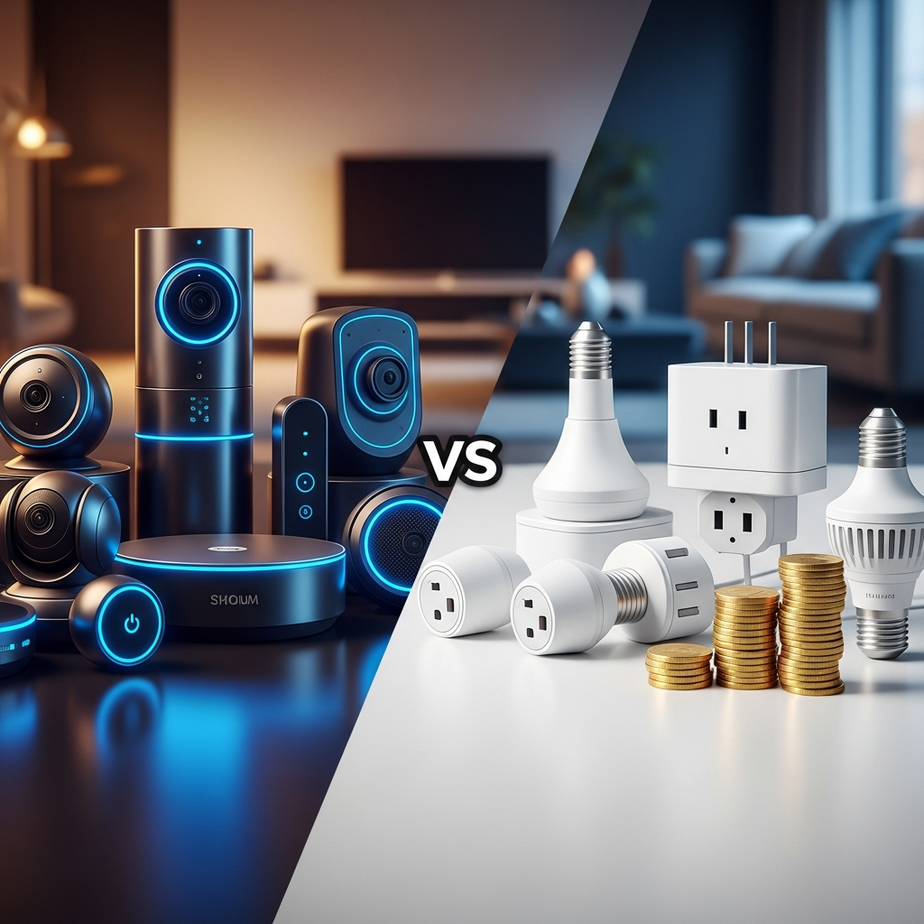
Building a connected home used to feel like a luxury reserved for the ultra-wealthy or the incredibly tech-savvy. The dream of walking into a room and having the lights adjust automatically, or commanding a digital assistant to brew your morning coffee, often came with a hefty price tag. Early adopters paid a premium for these conveniences, establishing a perception that home automation requires a massive bank account. However, the technology landscape has shifted dramatically in recent years. Today, you can easily find cheap alternatives to expensive smart home gadgets that offer nearly identical functionality without breaking the bank. The market is now flooded with high-quality, budget-friendly devices that compete head-to-head with the big-name brands. Whether you are looking to secure your front porch, automate your lighting, or keep your floors clean, you no longer need to sacrifice performance for price. By looking beyond the flagship products of major tech giants, you can piece together a fully functional smart ecosystem for a fraction of the cost. This guide will walk you through the best value-for-money swaps you can make today to upgrade your home intelligence while keeping your wallet happy.
Smart Lighting: Bright Ideas for Less
When people think of smart lighting, they often picture the high-end systems that require a dedicated central hub and cost upward of fifty dollars per bulb. While these premium systems offer excellent reliability and color accuracy, they are overkill for the average user who just wants to dim the lights from the sofa or set a wake-up schedule. The barrier to entry for smart lighting has crashed significantly thanks to the rise of Wi-Fi-enabled bulbs that connect directly to your router. You can find incredible value in brands that focus on direct-to-consumer sales or simplified connectivity. These bulbs screw into your existing fixtures just like a standard light bulb. Once you download the companion app, you can control brightness, temperature, and even color without needing to buy an additional bridge or hub. This seemingly small difference saves you a significant amount of money upfront and simplifies the setup process.
Wi-Fi Bulbs vs. Hub-Based Systems
The main difference between budget options and premium ones lies in how they communicate. Premium systems often use protocols like Zigbee or Z-Wave, which create a mesh network in your home. This reduces congestion on your Wi-Fi network. However, unless you plan to install fifty or more smart bulbs, a standard Wi-Fi bulb is perfectly adequate. Modern routers can easily handle the load of a dozen smart bulbs without slowing down your Netflix streaming.
Features You Do Not Have to Sacrifice
Opting for cheap alternatives to expensive smart home gadgets in the lighting category does not mean you lose out on fun features. Budget bulbs from brands like Wyze, Sengled, or Govee still offer millions of colors, voice control compatibility with major assistants, and the ability to sync with music. You can still set “vacation modes” that randomly toggle lights to make it look like someone is home, or schedule your porch lights to turn on exactly at sunset. The user experience is virtually indistinguishable from the luxury brands.
Smart Plugs: The MVP of Budget Automation
If you want to make your home smarter instantly, the humble smart plug is your best friend. These small devices act as intermediaries between your wall outlet and your “dumb” appliances. By plugging a standard lamp, fan, or coffee maker into a smart plug, you gain the ability to control power to that device remotely or via voice command. While some premium brands charge a high price for sleek designs and energy monitoring, the core functionality is available for just a few dollars per unit. There is rarely a need to overspend on smart plugs because the technology inside them is relatively simple. It is essentially a switch that receives a Wi-Fi signal. Because the tech is commoditized, you can often find multi-packs of reliable smart plugs for the price of a single premium plug. This allows you to automate multiple rooms at once rather than buying them piecemeal.
Transforming Ordinary Appliances
The real magic of affordable smart plugs is their versatility. You can use them to manage space heaters, ensuring they are never left on when you leave the house. You can plug in your holiday lights so you never have to crawl behind the Christmas tree to unplug them again. Some budget plugs even include energy monitoring, allowing you to see which devices are draining your electricity bill. This creates a double layer of savings: you save money on the device itself, and then the device helps you save on your utility bill.
Home Security Cameras Without the Monthly Fees
Security is one of the main drivers for smart home adoption, but it is also one of the most expensive categories. High-end security cameras often come with a high initial hardware cost followed by a mandatory monthly subscription to access your video footage. Over a few years, the total cost of ownership can be astronomical. Fortunately, the market has responded with affordable security cameras that offer local storage options. Many budget-friendly cameras now support microSD cards. This means your video clips are saved directly to the camera rather than a cloud server. You own your footage, and you do not have to pay a monthly ransom to view what happened on your front porch yesterday.
Video Quality and Night Vision
You might assume that paying less means grainy, unusable video. However, camera sensors have become incredibly cheap to manufacture. It is now standard to find 1080p and even 2K resolution cameras for under forty dollars. These budget cameras often feature color night vision, two-way audio so you can speak to delivery drivers, and motion detection zones.
Intelligent Detection for Less
A common selling point for expensive cameras is AI detection that can tell the difference between a person, a pet, and a package. Surprisingly, many cheap alternatives to expensive smart home gadgets now include this processing on the device itself. You get the same alert specificity without the lag of sending video to the cloud for analysis. Whether you choose a compact indoor camera or a weather-resistant outdoor unit, you can build a robust security perimeter for a fraction of the cost of a professional install.
Robot Vacuums: diverse Options for Every Floor
Perhaps no smart home gadget feels more like the future than a robot vacuum. The market leaders in this space established the category with machines that cost as much as a major appliance. For a long time, the alternative was a “dumb” robot that aimlessly bumped into walls. That gap has closed. Today, you can find competent robot vacuums that offer logical navigation, strong suction, and app control for significantly less than the flagship models. The primary trade-off usually involves the absolute latest features, such as self-emptying bases or AI-powered obstacle avoidance that dodges phone charging cables. However, if your goal is simply to keep dust and pet hair under control on a daily basis, mid-range and budget models are excellent workhorses.
Navigation Technology
Premium vacuums often use LiDAR (laser navigation) to map your home instantly. Budget-friendly alternatives often use gyroscopes and optical sensors to map the room as they clean. While it might take the budget robot a few minutes longer to finish the living room, the end result is a clean floor. Brands like Eufy, ILIFE, and Roborock offer models that strike a fantastic balance between price and performance. They can still return to their charging dock automatically and can be scheduled to run while you are at work.
Maintenance and Longevity
One area where budget vacuums shine is simplicity. With fewer complex sensors and moving parts, they are often easier to repair and maintain. Replacement brushes and filters are widely available and cheap. By scheduling a daily clean with a more affordable unit, you maintain a baseline of cleanliness in your home that reduces the need for deep cleaning, providing a massive return on investment in terms of time saved.
Smart Speakers and Hubs: Small Sizes, Big Capabilities
The center of many smart homes is the voice assistant. Tech giants push their largest, screen-equipped devices as the ultimate hubs for family organization. These devices are impressive, acting as digital photo frames and video calling stations. However, if your primary goal is voice control for your other devices, the smaller “mini” versions of these speakers are cheap alternatives to expensive smart home gadgets that perform the exact same core functions. A small smart speaker hidden on a bookshelf has the same intelligence as its larger, screen-bearing counterpart. It can answer questions, control your lights, set timers, and play music. If you are not planning to watch videos in your kitchen, the screen is largely unnecessary.
Creating a Whole-Home Audio System
Because the smaller speakers are so affordable, you can purchase three or four of them for the price of one large smart display. This allows you to place voice control in the kitchen, bedroom, living room, and hallway. This distribution is far more valuable for a smart home experience than having one expensive screen in a single room. You can group these speakers together to play music throughout the entire house, creating a synchronized audio system that used to cost thousands of dollars to install professionally.
Making It All Work Together
One concern with buying budget devices from different brands is fragmentation. You do not want to open five different apps just to turn off the lights and lock the door. This is where smart home integration platforms come into play. Most reputable budget devices are compatible with major ecosystems like Google Home, Amazon Alexa, or Samsung SmartThings. By linking your affordable bulbs, plugs, and cameras to one of these central platforms, you get a unified interface. You can create routines—such as “Good Night”—that turn off your budget smart plugs, dim your budget smart bulbs, and arm your budget security cameras, all with a single command. The software bridges the gap, making your collection of affordable devices feel like a cohesive, premium system.
The Importance of Compatibility Standards
When shopping for these devices, look for logos indicating compatibility with your preferred voice assistant. Additionally, keeping an eye out for “Matter” support is a wise move for future-proofing. Matter is a new industry standard that ensures smart devices can talk to one another regardless of the brand. As more budget devices adopt this standard, mixing and matching cheap alternatives to expensive smart home gadgets will become even seamless. It is also worth checking tech publications for reliability ratings. Websites like CNET or TechRadar often run stress tests on budget devices. Referencing a credible source like the New York Times’ Wirecutter reviews can also provide peace of mind that a cheaper device does not compromise on safety or security standards.
Conclusion
Creating a smart home is no longer a pursuit reserved for the wealthy. The technology has matured to the point where excellent performance is available at entry-level prices. By choosing Wi-Fi bulbs over hub-based systems, using smart plugs to modernize old appliances, and opting for cameras with local storage, you can enjoy all the conveniences of automation without the financial strain. The key is to focus on the features you will actually use rather than paying for the marketing hype surrounding flagship products. Start small, perhaps with a single smart plug or a couple of bulbs, and experience how these small changes can streamline your daily routine. The smart home of the future is available right now, and it is likely much cheaper than you think.