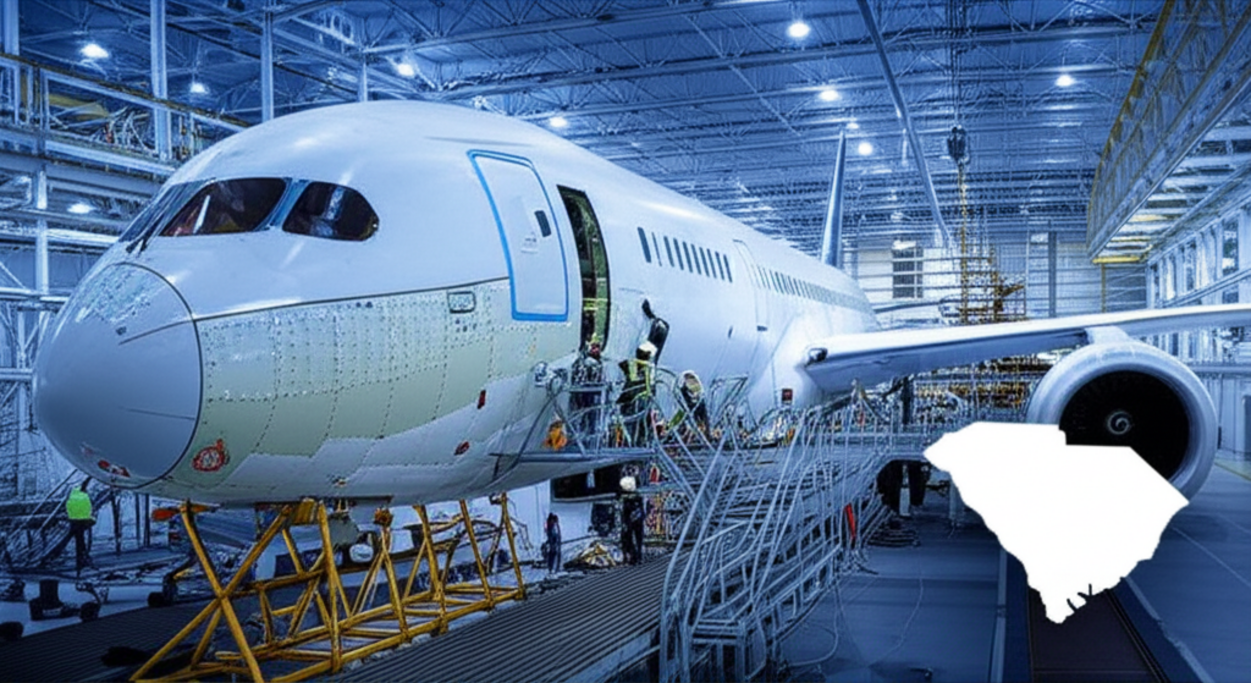
Investing in the Future: Boeing’s $1 Billion Commitment to South Carolina
Boeing Co. is setting the stage for a new era in aircraft manufacturing with a bold move that could reshape the aerospace landscape. The company has announced a commitment of more than one billion dollars to upgrade its Dreamliner (787) production facility in North Charleston, South Carolina. The investment is designed to double the monthly output of the 787‑8, 787‑9, and 787‑10 variants, a response to soaring demand from airlines around the globe.
Why South Carolina? The Strategic Advantage
South Carolina’s aerospace corridor has long been a hub for innovation, supported by a highly skilled workforce and a business-friendly environment. Boeing’s decision to focus on the South Carolina site is not arbitrary:
- Supply Chain Synergy – The region already hosts a network of key suppliers, from avionics to composite materials, reducing logistics costs and lead times.
- Skilled Labor Pool – With a tradition of manufacturing excellence, the local workforce brings deep expertise in complex assembly processes.
- Economic Incentives – State and local governments offer tax credits and infrastructure support that make large-scale expansion financially viable.
The 787 Dreamliner: A Sales Powerhouse
The 787 Dreamliner has become the flagship of Boeing’s wide‑body strategy. Its advanced composite construction, fuel efficiency, and passenger comfort features have positioned it as the preferred choice for carriers seeking to expand long‑haul routes. Current orders exceed 1,500 units, and the backlog suggests a steady demand stream that Boeing aims to satisfy by ramping up production.
In recent months, airlines from United Airlines to Qatar Airways have added to their orders, and new contracts are being signed worldwide. The demand spike is fueled by:
- Global recovery in air travel post‑pandemic.
- Rise in long‑haul leisure and cargo traffic.
- Competitive edge over legacy aircraft platforms.
Doubling Production: What It Means for the Industry
Doubling the monthly production rate from approximately 12 to 24 units is a massive operational shift. Boeing plans to achieve this through:
- Adding an additional production line dedicated to the 787‑10.
- Upgrading the state‑of‑the‑art manufacturing tools with new robotics and AI‑driven quality control systems.
- Expanding the workforce by 1,500 to 2,000 new skilled employees.
Such expansion is expected to improve manufacturing lead times, reduce per‑unit costs, and allow the company to meet its order fulfillment targets more quickly.
Challenges and Opportunities
While the outlook is optimistic, Boeing faces several hurdles:
- Supply Chain Resilience – The global shortage of critical components, especially high‑strength aluminum and composite materials, could slow production.
- Workforce Training – Rapid expansion requires intensive training programs to ensure new hires meet Boeing’s stringent quality standards.
- Regulatory Compliance – Each incremental change in production must undergo rigorous certification processes.
Nevertheless, the investment also opens new opportunities:
- It positions Boeing as a leader in sustainable aviation by leveraging the Dreamliner’s advanced fuel‑efficiency technologies.
- It fosters collaboration with local universities for research and development of next‑generation materials.
- It provides a template for other manufacturers looking to scale up production efficiently.
Impact on the Local Economy
The economic ripple effect of Boeing’s expansion in South Carolina is far from modest. By creating thousands of high‑pay jobs, the company will stimulate demand for housing, retail, and services in the region. Additionally, the presence of a high‑tech manufacturing hub attracts complementary industries, from aerospace electronics to software development, further diversifying the local economy.
Local government officials predict that the investment will generate an estimated $2.5 billion in indirect economic activity over the next decade, a figure that underscores the importance of the aerospace sector to the state’s prosperity.
Looking Ahead: The Future of Aerospace Manufacturing
Boeing’s push to double 787 output reflects broader industry trends:
- Manufacturing digitalization—leveraging IoT, AI, and automation to streamline processes.
- Shift to modular construction, where aircraft components are built in smaller, transportable sections and assembled on‑site.
- Growing emphasis on sustainability, with manufacturers seeking to reduce the environmental footprint of both production and operation.
As Boeing scales up, it will also need to keep an eye on emerging competitors—such as Airbus’s A350—by ensuring that the Dreamliner remains technologically ahead in fuel efficiency, cabin comfort, and operational flexibility.
Conclusion
Boeing’s $1 billion investment in its South Carolina Dreamliner facility is more than a capital expenditure—it is a strategic statement. By doubling production capacity, the company is aligning itself with the escalating demand for advanced wide‑body aircraft and reinforcing its position as an industry leader. For South Carolina, the initiative promises a robust economic boost and positions the state as a critical node in the global aerospace supply chain. As the aviation sector continues its post‑pandemic rebound, such bold moves may well dictate the pace at which the industry adapts and grows in the years to come.