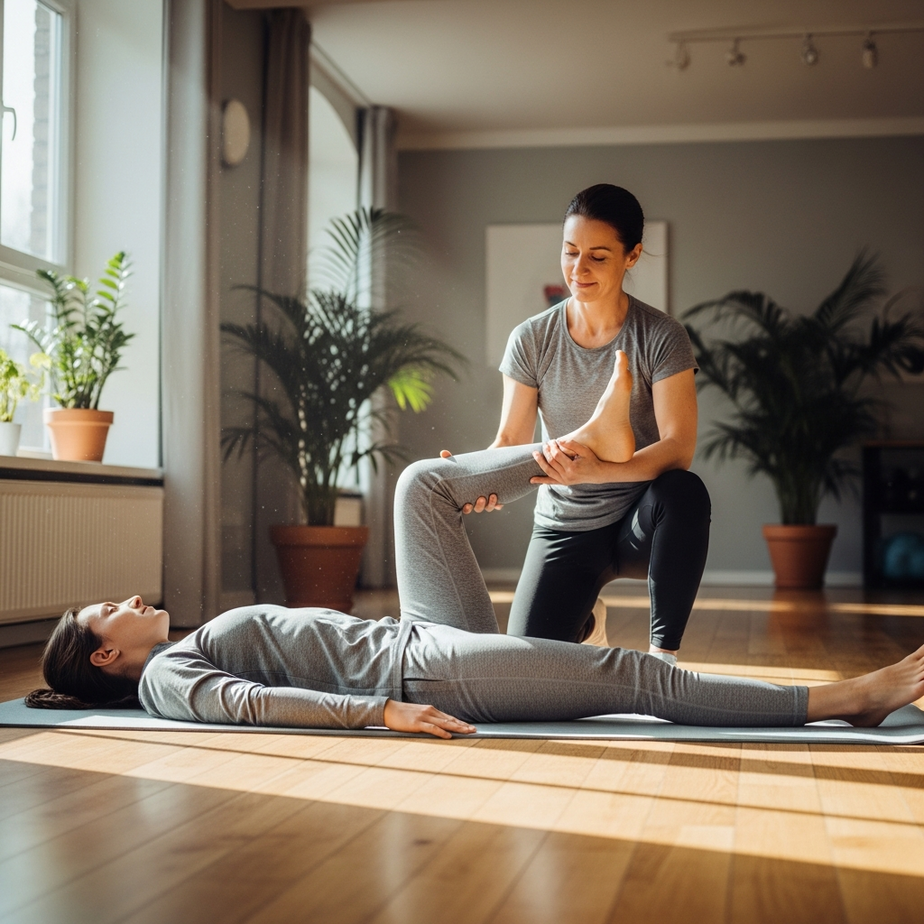
Most of us treat our bodies like sophisticated carrying cases for our brains, especially in an era defined by screen time and sedentary work. We optimize our software, upgrade our hardware, and streamline our workflows, yet we often ignore the mechanical tension building up in our own biological machinery until something breaks. Recently, I decided to address this by handing over control of my mobility to a professional. The concept was simple but slightly intimidating: I would lie on a table while a trained practitioner manipulated my limbs to achieve a depth of flexibility I could never reach on my own. This practice is known as assisted stretching, and it is rapidly gaining popularity among office workers, athletes, and anyone looking to hack their physical recovery. While the idea of letting a stranger twist you into pretzel-like shapes might sound daunting, the results offer a compelling argument for why we should all be paying closer attention to our range of motion. It turns out that manual therapy isn’t just about feeling loose; it is about recalibrating the way your body functions on a fundamental level.
The Sedentary Crisis: Why We Need External Support
The modern lifestyle is a recipe for orthopedic disaster. Whether you are coding for ten hours a day, managing complex projects, or simply scrolling through feeds, the human body is forced into prolonged periods of stagnation. When we sit, our hip flexors shorten, our shoulders roll forward, and our hamstrings lock up. Over time, this creates a default posture that restricts movement and invites chronic pain. Many of us attempt to mitigate this with quick, static stretches before a workout or after waking up. We reach for our toes, hold for ten seconds, and assume we have done our due diligence. However, the limitation of self-stretching is the stretch reflex. This is a safety mechanism in your muscles that prevents them from tearing. When you stretch yourself, your body naturally resists going too deep because your nervous system is trying to protect you. This is where assisted stretching changes the equation. By utilizing a practitioner, you can bypass some of these natural inhibitors safely. The practitioner stabilizes one part of your body while isolating and stretching another, applying force that is difficult to replicate on your own. It is akin to having a mechanic work on your car rather than trying to fix the engine while you are driving it. The external support allows you to relax completely, which is the secret ingredient to unlocking true mobility.
The Science of the Stretch: PNF and Biomechanics
To understand why a fifty-minute session feels so transformative, we have to look at the underlying mechanics. Assisted stretching often utilizes a technique called Proprioceptive Neuromuscular Facilitation, or PNF. While the name sounds complex, the concept is straightforward and rooted in how our nerves communicate with our muscles. PNF involves a sequence of stretching a muscle, contracting it against resistance, and then stretching it again. When you contract a muscle while it is being stretched, you trigger a physiological response that encourages the muscle to relax further immediately afterward. This technique provides several advantages over standard stretching: – It resets the muscle length tension relationship.
– It improves neuromuscular efficiency.
– It rapidly increases the range of motion in a short period. During my session, the practitioner used this method repeatedly. I was asked to push my leg against their shoulder for a few seconds, relax, and then they would gently push my leg further. It was fascinating to feel my body “give way” after the contraction phase. It wasn’t painful; rather, it felt like a software update for my joints, overwriting the code that said “stop here” and replacing it with “you can go further.”
The Nervous System Connection
Beyond the mechanical stretching of fibers, assisted stretching acts as a reset button for the nervous system. High-stress environments and constant digital connectivity keep many of us in a sympathetic state—the “fight or flight” mode. This state increases muscle tension as a protective armor. By focusing on deep breathing while the practitioner moves your body, you shift into a parasympathetic state, often called “rest and digest.” This mental relaxation is critical. You cannot force a tight body to open up if the mind is racing. The combination of rhythmic breathing and external manipulation signals safety to the brain, allowing the tension to melt away.
The Experience: Vulnerability and Relief
Walking into the studio, I wasn’t sure what to expect. Would it be like a massage? A chiropractic adjustment? A yoga class where I didn’t have to do any work? The reality was a hybrid of all three. The session took place on a padded table, similar to a massage setup, but I remained fully clothed in athletic wear. The practitioner began with an assessment, checking my rotation and identifying the areas where my desk job had done the most damage. Unsurprisingly, my hips and upper back were the primary culprits. The session started with gentle traction, pulling on the legs to decompress the lower back. This sensation alone was worth the price of admission. As we moved into deeper stretches, the “pretzel” description became accurate. One moment, my leg was leveraged over my opposite shoulder to target the glutes; the next, my arms were pinned back to open up the chest cavity. There is a distinct vulnerability in allowing someone else to control your limbs. You have to surrender control, which is difficult for Type-A personalities who are used to managing every aspect of their lives. However, once I leaned into that surrender, the experience became profoundly relaxing. The practitioner guided my breathing, instructing me to inhale during the hold and exhale during the deepen phase. This rhythm became hypnotic. Unlike a massage, which works on the tissue, assisted stretching feels like it works on the structure. You can feel the joint capsules opening and the fascia—the connective tissue wrapping your muscles—finally letting go of years of accumulated tightness.
Quantifiable Benefits: Analyzing the ROI on Your Body
For those who view their health through a data-driven lens, the return on investment for assisted stretching is significant. It is not just about feeling flexible; it is about performance optimization and longevity.
Immediate Range of Motion Increases
The most obvious benefit is the immediate improvement in flexibility. After fifty minutes, I stood up and felt taller. My shoulders sat further back without conscious effort. Bending down to tie my shoes felt effortless, free of the usual catch in my lower back. This immediate feedback loop is satisfying, providing proof that the mechanical intervention worked.
Enhanced Circulation and Recovery
Stretching is a circulatory aid. By manually pumping the muscles and lengthening the tissue, you increase blood flow to the extremities. This oxygen-rich blood helps flush out metabolic waste products that accumulate from exercise or stress. For athletes, this means faster recovery times between workouts. For the average professional, it means less lethargy and more physical energy throughout the day. According to the Mayo Clinic, maintaining flexibility is crucial for preserving a range of motion as we age, which directly correlates to independence and quality of life later in years. By investing in assisted stretching now, you are essentially contributing to a 401(k) for your physical mobility.
Correction of Imbalances
We all have a dominant side. You might carry your bag on your right shoulder, stand with your weight on your left leg, or use a mouse with your right hand. Over time, these habits create asymmetries in the body. One side becomes short and tight, while the other becomes long and weak. A skilled practitioner can identify these imbalances immediately. During my session, it was noted that my right hip was significantly tighter than my left. By spending extra time on that side, the practitioner worked to rebalance the system. Self-stretching rarely addresses this because we tend to stretch both sides equally, or worse, avoid the tight side because it is uncomfortable.
Integrating Mobility into a High-Tech Life
You do not need to book a daily appointment to benefit from the principles of assisted stretching. The goal is to integrate the lessons learned on the table into your daily routine. The session taught me exactly what “full range of motion” feels like, giving me a new baseline to aim for. Here are a few ways to maintain that mobility between deep sessions: – Micro-dosing movement: Instead of one long workout, take five minutes every two hours to move your joints through their full range.
– Tools for self-myofascial release: utilize foam rollers or percussion massage guns to loosen tissue before attempting to stretch.
– Active workstations: If possible, alternate between sitting and standing to prevent the hip flexors from becoming permanently shortened. The technology sector creates problems for our bodies, but it also offers solutions. There are now apps that guide you through PNF-style stretching at home, and wearables that remind you when you have been static for too long. However, technology cannot yet replicate the tactile feedback and intuitive adjustments of a human practitioner.
The Verdict: Is It Worth It?
After fifty minutes of being pulled, pushed, and twisted, I walked out of the studio feeling like I was operating a new machine. The mental fog that usually accompanies a mid-week afternoon had vanished, replaced by a sense of clarity and physical lightness. The realization I came to is that we spend thousands of dollars maintaining our cars and upgrading our computers, yet we expect our bodies to run indefinitely with zero maintenance. We accept stiffness and aches as a normal part of aging or working, but they are often just symptoms of neglect. Assisted stretching provides a deep, structural reset that is difficult to achieve in a yoga class or gym session. It bridges the gap between medical therapy and fitness, offering a preventive solution to the problems caused by our modern, sedentary lives. While it requires a level of trust to let a stranger manipulate your limbs, the payoff is a body that functions with less friction and more freedom. If you have been feeling the weight of the digital world settling into your shoulders, or if your lower back complains every time you stand up from your desk, it might be time to stop trying to fix it yourself. Lie down, breathe, and let an expert help you reclaim the movement you didn’t realize you had lost. Your body is the only hardware you can’t replace—it is time to start treating it that way.