The Foldable iPhone: Apple’s Answer to a New Form Factor
For years, the smartphone industry has been buzzing with foldable devices, led by competitors like Samsung and Google. Yet, Apple has remained conspicuously on the sidelines, observing, patenting, and perfecting. This deliberate patience is classic Apple, a company that rarely pioneers a new category but almost always defines it. By 2026, the wait may finally be over, culminating in the release of a foldable iPhone.
This isn’t just about bending a screen; it’s about reimagining the personal computer that lives in our pockets. Apple’s entry into the foldable market will likely address the key pain points of current devices: screen durability, the visible crease, and software optimization. Expect a device that feels less like a fragile experiment and more like a polished, inevitable evolution of the iPhone. The vision for Apple in 2026 hinges on delivering an experience that is both innovative and flawlessly reliable.
What a Foldable iPhone Could Look Like
The rumor mill is currently divided on the exact form factor Apple will choose. Two primary designs are in contention, each with unique advantages for different users.
– The “Clamshell” Design: Similar to the Samsung Galaxy Z Flip, this would be a standard-sized iPhone that folds in half horizontally. This design prioritizes portability, allowing a large-screen device to fit comfortably into a small pocket or purse. It’s a modern take on the classic flip phone, blending nostalgia with cutting-edge technology.
– The “Book-Style” Design: This form factor, akin to the Samsung Galaxy Z Fold, would feature a regular iPhone-sized screen on the outside and unfold vertically like a book to reveal a larger, iPad-mini-sized display on the inside. This model is built for productivity and media consumption, transforming from a phone into a small tablet in an instant.
Whichever path Apple chooses, the device will be defined by its seamless integration of hardware and software. Expect iOS to be fundamentally re-engineered to take advantage of the dual-screen setup, offering unique multitasking capabilities and app experiences that are impossible on a traditional smartphone.
The “Crease-less” Display: Apple’s Biggest Hurdle
The single biggest challenge for any foldable device is the screen crease—the subtle but persistent indentation where the display bends. For a company obsessed with design perfection, releasing a product with a visible flaw is simply not an option. This is likely the main reason for Apple’s delayed entry.
Apple is reportedly investing heavily in advanced ultra-thin glass and polymer technologies to create a display that is both flexible and durable, with a minimal or even invisible crease. Paired with a meticulously engineered hinge mechanism, the foldable iPhone could set a new industry standard for build quality. This device is more than just a new phone; it’s a statement about the future of mobile computing and a cornerstone for the ambitious roadmap of Apple in 2026.
The Affordable MacBook: Bringing High-End Computing to the Masses
The MacBook is an icon of design and performance, but its premium price tag places it out of reach for many students, families, and casual users. For years, the lower end of the laptop market has been dominated by Windows PCs and, especially in education, Google’s Chromebooks. Apple in 2026 may finally be ready to challenge this status quo with a more accessible MacBook.
This move wouldn’t just be about competing on price; it would be a strategic play to bring millions of new users into the Apple ecosystem. By offering the core macOS experience powered by efficient Apple Silicon at a lower price point, Apple could capture a massive, untapped market segment and create a new generation of lifelong customers.
Competing with Chromebooks and Budget Windows Laptops
The education sector is a key battleground. Chromebooks have gained a strong foothold in schools due to their low cost, simplicity, and cloud-based management. An affordable MacBook, even at a slightly higher price, could be a compelling alternative, offering far superior performance, a more robust application library, and the creative potential that Apple products are known for.
This new device wouldn’t replace the MacBook Air or Pro. Instead, it would carve out its own niche. Imagine a 12-inch or 13-inch laptop designed specifically for everyday tasks: web browsing, document editing, video calls, and light creative work. Powered by a base-level M-series chip, it would still outperform most of its rivals in the same price bracket.
What Would Apple Sacrifice?
To hit a lower price point, some compromises would be necessary. Here’s where Apple might make strategic cuts without diluting the core experience:
– Build Materials: Instead of the signature aluminum unibody, Apple might opt for a high-quality polycarbonate or a different metal alloy, similar to what it did with older MacBooks or the iPhone 5c.
– Display Technology: The screen would likely be a high-quality LCD panel rather than the high-end Liquid Retina or Mini-LED displays found in more expensive models.
– Port Selection: It might feature fewer Thunderbolt ports, perhaps relying on one or two USB-C ports for charging and connectivity.
– Keyboard and Trackpad: While still excellent, these components might use slightly older, more cost-effective technologies.
Even with these adjustments, the main draw would remain: a genuine MacBook running the full macOS, powered by the incredible efficiency and speed of Apple Silicon. This product alone could dramatically reshape the personal computing landscape.
Apple Glasses: The Next “One More Thing” Moment?
While a foldable phone and a cheaper laptop are evolutions of existing products, Apple Glasses represent a true leap into the future. Distinct from the powerful but niche Vision Pro headset, which focuses on immersive “spatial computing,” Apple Glasses would be designed for all-day wear and subtle, helpful “augmented reality” (AR). This could be the most revolutionary product from Apple in 2026.
If the iPhone put the internet in our pockets, Apple Glasses aim to weave it seamlessly into our field of view. The goal is to provide glanceable information without requiring you to pull out a device, fundamentally changing how we interact with technology and the world around us. This is the kind of ambitious, category-defining product that has long been the hallmark of Apple’s success.
A Vision for Everyday Augmented Reality
Imagine walking down a new street with navigation arrows appearing directly on the pavement in front of you. Picture receiving text messages that hover discreetly in your peripheral vision, or seeing a real-time translation of a foreign menu as you look at it. This is the promise of AR glasses.
The use cases are nearly limitless:
1. Notifications: See incoming calls, messages, and alerts without looking at your phone or watch.
2. Navigation: Get turn-by-turn directions for walking, cycling, or driving, overlaid on the real world.
3. Information: Look at a landmark and see historical facts, or view restaurant ratings as you pass by.
4. Communication: Have more immersive FaceTime calls where the person you’re speaking to feels more present.
According to a report by industry analyst firm IDC, the AR/VR market is projected to grow significantly, and a mainstream consumer product from Apple would be a massive catalyst for that growth.
The Challenges of Miniaturization and Battery Life
Creating a device this advanced is an immense engineering challenge. The core problem is packing a powerful processor, micro-displays, cameras, sensors, and a long-lasting battery into a frame that is lightweight, comfortable, and socially acceptable. Early prototypes from other companies have often been bulky, awkward, and technologically limited.
Apple’s approach will likely involve a deep integration with the iPhone, offloading much of the heavy processing to the phone to keep the glasses themselves as light and efficient as possible. Solving the battery life equation will be critical for all-day usability. If any company can merge high-tech function with high-fashion form, it’s Apple.
Redesigned Apple Watch & Advanced Health Sensors
The Apple Watch has evolved from a simple smartwatch into a formidable health and wellness device. It can monitor your heart rate, take an ECG, and measure your blood oxygen levels. But for Apple in 2026, the next frontier is predictive and non-invasive health monitoring, turning the device from a fitness tracker into a guardian of your well-being.
Alongside these internal advancements, rumors point to a major external redesign, potentially called the “Apple Watch X” to mark its tenth anniversary. This would be the most significant visual overhaul in the product’s history, making it sleeker and more powerful than ever.
The Holy Grail: Non-Invasive Blood Glucose Monitoring
For millions of people living with diabetes, monitoring blood sugar typically requires a painful finger prick or an invasive wearable sensor. For years, tech companies have been racing to develop a non-invasive method, and Apple is widely reported to be at the forefront of this effort. As noted by sources like Bloomberg, Apple has a secret team that has been working on this technology for over a decade.
Using advanced optical absorption spectroscopy, a future Apple Watch could shine a light through the skin to measure glucose concentration in the blood. If Apple can successfully implement this feature by 2026, it would not just be a game-changer; it would be one of the most significant medical technology breakthroughs of the century, saving lives and transforming chronic disease management.
A Sleeker Design and Smarter Bands
The rumored “Apple Watch X” redesign is expected to feature a thinner case and a new magnetic band attachment system. This would allow for an even slimmer profile and potentially create more internal space for a larger battery or new sensors.
The new band system could also enable “smart bands” with their own integrated sensors. For example, a specific band could offer more advanced hydration tracking for athletes, while another could provide enhanced sleep monitoring capabilities. This would make the Apple Watch a more modular and customizable health platform.
The HomePod with a Screen: A True Smart Home Hub
Apple’s smart home strategy has often felt disjointed, split between the audio-focused HomePod and the media-centric Apple TV. Meanwhile, competitors like Amazon and Google have found great success with smart displays that provide a visual interface for controlling the home. The arrival of a HomePod with an integrated screen would finally give Apple a true command center for the HomeKit ecosystem.
This device would merge the high-fidelity audio of a HomePod with the visual versatility of an iPad. It would serve as a central hub for controlling lights, thermostats, and cameras, while also acting as a family communication and entertainment device. This is a critical product for unifying Apple’s presence in the living room and kitchen.
Combining the Best of HomePod and iPad
Imagine a device on your kitchen counter that can do it all:
– Smart Home Control: A persistent dashboard showing the status of all your HomeKit devices.
– Communication Hub: Make FaceTime calls, send messages, and leave video notes for family members.
– Kitchen Assistant: Look up recipes, watch cooking videos, and set multiple timers with Siri.
– Entertainment Center: Listen to Apple Music with rich album art, watch Apple TV+, or use it as a digital photo frame.
Running a customized version of iPadOS, the device would be instantly familiar to millions of users, making it incredibly easy to adopt. It would fill a glaring gap in Apple’s product line and provide a powerful, visual front-end for the company’s growing array of services. This is a vital piece of the puzzle for the vision of Apple in 2026.
Why This Device is Crucial for Apple’s Ecosystem
A smart display isn’t just about controlling smart plugs. It’s about creating a focal point for the digital home that strengthens the entire Apple ecosystem. It would encourage deeper engagement with services like Apple Music, Apple TV+, and iCloud Photos.
By providing a more accessible and visual way to interact with HomeKit, it could also spur the adoption of other smart home accessories. It’s the missing link that ties Apple’s hardware, software, and services together in the most important room of the house.
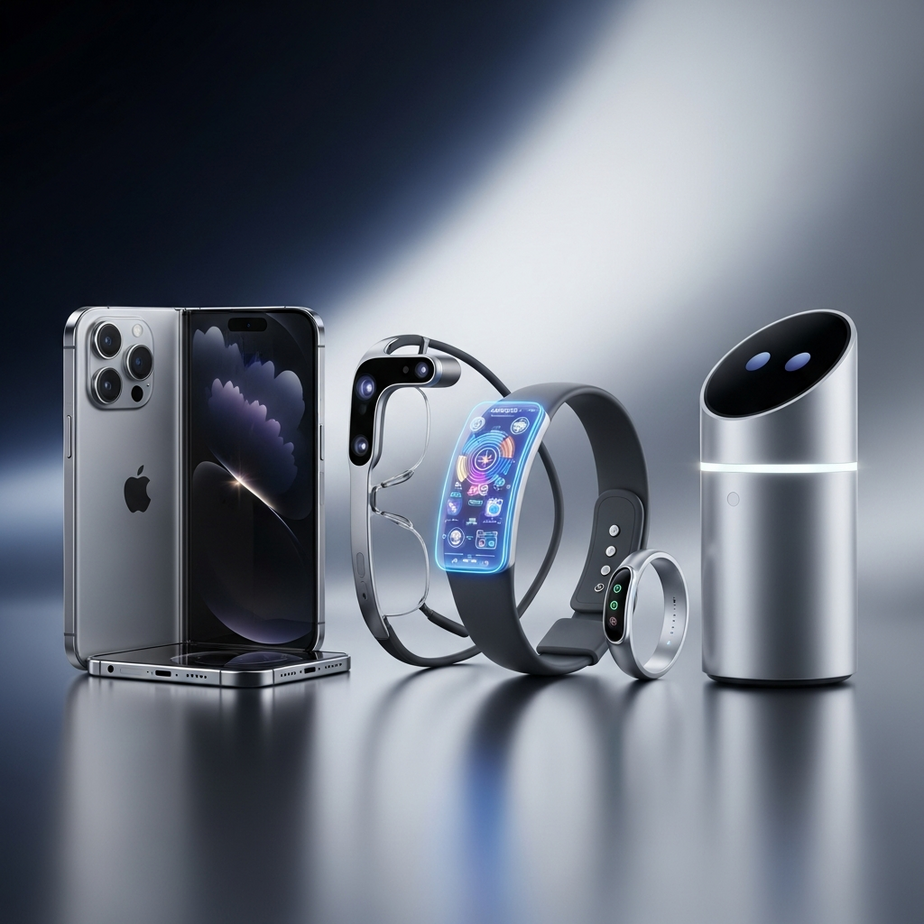
The year 2026 is shaping up to be more than just another product cycle for Apple; it feels like a pivotal moment of redefinition. From a foldable iPhone that challenges the very form of a smartphone to an affordable MacBook that democratizes access to the Apple ecosystem, the company is preparing to push into new territory. Add to that the revolutionary potential of everyday AR with Apple Glasses, life-saving advancements in the Apple Watch, and a true command center for the smart home, and the picture becomes clear.
This is not just an assortment of new gadgets. It’s a cohesive strategy to embed Apple’s technology more deeply and usefully into every aspect of our lives. The vision for Apple in 2026 is ambitious, weaving together hardware, software, and services into a future that feels both exciting and inevitable. The only question is, which of these innovations will you be waiting for? As we move closer to 2026, keep an eye out for the leaks and rumors that will undoubtedly paint an even clearer picture of what’s to come from Cupertino.