When you picture the founder of a billion-dollar tech company, you might imagine someone in a hoodie or a sharp suit, speaking in buzzwords about disrupting markets from a sleek Silicon Valley office. Now, picture that same founder, but in a Hawaiian shirt and shorts, talking about disrupting a market that’s a little more… kinetic. This isn’t about a new social media app or a food delivery service. This is the world of defense technology, and it’s being fundamentally reshaped by a company called Anduril. This audacious startup is not just building new gadgets; it’s rewriting the rules of engagement for an industry steeped in tradition, trading slow-moving bureaucracy for the rapid-fire innovation of the software world. It’s a fascinating clash of cultures, where laid-back attire belies a deadly serious mission to build the future of national security.
Who Is Building the Future of Defense?
At the heart of this story is Anduril Industries, a defense technology firm founded in 2017. The name itself, borrowed from the legendary sword in “The Lord of the Rings,” hints at its ambitious goal: to provide heroes with the tools they need to prevail. The company was co-founded by Palmer Luckey, a name many will recognize as the prodigious inventor of the Oculus Rift VR headset, which he sold to Facebook (now Meta) for a staggering sum. After his controversial departure from Facebook, Luckey turned his sights from virtual worlds to the real one, aiming to solve what he saw as a critical technology gap in the U.S. military and its allies.
Luckey and his co-founders saw a defense industry dominated by legacy contractors—often called “primes”—that were slow, expensive, and frequently behind the technological curve. They believed that the Pentagon was struggling to keep pace with adversaries who were leveraging commercially-driven technologies like AI and autonomous systems. Their solution was to create a new kind of defense company, one that operates with the speed and agility of a software startup to deliver cutting-edge capabilities directly to the warfighter.
The Silicon Valley Playbook for National Security
What truly sets Anduril apart isn’t just its technology, but its entire business model. Traditional defense contractors typically wait for the government to issue a detailed request for a specific piece of hardware. This leads to a long, bureaucratic process of bidding and development that can take decades and cost billions, sometimes resulting in outdated technology by the time it’s deployed. Anduril flips this script entirely.
Instead of waiting for a contract, the company uses its own venture capital funding to anticipate the military’s needs. It develops products speculatively, building solutions it believes will be crucial for future conflicts. This “build it and they will come” approach allows for much faster development cycles. They can iterate on their products, refine their software, and present a finished, working solution to the Department of Defense, rather than a proposal on paper. This fundamentally changes the dynamic, shifting from a cost-plus contracting model to a technology-first partnership.
This strategy allows Anduril to focus on creating a tightly integrated ecosystem of products, all powered by a common software backbone. It’s a page taken directly from the Silicon Valley playbook, where companies like Apple build both the hardware (iPhone) and the software (iOS) to create a seamless user experience. For the military, this means tools that work together intelligently from day one.
Inside the Digital Arsenal
The technology Anduril is developing isn’t science fiction; it’s being deployed in the field today. Their products are designed to create a comprehensive, AI-driven picture of a battlefield, enabling commanders to make faster and smarter decisions. Here’s a look at some of their core offerings.
Lattice OS: The Brains of the Operation
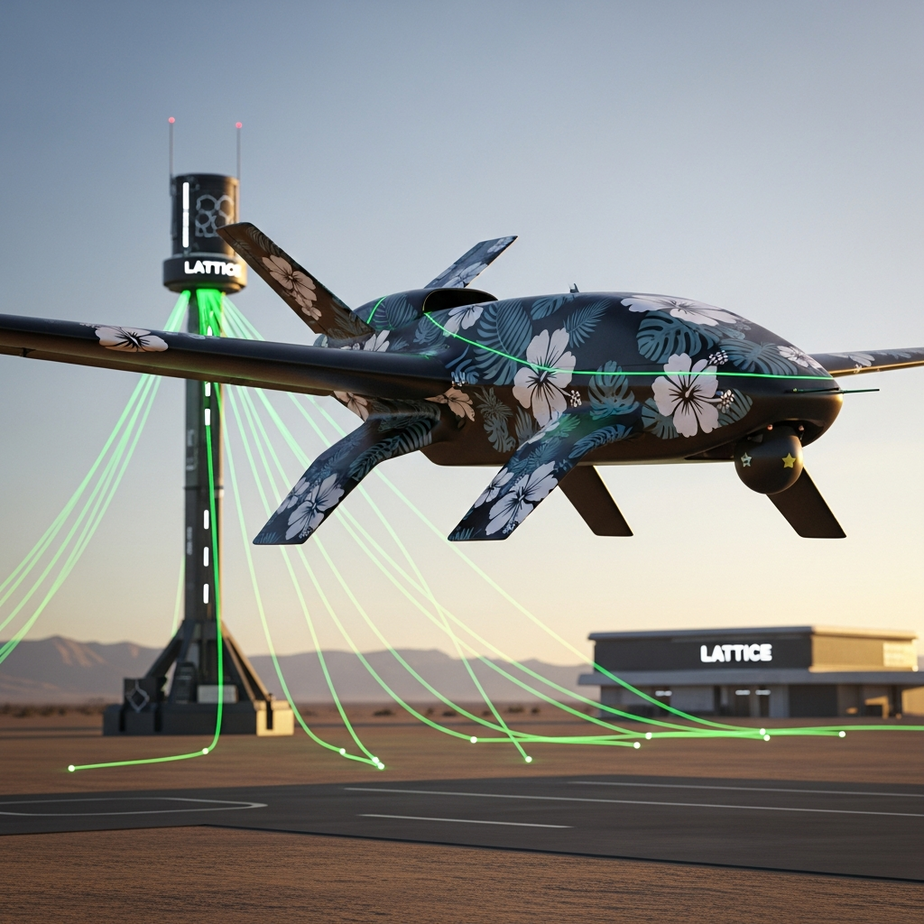
The true centerpiece of Anduril’s ecosystem is Lattice OS, an AI-powered software platform. Think of it as the central nervous system for modern defense operations. Lattice ingests massive amounts of data from a wide array of sensors—from autonomous drones and sentry towers to third-party systems—and fuses it all into a single, real-time 3D model of an area. The software uses artificial intelligence to autonomously detect, classify, and track potential threats, presenting a clear operational picture to human decision-makers. It’s designed to reduce the cognitive load on soldiers, allowing them to focus on the mission rather than trying to interpret data from a dozen different screens.
Autonomous Sentinels and Drones
Anduril is perhaps best known for its hardware, which is all designed to feed information into Lattice. Their product suite includes:
– Sentry Towers: These are autonomous surveillance towers that can be rapidly deployed in remote locations. Packed with radar and cameras, they use AI to scan their surroundings 24/7, automatically identifying objects of interest like vehicles or personnel.
– Ghost: This is a small, autonomous helicopter-like drone designed for intelligence, surveillance, and reconnaissance. It’s built for stealth and endurance, providing real-time video and data back to the Lattice platform.
– Altius: A family of larger, tube-launched drones that can be configured for various missions, from surveillance to electronic warfare and even kinetic strikes. They can be launched from the ground, air, or sea and can operate in swarms.
Countering 21st-Century Threats
One of the most pressing challenges in modern warfare is the proliferation of cheap, commercially available drones. To address this, Anduril developed the Anvil interceptor drone. When Lattice detects a hostile drone, it can launch Anvil, a small, high-speed craft that flies directly into the threat, physically destroying it on impact. As detailed in a Forbes report on their counter-drone business, this system is designed to protect military bases, ships, and critical infrastructure from this growing aerial menace.
Redefining the Modern Battlefield
The work being done by Anduril and other tech-forward defense companies signals a profound shift in the nature of warfare. The future battlefield will be less about the size of an army and more about the speed and quality of its decisions. By leveraging AI and autonomous systems, the goal is to see farther, understand faster, and act decisively before an adversary can.
This raises important questions about the role of humans in conflict. Anduril is adamant that its systems are designed to keep humans “in the loop,” providing better information so they can make the final call, particularly on lethal actions. However, the push toward greater autonomy is undeniable. The company’s vision is one where networks of intelligent machines can patrol borders, secure perimeters, and identify threats, freeing up human soldiers for higher-level tasks. This technological overmatch, they argue, is the key to deterring future conflicts and protecting personnel.
Of course, this path is not without its challenges. Breaking into the entrenched military-industrial complex is a monumental task, and the company has faced scrutiny and skepticism from established players. Furthermore, the broader ethical debate around AI and autonomous weapons is ongoing and complex. As Anduril continues to push the boundaries of what’s possible, it will also be at the center of the conversation about how these powerful technologies should be governed and controlled.
The story of Anduril is about more than just a single company. It represents a critical inflection point where the fast-paced, software-driven world of tech is colliding with the high-stakes, methodical world of national defense. By challenging conventions and building technology at the speed of relevance, they are not just aiming to win contracts; they are aiming to shape the very future of security. The fusion of Silicon Valley innovation with the immense responsibility of protecting a nation is a powerful and transformative force. To understand where global security is headed, one must keep an eye on the pioneers who are programming its future, one line of code at a time.