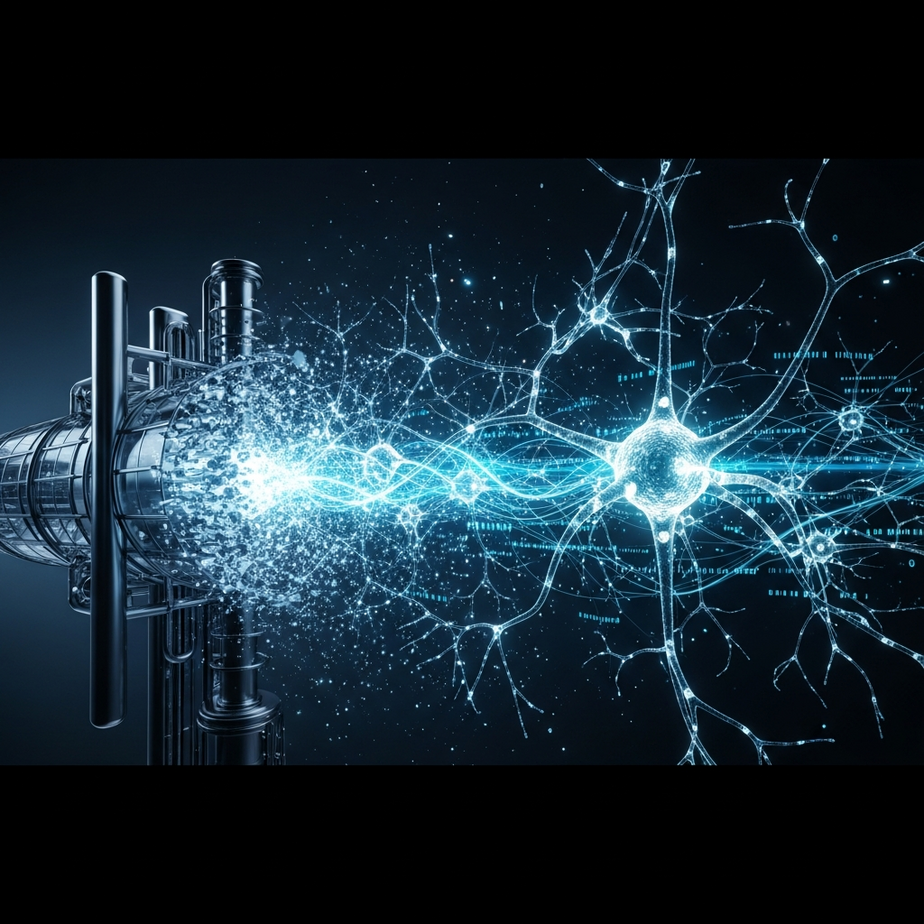
The Inevitable AI Wave: Beyond Automation to True Transformation
We stand at the precipice of a revolution not seen since the dawn of the internet. Artificial intelligence is no longer a futuristic concept from science fiction; it is a present-day force actively reshaping our world. The critical issue is not whether AI will transform industries, but whether we can proactively guide this change to enhance security and well-being for humans. This transformation goes far beyond simple automation—it represents a fundamental shift in how we solve problems, create value, and interact with technology.
Unlike previous industrial shifts that replaced manual labor with machines, the AI revolution targets cognitive tasks. It’s about creating systems that can learn, reason, predict, and even generate novel ideas. We see this unfolding in real-time: AI algorithms are diagnosing diseases with a precision that rivals experienced doctors, managing complex financial portfolios, and composing music that evokes genuine emotion.
This wave is faster, more pervasive, and more profound than any that has come before. Its potential to accelerate human progress is immense, but its power also brings significant responsibility. Every new application, from autonomous vehicles to personalized education platforms, carries with it a set of ethical and societal questions that demand answers. The challenge lies in building a future where these powerful tools serve humanity’s best interests.
Successfully navigating this era requires a collective effort to understand the technology, anticipate its impacts, and establish frameworks for its responsible deployment. We must move from being passive observers to active architects of this new age, ensuring that we thoughtfully guide this change to enhance security and well-being for humans across the globe.
Reshaping the Industrial Landscape: A Sector-by-Sector Look
The impact of AI is not a monolithic event but a series of tailored revolutions occurring simultaneously across every industry. From the operating room to the factory floor, intelligent systems are unlocking efficiencies and capabilities that were previously unimaginable. Understanding these specific transformations is key to appreciating the scale of the change underway.
Healthcare’s AI-Powered Future
Nowhere is the potential of AI more life-altering than in healthcare. Machine learning models are analyzing medical images—like X-rays and MRIs—to detect cancers and other anomalies earlier and more accurately than the human eye. This leads to earlier intervention and drastically improved patient outcomes.
Beyond diagnostics, AI is accelerating drug discovery by simulating molecular interactions, a process that once took years and is now being completed in months. This means new treatments and vaccines can reach the public faster. We are also seeing the dawn of truly personalized medicine, where AI analyzes an individual’s genetic makeup and lifestyle to recommend bespoke treatment plans. However, with this power comes the critical need to protect sensitive patient data and ensure these advanced tools are accessible to all, not just a privileged few.
The New Era of Manufacturing and Logistics
The concept of the “smart factory” is now a reality. AI-powered sensors on machinery can predict when a part is about to fail, allowing for pre-emptive maintenance and eliminating costly downtime. This is known as predictive maintenance, and it’s saving manufacturers billions of dollars annually.
In logistics, AI is the unsung hero behind the global supply chain. It optimizes shipping routes in real-time to account for weather, traffic, and port congestion. It predicts consumer demand with astonishing accuracy, ensuring that store shelves are stocked and waste is minimized. This level of optimization allows for a shift from inefficient mass production to hyper-efficient mass customization, where products can be tailored to individual consumer needs without a significant increase in cost.
Finance and a More Intelligent Economy
The financial sector was an early adopter of AI, using algorithms for high-frequency trading and fraud detection for years. Today, its role is expanding dramatically. AI now powers personalized banking apps that offer tailored financial advice, automates loan underwriting, and performs complex risk assessments for investment firms.
This integration presents profound ethical challenges. If an AI algorithm is trained on historical data that contains societal biases, it can perpetuate and even amplify those biases, unfairly denying loans or opportunities to certain groups. This is a clear example of why we must actively guide this change to enhance security and well-being for humans, ensuring that the algorithms shaping our economic futures are fair, transparent, and accountable.
The Human Element: Navigating the Workforce Shift
The most common fear surrounding AI is widespread job displacement. While it’s true that some roles will be automated, the narrative of “robots taking our jobs” is an oversimplification. The more accurate picture is one of profound job redefinition, where AI acts as a powerful collaborator, augmenting human capabilities rather than simply replacing them.
From Job Replacement to Job Redefinition
Think of AI not as a replacement for a worker, but as a “co-pilot.” It handles the repetitive, data-intensive tasks, freeing up human professionals to focus on what they do best: strategy, creativity, and complex problem-solving.
Consider these examples of augmentation in practice:
– A lawyer uses an AI platform to analyze thousands of legal documents in minutes, identifying key precedents that would have taken weeks to find manually.
– A marketing manager uses AI to sift through vast datasets of consumer behavior, uncovering subtle trends to build a more effective campaign.
– A software developer uses an AI coding assistant to generate boilerplate code and debug errors, allowing them to build better software faster.
This shift is also creating entirely new job categories that didn’t exist a decade ago. Roles like AI Ethicist, Prompt Engineer, and AI Trainer are becoming increasingly common as organizations seek experts who can build, manage, and govern these powerful systems responsibly.
The Imperative of Reskilling and Lifelong Learning
To thrive in this new landscape, the workforce must adapt. The emphasis is shifting from knowledge of specific tasks to the cultivation of uniquely human skills. These are the abilities that AI, in its current form, cannot easily replicate.
Key skills for the future of work include:
– Critical Thinking: The ability to analyze information objectively and make reasoned judgments.
– Emotional Intelligence: Understanding and managing your own emotions, and recognizing and influencing the emotions of others.
– Creativity: The capacity to generate novel and valuable ideas.
– Complex Problem-Solving: The skill to navigate multifaceted issues with no clear solution.
This places a new and urgent responsibility on both governments and corporations to invest in robust reskilling and upskilling programs. Lifelong learning will no longer be a suggestion but a necessity for career longevity. Providing accessible pathways for education is a cornerstone of how we can guide this change to enhance security and well-being for humans, ensuring no one is left behind by this technological leap.
How We Can Guide This Change to Enhance Security and Well-being for Humans
The immense power of artificial intelligence requires an equally immense commitment to its responsible stewardship. Without intentional direction and robust guardrails, the same technology that promises to solve our greatest challenges could also create new ones. Building a safe and equitable AI-powered future depends on a multi-faceted approach grounded in ethics, security, and transparency.
Establishing Robust Ethical Frameworks
We cannot leave the ethics of AI to chance. This requires the development of clear, enforceable rules and regulations at both national and international levels. Efforts like the European Union’s AI Act are pioneering examples of attempts to create a legal framework that classifies AI systems by risk and imposes requirements accordingly. A core principle of these frameworks is the concept of “explainable AI” (XAI), which demands that we can understand and trace how an AI model arrived at a particular decision, especially in high-stakes areas like medical diagnoses or criminal justice.
Furthermore, we must confront the pervasive issue of algorithmic bias. AI models learn from the data they are given, and if that data reflects existing societal biases, the AI will learn and amplify them. Mitigating this requires careful curation of training data, rigorous testing for fairness, and the inclusion of diverse teams in the development process to challenge assumptions and spot potential blind spots.
Prioritizing Cybersecurity in an AI-Driven World
As AI systems become more integrated into our critical infrastructure—from power grids to financial markets—they also become high-value targets for malicious actors. AI can be weaponized to create highly sophisticated cyberattacks, such as adaptive malware or hyper-realistic phishing scams that are nearly impossible for a human to detect.
Conversely, AI is also our most powerful tool for cyber defense. It can monitor networks for anomalous behavior, identify novel threats in real-time, and automate responses faster than any human team could. The key is to stay one step ahead, which means investing heavily in AI-driven security and, just as importantly, securing the AI models themselves from being poisoned or manipulated.
Fostering Public Trust Through Transparency
For AI to be widely adopted and accepted, the public must trust it. This trust cannot be built behind the closed doors of a “black box” algorithm. Organizations deploying AI must be transparent about where, how, and why they are using it. This includes clear communication with customers and users, letting them know when they are interacting with an AI system.
It also means establishing clear lines of accountability. When an AI system makes a mistake that causes harm—whether it’s an autonomous vehicle causing an accident or a hiring algorithm showing bias—there must be a clear process for recourse and remediation. Building this trust is fundamental to our collective ability to guide this change to enhance security and well-being for humans.
The Metamorphosis of AI Itself: The Next Frontier
One of the most fascinating aspects of this transformation is that AI is not just changing the world; it is also changing itself. The very tools we are building are now being used to accelerate the development of even more powerful and efficient versions of AI, creating a cycle of rapid, self-reinforcing innovation.
This evolution is happening on several fronts. Researchers are using AI to automate the design of machine learning models—a field known as AutoML—which drastically reduces the time and expertise needed to create custom AI solutions. This democratization of AI development means more people and smaller organizations can harness its power.
Simultaneously, there is a major push toward creating smaller, more energy-efficient AI models. Early large-scale models required massive data centers and consumed enormous amounts of power. The next generation of AI is being designed to run effectively on local devices like smartphones and sensors, enabling powerful capabilities without constant reliance on the cloud. This trend enhances privacy and reduces latency for real-world applications.
This self-improvement loop is what makes the AI revolution fundamentally different from past technological shifts. Its exponential nature underscores the urgency of our present task. The foundational principles of ethics, safety, and human-centric design we establish today will be inherited and amplified by these future systems. Therefore, our initial efforts to guide this change to enhance security and well-being for humans are not just important—they are the most critical work we can undertake.
The great transformation is here. It is not a distant event to prepare for but a present reality to navigate. We’ve seen how artificial intelligence is moving beyond simple automation to fundamentally reshape entire industries, from healthcare to finance. This is creating unprecedented opportunities for progress, but it also forces a necessary reckoning with the future of work and the very nature of human skill.
The core message is not one of fear, but of agency. The trajectory of AI is not predetermined. We have the power and the responsibility to steer its development. By focusing on robust ethical frameworks, prioritizing cybersecurity, fostering transparency, and committing to lifelong learning, we can build a future where AI serves as a powerful tool for human augmentation and societal good. The choices we make in this decade will echo for generations.
The conversation about AI’s future is not just for technologists and policymakers; it is for everyone. Now is the time to get involved. Start by educating yourself and your team on both the potential and the pitfalls of these new technologies. Advocate for responsible implementation within your organization and community. Ask the hard questions. What is the first step you will take to help guide this change to enhance security and well-being for humans?