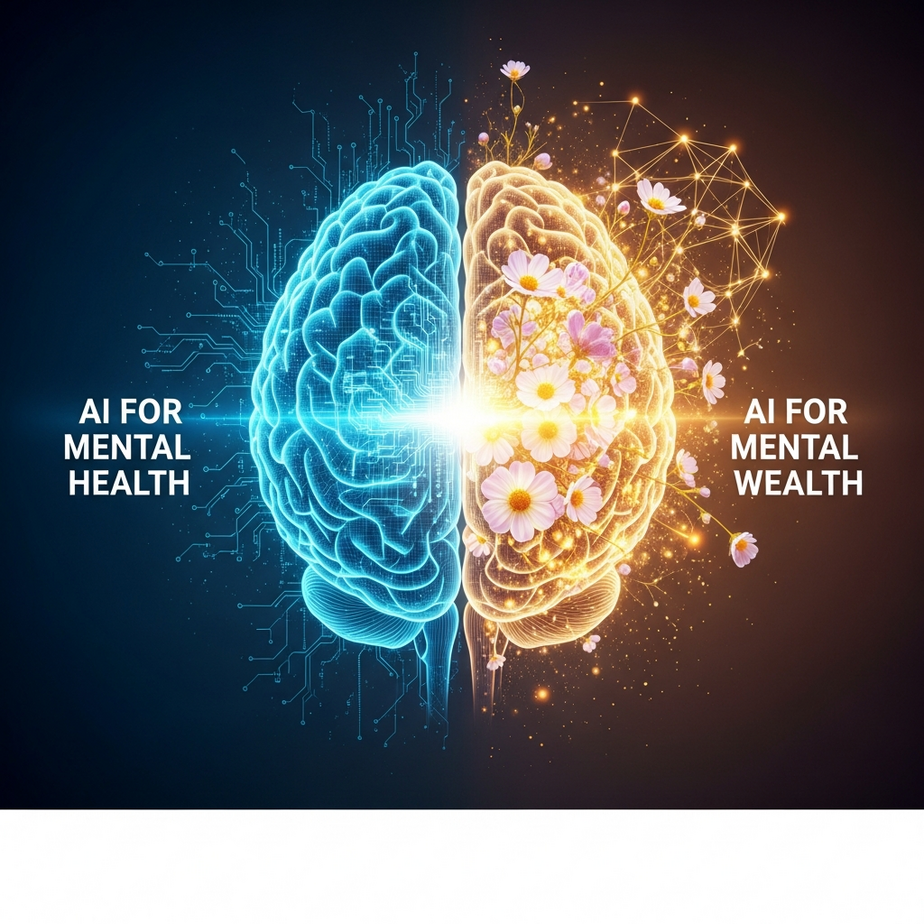
From Reactive Treatment to Proactive Well-being
The conversation around artificial intelligence and our minds is often a whirlwind of therapy chatbots and diagnostic algorithms. While these tools are valuable, they represent a reactive approach, stepping in only when something is wrong. But a profound shift is underway, reframing the entire discussion from AI for mental health to the more empowering concept of **AI for mental wealth**. This isn’t just a change in terminology; it’s a fundamental change in philosophy from merely treating illness to actively building a rich reserve of cognitive and emotional assets.
Imagine your mental state not as a health bar that depletes but as a savings account you can invest in. The traditional mental health model focuses on bringing a negative balance back to zero. The mental wealth model, however, is about growing that balance into a surplus—a reserve of resilience, focus, and emotional intelligence that helps you navigate life’s challenges more effectively.
This proactive stance moves us beyond the clinic and into our daily lives. It’s about using technology not just as a crutch during difficult times but as a personal trainer for our minds, continuously strengthening our mental “muscles.” The goal is to build a robust internal foundation that can withstand stress, foster creativity, and enhance our overall quality of life long before a crisis ever emerges.
What Is AI for Mental Wealth, Really?
So, what does this new frontier of **AI for mental wealth** actually look like? At its core, it is the strategic use of artificial intelligence to cultivate and enhance the positive attributes that contribute to a flourishing life. It’s a move from a deficit-based model to an asset-based one.
Instead of only identifying symptoms of anxiety or depression, **AI for mental wealth** focuses on quantifying and improving the pillars of psychological thriving. These are the internal resources we draw upon every day, often without realizing it.
The Key Components of Mental Wealth
Mental wealth isn’t a single metric but a composite of several crucial cognitive and emotional skills. AI tools are uniquely positioned to help us measure, understand, and strengthen each one.
– Resilience: The ability to bounce back from adversity. AI can help by providing personalized stress-management exercises or simulations that train our response to pressure in a controlled way.
– Emotional Intelligence (EQ): The capacity to understand and manage your own emotions, as well as recognize and influence the emotions of others. AI can offer real-time feedback on communication styles or help users identify emotional triggers through journaling analysis.
– Focus and Attention: In a world of constant distraction, the ability to concentrate is a superpower. AI-driven apps can use neurofeedback or personalized soundscapes to help train the brain for deeper, more sustained focus.
– Self-Awareness: A clear perception of your personality, including strengths, weaknesses, thoughts, beliefs, and motivations. AI-powered journaling platforms can identify patterns in your thoughts and feelings that you might miss.
– Purpose and Meaning: Feeling connected to something larger than oneself. AI can help individuals explore their values and connect them with activities, career paths, or volunteer opportunities that align with those core principles.
This approach transforms AI from a digital therapist into a personalized cognitive coach. It’s less about fixing what’s broken and more about building what’s strong. It’s a continuous, lifelong process of personal growth, augmented by intelligent technology that learns and adapts right alongside us.
The Core Pillars of AI for Mental Wealth in Action
The concept of using **AI for mental wealth** might sound futuristic, but its applications are already emerging and becoming integrated into our daily routines. These technologies are not designed to replace human connection but to augment our personal development journeys, providing insights and support that were previously inaccessible.
Here’s a closer look at how AI is actively helping people build their cognitive and emotional assets.
Personalized Resilience and Stress Management
Generic advice to “breathe deeply” or “meditate” often falls short because stress is deeply personal. What triggers one person may not affect another. AI is revolutionizing this space by offering hyper-personalized interventions.
Wearable devices like smartwatches and rings now continuously monitor physiological data, including heart rate variability (HRV), sleep quality, and activity levels. AI algorithms analyze this data to detect early signs of stress before you’re even consciously aware of them.
When a stress pattern is detected, an AI-powered app might:
– Prompt a two-minute guided breathing exercise precisely when your HRV drops.
– Suggest a short walk after noticing you’ve been sedentary and your stress metrics are rising.
– Adapt your meditation plan for the day based on your previous night’s poor sleep.
This proactive and data-driven approach helps you build resilience by addressing stressors in real-time, effectively training your nervous system to return to a calm state more quickly.
Augmenting Emotional Intelligence (EQ)
Emotional intelligence is a critical component of mental wealth, impacting our relationships, careers, and self-perception. AI is providing novel tools to help us hone our EQ.
– Conversational AI: Platforms designed for sales or leadership training use AI to analyze speech patterns, tone of voice, and word choice. They provide instant feedback on how your communication might be perceived, helping you become a more empathetic and effective communicator.
– AI Journaling: Apps like Replika or Wysa use natural language processing (NLP) to analyze your journal entries. They can identify recurring emotional themes, help you reframe negative thought patterns based on Cognitive Behavioral Therapy (CBT) principles, and track your mood over time to reveal hidden triggers.
These tools act as a non-judgmental mirror, reflecting our emotional habits back to us and providing actionable steps for improvement.
Enhancing Focus and Cognitive Performance
Our ability to focus is a currency in the modern economy, and it’s constantly under assault. **AI for mental wealth** is about protecting and strengthening this vital asset.
– Adaptive Soundscapes: Apps like Brain.fm or Endel use AI to generate personalized soundscapes that are scientifically engineered to help you focus, relax, or sleep. The AI adjusts the audio in real-time based on your desired outcome, time of day, and even local weather.
– Neurofeedback Devices: Headsets that measure brainwave activity (EEG) are becoming more consumer-friendly. They pair with AI-driven apps that provide real-time feedback, gamifying the process of training your brain to enter and maintain a state of deep concentration, often called a “flow state.”
By making cognitive training accessible and engaging, AI helps us reclaim our attention and perform at our peak.
Navigating the Ethical Landscape and Inherent Challenges
Embracing **AI for mental wealth** requires a clear-eyed view of the potential pitfalls. As we entrust technology with our most intimate data—our thoughts, feelings, and physiological states—the ethical considerations become paramount. A healthy dose of skepticism and a demand for transparency are crucial for ensuring these tools serve our best interests.
Data Privacy and Security
The data collected by mental wealth apps is incredibly sensitive. It can include everything from your private journal entries to your real-time biometric stress signals.
– The Risk: Where is this data stored? Who has access to it? Could it be sold to third-party advertisers, insurance companies, or employers? A data breach could expose the most vulnerable parts of a user’s life.
– The Solution: Users must demand end-to-end encryption, clear and concise privacy policies, and the ability to delete their data permanently. Companies in this space have a profound responsibility to prioritize user privacy above all else, adopting a “privacy by design” approach.
Algorithmic Bias and Inequity
AI models are trained on data, and if that data is not diverse and representative of the global population, the resulting algorithms can be biased.
– The Risk: An AI stress-detection algorithm trained primarily on data from one demographic might be less accurate for others, potentially failing to provide support to those who need it. A therapy bot might not understand cultural nuances, offering advice that is irrelevant or even harmful. As the World Health Organization notes, the digital divide can also exacerbate existing health inequities, leaving behind those without access to technology.
– The Solution: Developers must commit to using diverse and inclusive datasets for training their models. Ongoing audits for bias are necessary, and users should have mechanisms to provide feedback when the AI’s guidance feels culturally misaligned.
The Risk of Over-Reliance and Dehumanization
While AI can be a powerful supplement, it should never be a complete substitute for human connection.
– The Risk: Leaning too heavily on an AI for emotional support could potentially weaken our ability to form deep, meaningful human relationships. It can create a “perfect” but sterile support system that doesn’t challenge us in the same way a friend, mentor, or therapist can.
– The Solution: We must frame **AI for mental wealth** as a tool for augmentation, not replacement. The goal should be to use AI insights to improve our real-world interactions and self-understanding, not to retreat into a digital cocoon. Responsible app design should encourage users to apply what they’ve learned in their daily lives and social connections.
How to Start Building Your Mental Wealth with AI Today
Getting started with **AI for mental wealth** doesn’t require a deep understanding of algorithms or a significant financial investment. It begins with a simple mindset shift: viewing technology as a proactive partner in your well-being journey.
Here are a few practical steps you can take to begin leveraging AI to build your cognitive and emotional reserves.
1. Audit Your Current Digital Habits: Before adding new tools, look at what you’re already using. Does scrolling through social media drain your energy? Do news alerts increase your anxiety? The first step in building wealth is often stopping the “spending” of your mental resources on things that don’t provide a return.
2. Start with a Single Focus Area: Don’t try to optimize everything at once. Pick one pillar of mental wealth you’d like to work on.
– Is it focus? Try an AI-powered soundscape app for one week during your work sessions.
– Is it self-awareness? Commit to three minutes of journaling with an AI-guided app each evening.
– Is it stress management? Pay attention to the “take a breath” reminders from your smartwatch and actually do them.
3. Choose Your Tools Wisely: Not all apps are created equal. When selecting a tool, look for evidence-based approaches and transparency.
– Read the Privacy Policy: It might be tedious, but understand what you’re agreeing to. Does the company sell user data?
– Look for Scientific Backing: Do they cite research or collaborate with clinicians or neuroscientists?
– Start with Free Versions: Most reputable apps offer a free trial or a freemium version. Test it out to see if it genuinely adds value to your life before committing.
4. Integrate and Reflect: A tool is only useful if it’s integrated into your routine. Pair a new habit with an existing one. For example, use your meditation app right after you brush your teeth in the morning. At the end of each week, take five minutes to reflect: Did this tool help? Do I feel more focused, calm, or self-aware? Adjust your approach based on your own experience.
The journey toward greater mental wealth is personal and continuous. AI provides a powerful toolkit, but you are the architect. By starting small, choosing wisely, and staying intentional, you can begin building a foundation of mental and emotional strength that will pay dividends for years to come.
The paradigm is shifting away from a world that waits for a mental health crisis to a world that actively cultivates mental strength. The development of **AI for mental wealth** is at the heart of this transformation, offering personalized, accessible, and data-driven tools to help us become more resilient, focused, and emotionally intelligent. It’s about moving beyond simply “not being sick” to truly thriving.
We’ve seen how this approach redefines well-being as an asset to be built, not just a problem to be solved. From real-time stress management powered by wearables to AI coaches that enhance our communication skills, the applications are already here and are becoming more sophisticated every day. While we must navigate the significant ethical challenges of privacy and bias with care, the potential is undeniable. This technology empowers us to take a proactive role in our own cognitive and emotional development.
The future isn’t about letting AI manage our minds for us. It’s about using it as a co-pilot to better understand ourselves and build a richer inner life. The first step on this journey doesn’t have to be monumental. It can be as simple as exploring one tool that resonates with you.
Are you ready to stop just protecting your mental health and start investing in your mental wealth? Explore one of the AI-powered apps mentioned today, and take the first small, proactive step toward building a more resilient and flourishing you.