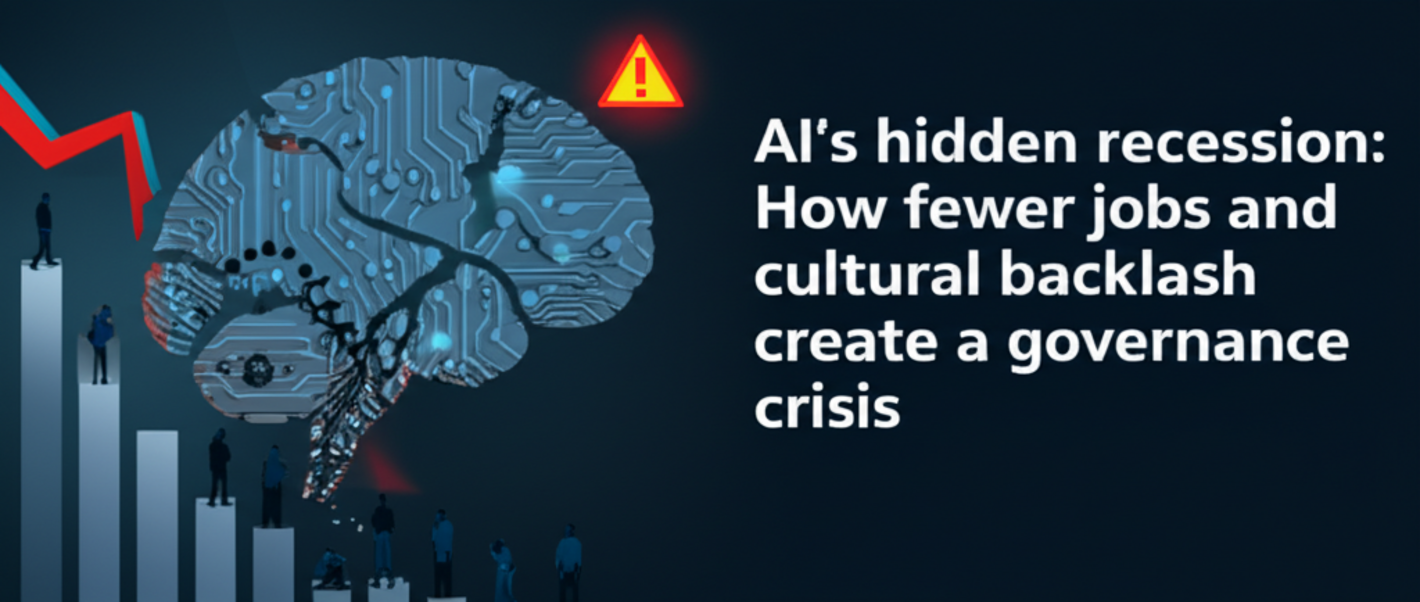
Artificial Intelligence has been hailed as the next industrial revolution, promising unprecedented efficiency and creativity. Yet beneath the glossy promise of faster production and smarter decision‑making lies an unseen recession: a contraction in the human workforce that is reshaping our social fabric and eroding the very governance structures that have kept societies stable.
When Automation Trims Jobs, Culture Sags
The most immediate impact of AI is visible on the factory floor, in offices, and on digital platforms—where algorithms replace routine tasks and even complex decision processes. According to a recent McKinsey study, up to 45% of global working hours could become automated by 2030, translating to millions of displaced workers. The paradox is that the same AI technologies that eliminate low‑skill jobs are also creating high‑skill positions that demand a different skill set, thereby widening the socioeconomic divide.
As the labor market contracts, the cultural backlash begins to surface. Communities that once relied on manufacturing jobs feel the sting of obsolescence. The result is a growing sense of disenfranchisement that fuels distrust in institutions, undermines public policy, and accelerates the politicisation of technology. When people see their livelihoods vanish faster than the economy can create new roles, they are more likely to support populist agendas that promise protection—often at the cost of broader democratic principles.
The Governance Gap: From Policy to Practice
Governments have traditionally regulated the economy through labor laws, social safety nets, and investment in education. However, the pace of AI innovation outstrips policy development. As AI systems increasingly dictate who gets hired, promoted, or promoted, existing frameworks struggle to address issues like algorithmic bias, data ownership, and the moral responsibilities of autonomous systems.
Moreover, AI’s capacity to optimise processes raises questions about the legitimacy of decisions made by machines. When a hiring algorithm rejects a qualified applicant, who is accountable? When an autonomous vehicle makes a split‑second decision, whose moral compass is guiding it? These ambiguities create a governance crisis, as regulators are forced to balance technological progress with ethical safeguards without clear precedents.
Leadership Choices: The Fork in the Road
Leaders—whether they are CEOs, policymakers, or community organisers—stand at the crossroads of this hidden recession. The decisions they make will determine whether AI becomes a tool for inclusive value creation or a mechanism for exclusion. There are three strategic pathways:
- Redefine Value Creation: Invest in lifelong learning programmes that equip displaced workers with skills needed for high‑value AI roles. This requires public‑private partnerships to fund reskilling initiatives and to embed human oversight in AI development.
- Re‑engineer Governance: Develop regulatory sandboxes that allow for rapid testing of AI systems under real‑world conditions while maintaining rigorous ethical oversight. Such sandboxes can help close the gap between innovation and public trust.
- Re‑imagine Participation: Adopt deliberative democratic processes that involve citizens in shaping AI policy. By giving communities a voice, leaders can mitigate backlash and foster a sense of shared ownership over technological progress.
From Hidden to Visible: The Role of Transparency
Transparency is the linchpin for restoring trust. Transparent AI means not only clear explanations of algorithmic decisions but also open access to the data sets and training procedures that underpin those decisions. When workers and consumers can see how outcomes are generated, they are less likely to view AI as a black‑box threat.
Companies are increasingly adopting “explainable AI” (XAI) frameworks, which allow stakeholders to trace the logic behind a decision. However, explainability alone is insufficient; it must be coupled with robust accountability mechanisms that ensure those in power cannot weaponise AI to manipulate public opinion or suppress dissent.
Conclusion: Choices Now, Value Tomorrow
AI will redefine how humans create value. Whether it also redefines who is allowed to create value will depend on the choices leaders make now. The hidden recession—characterised by job contraction and cultural backlash—is not inevitable; it is a policy‑driven phenomenon. By proactively re‑engineering governance, investing in human capital, and fostering transparent dialogue, societies can turn the potential crisis into an opportunity for inclusive, ethical progress.